
Northern krill
Meganyctiphanes norvegica
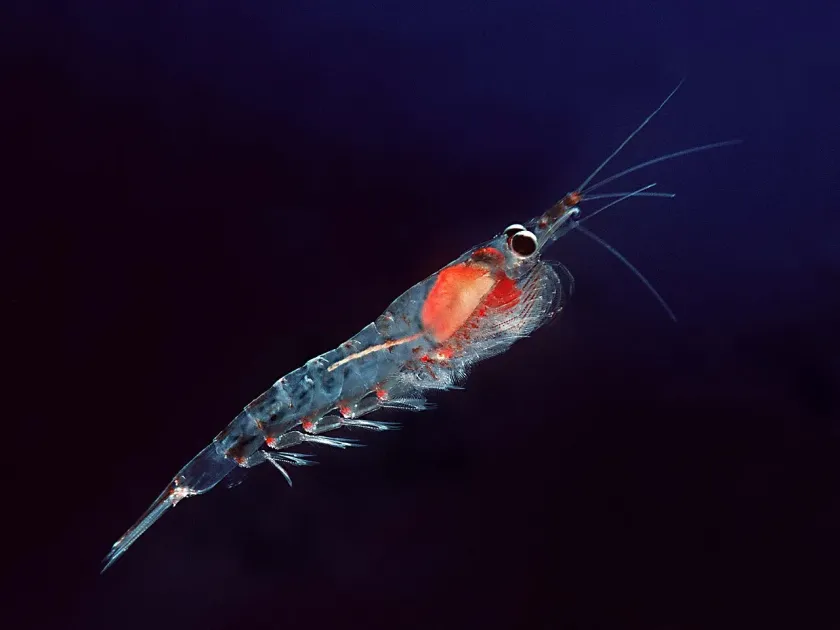
Description
How to identify
The Northern krill, scientifically known as Meganyctiphanes norvegica, is a prominent member of the order Euphausiacea and the family Euphausiidae.
These crustaceans typically grow up to 4–4.5 centimeters in length, possessing a translucent body and specialized luminous organs called photophores.
Unlike terrestrial pests, this species is a critical component of the pelagic ecosystem in the North Atlantic, inhabiting deep and coastal waters.
Their anatomy is perfectly adapted for swimming in the water column, allowing them to participate in extensive diel vertical migrations on a daily basis.
As a key organism in the marine food web, they provide an essential nutrient link between phytoplankton and higher-order predators such as whales, seals, and fish.
When it appears
The life cycle of the Northern krill is highly seasonal, heavily influenced by the bloom cycles of phytoplankton in cold oceanic waters.
Spawning usually occurs during the spring and summer months, which provides the necessary nutritional conditions for the survival of the larvae.
Development proceeds through several distinct larval stages, including nauplius, metanauplius, and calyptopis, before reaching the juvenile phase.
Environmental factors such as water temperature and current patterns play a decisive role in the distribution and abundance of krill populations each year.
During the winter season, these organisms adapt by shifting their diet and reducing metabolic activity to survive the period of lower primary production.
Taxonomy
- Latin name
- Meganyctiphanes norvegica
- Family
- Euphausiidae
- EPPO code
- MGNYNO
Discussion
No discussions yet — be the first.