
Meganephria bimaculosa
Meganephria bimaculosa
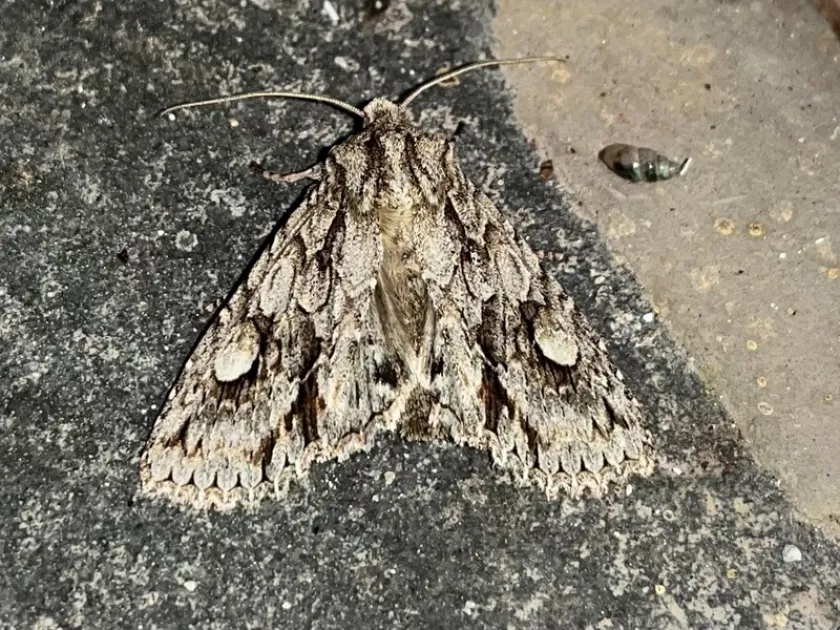
Description
How to identify
Meganephria bimaculosa is a moth species belonging to the family Noctuidae. It is commonly referred to in technical literature as a specialized feeder of certain deciduous trees.
The adult moth is medium-sized with greyish-brown forewings. Its natural color pattern allows it to blend perfectly into the tree bark, providing excellent camouflage.
The larvae are typical of the Noctuidae family, characterized by a smooth body and a color palette that matches the foliage of their host plants.
The species biology is closely tied to the lifecycle of the host trees, primarily within the Elm family, where they spend most of their life cycle.
Overwintering occurs primarily at the pupal stage, usually buried in the soil or tucked away in deep crevices of the host tree bark.
What it damages
The primary host plants for Meganephria bimaculosa larvae are species within the Ulmaceae family, specifically the elm tree (Ulmus genus).
In cases of high population density, larvae can feed on other nearby broad-leaved trees, though they show a strong preference for elms.
Larval feeding can lead to significant defoliation, which stresses the tree and makes it susceptible to further physiological disorders.
Small-scale infestations are often overlooked, but large-scale feeding can severely damage the health and aesthetic value of urban street trees.
Long-term damage leads to weakened tree structures and reduced vigor, which often manifests as a decline in annual branch growth.
When it appears
Adult moths are typically active in late summer and early autumn, which is the mating and oviposition phase for the species.
The larval stage coincides with spring, starting when elm trees begin to bud and leaf out, providing high-quality food for the growing larvae.
The insect typically follows a univoltine lifecycle, meaning it completes one full generation per year, which is a key factor in population management.
Spring temperatures play a critical role in the timing of egg hatching; warmer weather generally leads to earlier larval activity.
Pupation occurs during the summer months, and the insects remain in this dormant stage until the late-season adult emergence.
Signs of infestation
The first indicator of an infestation is the appearance of small, irregular holes in the leaves, progressing to full-scale skeletonization.
Frass (larval excrement) accumulation on the ground beneath the canopy is a clear sign of high larval activity in the upper branches.
- Increased presence of holes in leaf blades.
- Visible skeletonization where only the veins remain.
- Loss of foliage in the upper canopy.
- Premature yellowing or browning of leaves due to stress.
- Physical presence of larvae on the underside of foliage.
Regular visual inspections of the lower branches and bark crevices are recommended to detect infestations at the earliest possible stage.
Control measures
Chemical control involving systemic or contact insecticides is effective during the peak larval hatching period in the spring.
Cultural control practices include keeping trees healthy through proper watering and soil management to improve their natural resistance.
Biological control using entomopathogenic bacteria or natural predators can be a sustainable alternative to traditional chemical treatments.
Mechanical control measures, such as bark cleaning and soil cultivation around the base of the trees, can destroy overwintering pupae.
Monitoring populations with pheromone traps helps in timing the applications precisely, ensuring minimal impact on non-target species.
Taxonomy
- Latin name
- Meganephria bimaculosa
- Order
- Lepidoptera (butterflies)
- Family
- Noctuidae
- EPPO code
- MEGNBI
Discussion
No discussions yet — be the first.