
Bertha armyworm
Mamestra configurata
Description
How to identify
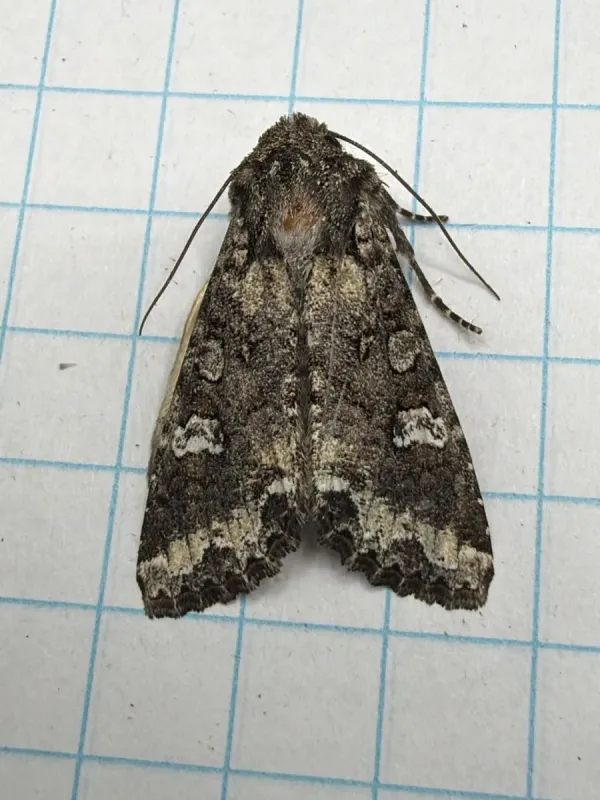
The Bertha armyworm (Mamestra configurata) is a significant agricultural pest belonging to the Noctuidae family of the order Lepidoptera. In its adult stage, it is a moth with a wingspan of approximately 35–40 mm.
The adult moth features cryptic, mottled brown or gray wings with distinct markings, such as a white kidney-shaped spot, which helps it blend into foliage and soil surfaces during the day.
The larvae, or caterpillars, exhibit color polymorphism, ranging from light green to velvet black. They are typically identified by the prominent light-colored lateral stripes running along their bodies.
This species undergoes complete metamorphosis: egg, larva, pupa, and adult. The pupae overwinter in the soil, protected within a small chamber, which allows them to withstand sub-zero winter temperatures.
Regular field scouting and the use of pheromone-baited traps are essential tools for agriculturalists to monitor flight patterns and predict potential outbreaks of this pest in their fields.
What it damages
The Bertha armyworm is a polyphagous pest, meaning it feeds on a wide range of host plants. Its primary targets are oilseed crops like canola, mustard, and flax, as well as several leguminous and cereal crops.
While younger larvae cause minor leaf feeding, the later larval instars (4th to 6th) are responsible for the vast majority of crop destruction, consuming foliage, flowers, and developing seed pods.
Severe infestations can lead to complete defoliation of plants, which significantly reduces the plant's ability to photosynthesize and develop healthy seeds. This results in direct yield losses and lower seed quality.
Feeding damage to the seed pods is particularly devastating, as the larvae chew through the pods to feed on the developing seeds inside, often leaving the pods hollow or damaged.
In addition to physical tissue loss, the wounds created by the larvae provide entry points for secondary pathogens, such as bacterial or fungal infections, further compromising the overall plant health.
When it appears
Adult moths typically emerge in early summer, often coinciding with warm evening temperatures. The timing of emergence can vary based on regional climatic conditions and soil warming trends.
After mating, females lay clusters of eggs on the undersides of host leaves. These eggs hatch into tiny larvae that begin feeding immediately on the plant material near the egg clusters.
The larvae are most active and damaging during the mid-to-late summer months. During this period, their growth rate is rapid, and they consume large amounts of biomass to fuel their development.
By late summer or early autumn, the mature larvae finish feeding and burrow into the soil to pupate. Most populations complete one or two generations per year, depending on the latitude.
The overwintering pupal stage ensures the survival of the species through the winter months. As soil temperatures rise in the spring, the pupae prepare for the adult emergence cycle to start again.
Signs of infestation
The most noticeable sign of a Bertha armyworm infestation is the presence of skeletonized leaves. Young larvae scrape the leaf surface, while older larvae consume entire leaf blades.
Dark fecal pellets, known as frass, are a primary indicator of larval presence. Accumulations of frass on the soil surface or caught in the leaf axils are signs of active feeding nearby.
Damaged seed pods with irregular holes are a clear indication of late-stage larval activity. Observing the plants in the morning or evening is recommended, as the larvae prefer to feed when temperatures are cooler.
Plant stands may appear thinned or patchy in areas of heavy feeding. In extreme cases, one might observe clusters of caterpillars migrating from one section of a field to another in search of food.
Field inspectors should check the underside of the leaves and the base of the plants, as the larvae often hide in the soil mulch or under leaves during the heat of the day to avoid desiccation.
Control measures
Effective management begins with cultural practices, such as tillage after harvest. Deep cultivation can disturb the soil-dwelling pupae, exposing them to predators and harsh environmental conditions.
Biological controls are a valuable part of an integrated pest management program. Naturally occurring predators, parasitoid wasps, and entomopathogenic viruses can significantly reduce larval numbers.
Chemical control via synthetic insecticides is recommended when larval populations reach or exceed established economic thresholds. Timely application ensures that the larvae are targeted before they cause irreversible damage.
It is crucial to rotate insecticide modes of action to manage resistance. Always follow local labels and safety guidelines to minimize the impact on non-target species and pollinators within the ecosystem.
Integrated Pest Management (IPM) strategies, which prioritize scouting, economic threshold calculation, and the judicious use of pesticides, are the most sustainable approach to long-term Bertha armyworm control.
Taxonomy
- Latin name
- Mamestra configurata
- Order
- Lepidoptera (butterflies)
- Family
- Noctuidae
- EPPO code
- BARACF
Discussion
No discussions yet — be the first.