
Longspine snipefish
Macroramphosus scolopax
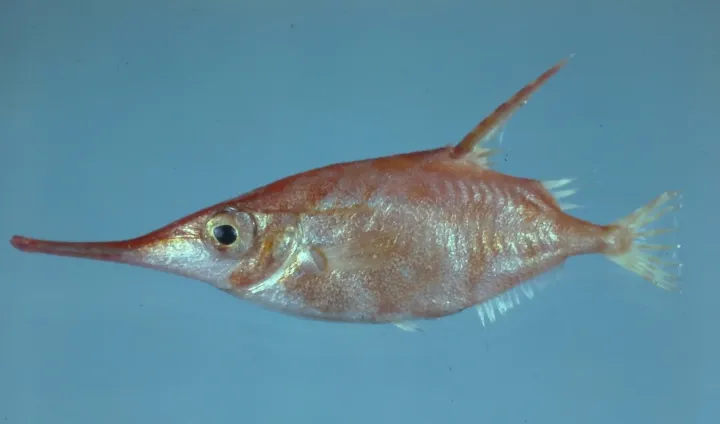
Description
How to identify
The longspine snipefish (Macroramphosus scolopax) is a marine fish species belonging to the family Macroramphosidae within the order Syngnathiformes.
Taxonomically, it is classified as a member of the class Actinopterygii, meaning it is a ray-finned fish, which is strictly aquatic and poses no threat to terrestrial vegetation.
This species is easily recognized by its extremely compressed body, a prominent snout shaped like a bird's beak, and a long, sharp spine on its first dorsal fin.
It typically inhabits deeper waters, often found near the seabed or in the water column in temperate and tropical zones of the Atlantic, Indian, and Pacific Oceans.
Any confusion regarding its status as a plant pest is purely artificial and stems from naming similarities or linguistic misinterpretations of the term "snipefish" in different contexts.
What it damages
The longspine snipefish is a carnivorous marine animal, feeding on small benthic crustaceans, plankton, and tiny marine invertebrates found on the ocean floor.
It has no mechanism to feed on land-based crops, nor can it thrive in any agricultural soil or climate, making the concept of it being a pest entirely impossible.
Farmers and agronomists do not need to implement any monitoring or control measures for this species, as it has no interaction with agricultural systems or garden plants.
Documentation regarding agricultural pests does not include this marine fish, and it should not be considered a threat to any crop cultivation or greenhouse production.
When reviewing literature on plant protection, readers should be aware that Macroramphosus scolopax remains purely a subject of interest for marine biology and fisheries science.
Taxonomy
- Latin name
- Macroramphosus scolopax
- Family
- Centriscidae
- EPPO code
- MRAMSC
Discussion
No discussions yet — be the first.