
Iris borer
Macronoctua onusta
Description
How to identify
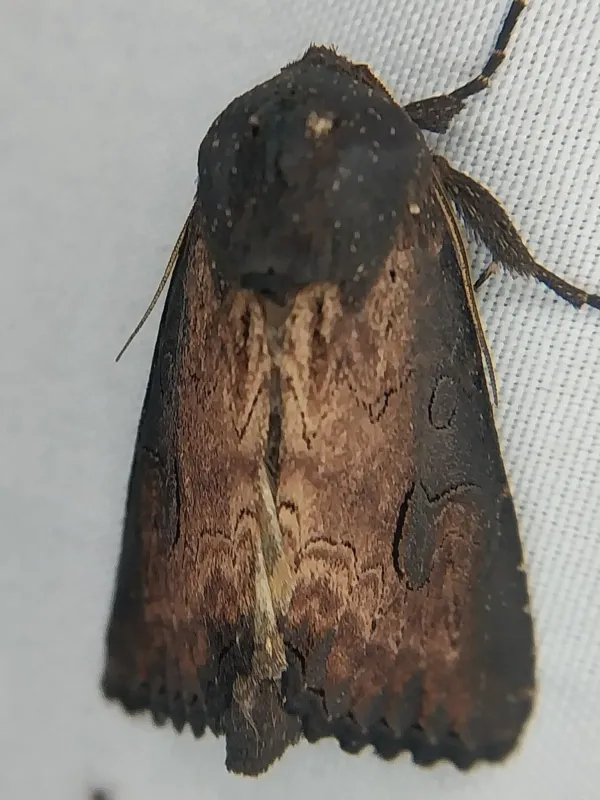
The iris borer (Macronoctua onusta) is a significant moth pest specifically targeting iris plants. The adult moth has a wingspan of approximately 50 mm, with mottled brown forewings that provide excellent camouflage against garden soil and debris.
The larval stage is the primary cause of plant damage. These caterpillars grow up to 50 mm in length and are characterized by a smooth, pinkish or brownish body with a distinctive dark head, making them relatively easy to spot once discovered.
This species follows a single annual life cycle. They overwinter in the egg stage, with females laying eggs in late summer or autumn on the underside of old iris leaves and among the dry foliage near the base of the plant.
Upon hatching in the spring, the young larvae begin their life cycle by feeding on the tender young leaves of the iris. They tunnel through the foliage, leaving visible feeding tracks, before gradually migrating downwards towards the rhizome.
Pupation occurs either in the soil or occasionally within the hollowed-out rhizome. The pupa is a dark brown, cylindrical form that remains dormant until the moth emerges in late summer to continue the cycle.
##damage##Iris borers primarily infest various species of bearded and beardless irises. While they are highly host-specific, a severe infestation can devastate an entire collection of irises in a garden setting.
Initial damage is restricted to the leaves, where larvae create narrow mines. These feeding sites are often overlooked until the leaves start to look ragged, discolored, or stunted, which is a symptom of internal tissue consumption.
The most destructive phase occurs when the larvae reach the rhizome. By hollowing out the rootstock, they compromise the plant's ability to absorb water and nutrients, eventually causing the entire plant to collapse and wilt.
Borer activity is frequently accompanied by secondary bacterial soft rot. The entry holes created by the larvae allow soil-borne pathogens to enter the rhizome, turning healthy tissue into a foul-smelling, mushy consistency.
In cases of heavy infestation, the rhizomes may be completely consumed. This often results in the permanent loss of the plant, as there is insufficient healthy tissue left for regeneration or recovery.
##signs##One of the earliest signs is the appearance of tiny, translucent "windows" or tracks on the leaves in early spring. These are caused by young larvae feeding on the interior tissues before they descend into the rhizome.
The presence of fine, dark, sawdust-like frass (excrement) around the base of the leaves is a definitive indicator of an active iris borer infestation. This debris is often found tucked into the leaf axils.
During mid-summer, a distinct, unpleasant odor of rotting vegetation often signals that the rhizome has been compromised. If leaves show yellowing and easily pull away from the root, the plant has likely suffered severe borer damage.
Visual inspection of the rhizome will show entry holes, which appear as small, circular, or irregular openings. Probing these holes usually reveals the presence of the caterpillar inside the root chamber.
Wilted foliage that does not recover in the evening is a critical sign of internal root damage. By the time this symptom appears, the caterpillar has often completed its growth, and the rhizome has sustained significant structural loss.
##control##Sanitation is the cornerstone of iris borer control. Clearing all dead leaves and plant debris from the garden in late autumn or early spring removes the overwintering eggs and breaks the life cycle.
Chemical control should be timed to coincide with the period of larval hatching in the spring. Systemic insecticides are most effective when applied before the larvae have the opportunity to tunnel deep into the rhizome.
Mechanical control involves manually removing larvae from infested rhizomes. If the damage is extensive, it is often better to dig up the plant, discard the mushy parts, and replant the healthy segments after disinfection.
Proper garden maintenance, including regular division of iris clumps, reduces the density of plants and makes it harder for borers to spread from one rhizome to another, significantly lowering overall infestation rates.
- Use pheromone traps for monitoring moth activity.
- Keep the area around irises free of tall weeds.
- Apply preventative fungicides if bacterial rot is detected.
- Regularly divide mature iris clumps every 3-4 years.
Taxonomy
- Latin name
- Macronoctua onusta
- Order
- Lepidoptera (butterflies)
- Family
- Noctuidae
- EPPO code
- MACNON
Discussion
No discussions yet — be the first.