
Macdunnoughia
Macdunnoughia
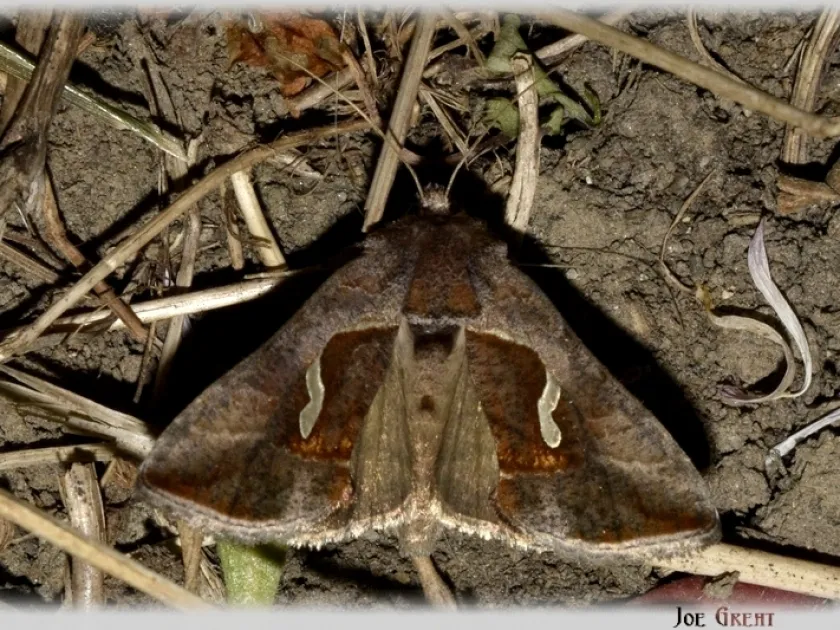
Description
How to identify
Macdunnoughia is a genus of moths belonging to the Noctuidae family, which includes several agricultural pests known as silver Y moths.
The adult moth is characterized by a wingspan of roughly 30-35 mm and distinctive metallic markings on the forewings, resembling Greek letters.
The larvae are typically green with longitudinal stripes, often featuring a white or yellowish line running along the side of the body.
These caterpillars move in a characteristic looping fashion because they lack some of the prolegs found in other moth larvae species.
The pupae are typically found within a fragile silk cocoon attached to the underside of leaves or hidden among weeds.
What it damages
Macdunnoughia larvae are polyphagous, feeding on a diverse range of host plants including many economically important crops.
They frequently target vegetables such as tomatoes, potatoes, and various legumes, consuming significant amounts of leaf tissue.
Young larvae initially graze on the leaf surface, creating small windows, while older larvae consume entire leaves, leaving only veins.
Infestations can drastically reduce the photosynthetic capacity of the plant, leading to stunted growth and reduced fruit yield.
High population densities can lead to total defoliation of seedlings, potentially causing complete crop failure in severe cases.
When it appears
The moth species usually has multiple generations per year, with adults emerging from late spring through the summer months.
The peak activity of the larvae often coincides with the mid-to-late summer period when crops are in their most active vegetative state.
Winter survival is typically achieved through diapause, where the insect overwinters as a larva or pupa buried in the soil or protected by debris.
Weather patterns heavily influence the emergence and life cycle speed, with warmer temperatures accelerating development cycles.
Monitoring adult moth flights using light or pheromone traps is essential for predicting caterpillar activity and timing interventions.
Signs of infestation
The presence of irregular, ragged holes in the leaves is a primary indicator of larval feeding activity within the field.
Frass (larval droppings) left on the foliage is a distinct sign that caterpillars are feeding nearby and should be located.
Larvae are often nocturnal or cryptic during the day, so inspecting the undersides of leaves during early morning is recommended.
Severe infestations often result in plants that look "skeletonized," with only the tough vascular structure of the leaves remaining.
Sticky residue or slight webbing near the feeding sites may occasionally be visible, especially on more sensitive crops.
Control measures
Cultural control strategies, such as weed management, are crucial because weeds often serve as the primary host plants during early infestation stages.
Mechanical cultivation of the soil post-harvest helps expose and destroy pupae, significantly reducing the population for the next season.
Biological control agents, including parasitic wasps and bacterial sprays, are effective tools for managing larvae without harming beneficial insects.
Chemical control should be employed only when monitoring reveals that populations have exceeded the established economic threshold for the specific crop.
- Regular field scouting programs.
- Use of pheromone lures for timing.
- Integrated pest management (IPM) practices.
Taxonomy
- Latin name
- Macdunnoughia
- Order
- Lepidoptera (butterflies)
- Family
- Noctuidae
- EPPO code
- MCDUSP
Discussion
No discussions yet — be the first.