
Fungus gnat
Lycoriella castanescens
Description
How to identify
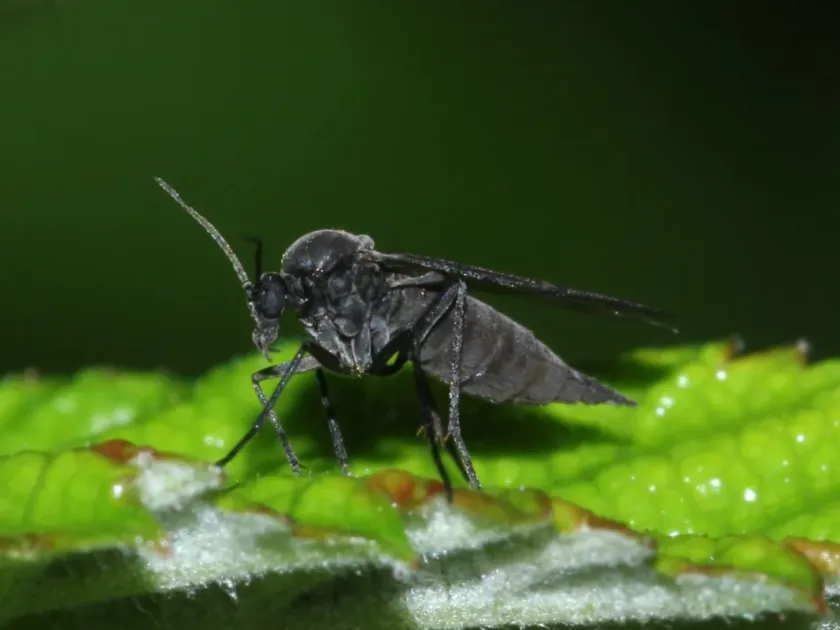
The fungus gnat (Lycoriella castanescens) is a small insect belonging to the family Sciaridae in the order Diptera. Adults are slender black or dark grey flies, 2–4 mm long, with transparent wings and long antennae.
Larvae are white or translucent with a distinct, shiny black head capsule. They typically reach 5–7 mm in length and thrive in moist environments rich in organic matter.
The life cycle is highly temperature-dependent; at 20–25°C, the complete development from egg to adult takes approximately 3–4 weeks.
Females lay up to 200 eggs in soil or substrate that contains decaying organic material or fungal mycelium, which provides a food source for the hatching larvae.
While adults do not damage plants, their presence is a reliable indicator of excessive soil moisture and decaying matter, which are necessary for the pest's reproduction.
What it damages
The primary damage is caused by larvae that reside in the soil and feed on the roots of young plants, seedlings, and the mycelium of cultivated mushrooms like oysters and button mushrooms.
Infested seedlings often show stunted growth, yellowing leaves, and reduced vigor; severe infestations can destroy the entire root system, leading to plant death.
In mushroom cultivation, larvae tunnel into the stalks and caps of mushrooms, rendering the crop unmarketable and promoting the growth of secondary bacterial rots.
For potted ornamental plants, larval feeding on delicate root hairs disrupts water and nutrient uptake, making the plants vulnerable to environmental stress.
Fungus gnats also act as vectors for various plant pathogens, including Fusarium, Pythium, and Verticillium, which can cause systemic infections in greenhouse crops.
Signs of infestation
The most common sign of an infestation is the appearance of small, dark flies hovering around plants or over the soil surface, particularly during watering or cultivation.
Heavy infestations may result in visible movement on the soil surface, where thousands of larvae can congregate in the top layers of moist substrate.
Young plants may suddenly wilt without obvious signs of drought, indicating that the root system has been severely compromised by larval activity.
Presence of chewed-out areas on the base of stems or in the root collar zone is a hallmark of Lycoriella castanescens larval feeding.
The use of yellow sticky traps provides an early warning system; high counts of adult gnats on these traps indicate the need for immediate control measures.
Control measures
The most effective cultural practice is the management of soil moisture. Allowing the top layer of substrate to dry out between waterings significantly hinders larval survival.
Growers should focus on using sterile potting mixes and avoiding the use of non-decomposed organic fertilizers, which serve as perfect breeding sites for the gnats.
- Deployment of yellow sticky traps to capture adults and reduce the breeding population.
- Application of biological control agents such as Bacillus thuringiensis or entomopathogenic nematodes like Steinernema feltiae.
- Systemic insecticide applications applied as a soil drench for severe infestations in non-edible crops.
Post-harvest sanitation of grow rooms and containers is crucial in mushroom production to eliminate residual populations of the pest.
Applying a layer of coarse sand or perlite on the soil surface creates a dry barrier that discourages female gnats from laying eggs in the moist substrate beneath.
Taxonomy
- Latin name
- Lycoriella castanescens
- Order
- Diptera (flies)
- Family
- Sciaridae
- EPPO code
- LYCLCA
Discussion
No discussions yet — be the first.