
Dark-winged fungus gnat
Lycoriella auripila
Description
How to identify
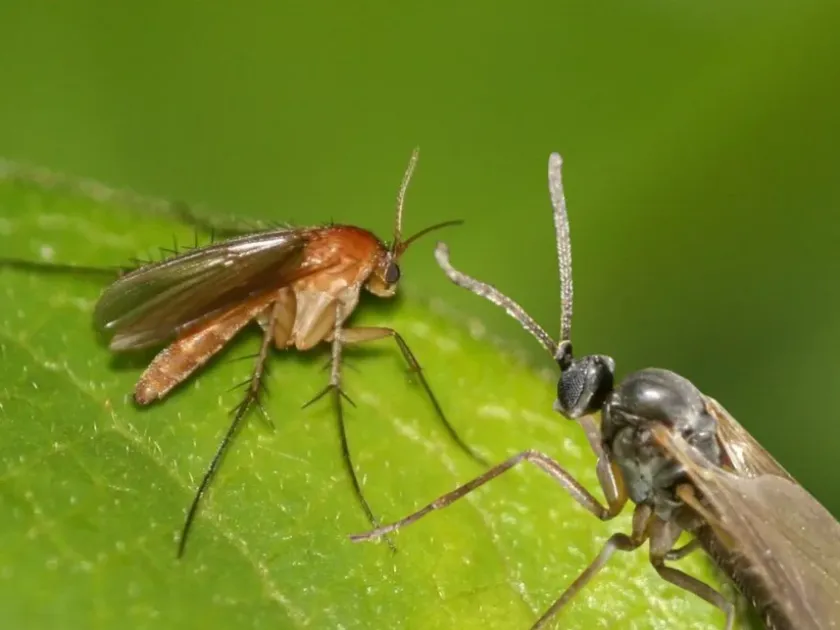
The dark-winged fungus gnat (Lycoriella auripila) is a member of the order Diptera and the family Sciaridae. Adults are small, fragile flies, approximately 3–4 mm long, with dark bodies and clear wings.
The larvae are easily identified by their translucent, legless bodies and distinct, shiny black head capsules, reaching lengths of up to 5–7 mm.
Larvae primarily reside in the top layer of soil, feeding on organic matter, fungi, and decaying plant tissues, but they will attack healthy roots if food sources are limited.
These pests reproduce rapidly in greenhouses and indoor settings, benefiting significantly from high soil moisture and warm temperatures.
Adult gnats do not damage plants directly but act as vectors for harmful soil-borne pathogens, including Fusarium and Pythium, as well as parasitic mites.
What it damages
Fungus gnats pose a serious threat to young seedlings and transplants in greenhouses, nurseries, and indoor environments.
Larvae feed on delicate root hairs and the root system, causing significant growth retardation, nutrient deficiencies, and eventual wilting of seedlings.
Plants prone to moist soil conditions, such as tomatoes, cucumbers, and many tropical houseplants, are particularly vulnerable to infestation.
Root damage caused by larvae facilitates the entry of fungal diseases, which can lead to rapid collapse of the plant vascular system.
In cases of heavy infestation, the entire root system may be consumed, leading to the total loss of the crop within a very short period.
When it appears
Fungus gnats are active throughout the year in controlled indoor environments, such as greenhouses and residential homes with consistent temperatures.
Activity levels typically peak during winter and spring, coinciding with intensive seedling production and frequent watering regimes.
Optimal environmental conditions for development are temperatures ranging from +18°C to +25°C and high relative humidity in the growing medium.
The life cycle from egg to adult takes approximately 3 to 4 weeks under ideal conditions, allowing for multiple overlapping generations.
Infestations are frequently introduced through contaminated potting media or by importing new plants already hosting the eggs or larvae.
Signs of infestation
The most common sign of an infestation is the presence of small, dark flies buzzing around the soil surface, particularly after watering.
Plants may show unexplained yellowing, leaf drop, and stunted development despite maintaining consistent irrigation and light levels.
Careful observation of the topsoil surface or a light excavation of the root zone can often reveal the presence of clear, worm-like larvae.
Presence of localized mold growth or a slimy residue on the soil surface often correlates with high moisture levels that encourage gnat breeding.
- Adult gnats flying around plant pots.
- Sudden wilting or stunted growth in young seedlings.
- Visible larvae on the soil surface after disturbance.
Control measures
Implementing proper irrigation management is crucial; always allow the top inch of soil to dry out between waterings to disrupt the larval cycle.
Yellow sticky traps should be placed at the soil level to monitor adult populations and physically reduce their numbers.
Biological control agents, such as predatory nematodes or bacterial formulations (e.g., Bti), are highly effective against larvae when applied to the soil.
For severe infestations, systemic soil-applied insecticides can be used according to the label requirements for indoor or greenhouse crops.
Always sterilize new potting soil or use pasteurized substrates to prevent the initial introduction of eggs into your nursery or greenhouse.
Taxonomy
- Latin name
- Lycoriella auripila
- Order
- Diptera (flies)
- Family
- Sciaridae
- EPPO code
- SCIAAU
Discussion
No discussions yet — be the first.