
Lycophotia
Lycophotia
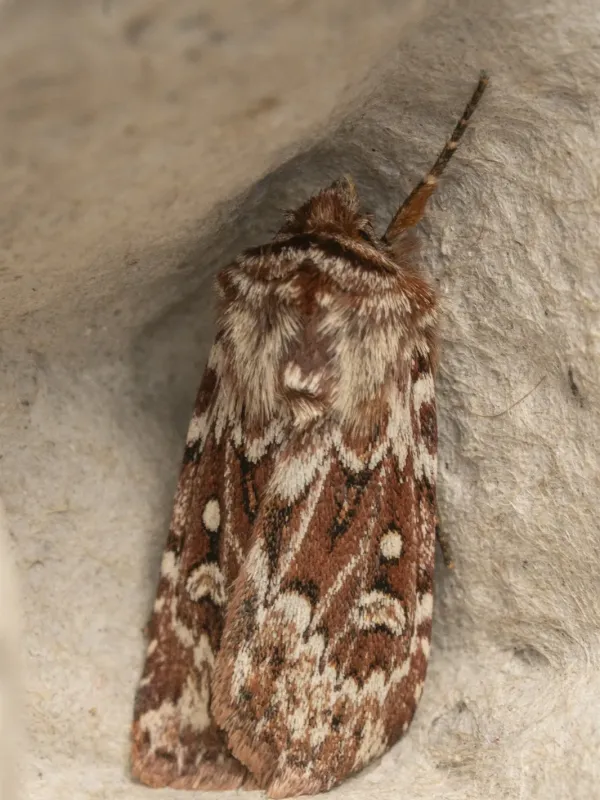
Description
How to identify
Lycophotia belongs to the Noctuidae family, order Lepidoptera. These are medium-sized nocturnal moths that possess a typical appearance for the Noctuinae subfamily, with developed hair-like scales on their thorax and wings.
Adults usually have a greyish-brown or brownish coloration on their forewings with an indistinct pattern, which helps them camouflage against tree bark or dry vegetation.
The larvae, known as cutworms, lead a secretive lifestyle. They have a dense, robust body, often colored in earthy tones, which makes them nearly invisible in the top layer of the soil.
The insect goes through a complete metamorphosis cycle: egg, larva (caterpillar), pupa, and adult (imago). Pupation occurs primarily in the soil, within dense earthen cocoons.
An important identification feature is the behavior of the caterpillars, which curl into a tight ring and freeze when threatened, a typical defense reaction for this family.
What it damages
This pest is a polyphage and causes significant damage to a wide range of agricultural crops. Cereals, vegetables, and industrial crops are particularly vulnerable during their early developmental stages.
The greatest damage is caused by young to mid-stage larvae, which actively feed on leaves at night and can completely destroy seedlings during mass outbreaks.
The list of crops susceptible to Lycophotia attacks includes various Brassica species, legumes, and many grasses. The pest can feed on both cultivated plants and weeds.
Damage to the root collar is an extremely dangerous factor, as it leads to rapid wilting and death of young plants during the spring period.
The damage is exacerbated by the larvae's ability to sever stems at the soil surface, turning a field into a sparse array of plants with patches that require replanting.
When it appears
The flight of the moths typically begins in the spring-summer period, depending on regional climatic conditions. Adults are mainly active during dark hours and are attracted to artificial light.
The peak destructive period for larvae occurs in spring and early summer when young plants are most vulnerable to damage and the food base is at its most abundant.
Several generations may develop throughout the season, but the most massive and devastating population spikes are often observed right after the larvae emerge from hibernation.
Soil temperature plays a key role in pest activity: a prolonged cold spring can delay development, whereas warm weather promotes accelerated growth of the caterpillars.
In the autumn period, the population prepares for hibernation, with larvae often continuing to feed until the onset of persistent freezing temperatures.
Signs of infestation
The first sign of infestation is the appearance of "bald patches" in the field, where seedlings suddenly collapse or disappear entirely due to the destruction of their aerial parts.
When inspecting plants in the early morning, one can notice rough feeding on the leaf blades, where the edges appear irregular and nibbled.
A characteristic sign of caterpillar presence is the accumulation of excrement on the soil surface around damaged plants and directly on the foliage.
One can detect the pest during the day by digging up the soil in the root zone of a damaged plant, where the caterpillars hide from direct sunlight.
Yellowing or sudden wilting of individual plants against the background of the total crop mass also serves as a signal for the need for detailed phytosanitary inspection.
Control measures
Effective protection begins with proper agricultural practices, including deep autumn plowing, which destroys hibernation sites and brings pupae to the surface to be consumed by birds.
It is essential to timely remove weeds, which serve as a reservoir for larval feeding before the emergence of cultivated crop seedlings.
During periods of mass outbreaks, the use of stomach-contact insecticides applied during the evening hours is justified for maximum effectiveness.
- Monitoring using pheromone traps to determine the start of egg-laying periods.
- The use of biological preparations based on bacteria (e.g., Bacillus thuringiensis).
- Strict adherence to crop rotation to prevent the accumulation of the pest in the soil.
Chemical treatment must be carried out taking into account environmental regulations, avoiding harm to beneficial entomophages and bees during the flowering period of surrounding crops.
Taxonomy
- Latin name
- Lycophotia
- Order
- Lepidoptera (butterflies)
- Family
- Noctuidae
- EPPO code
- LYCOSP
Discussion
No discussions yet — be the first.