
Flounced rustic
Luperina testacea
Description
How to identify
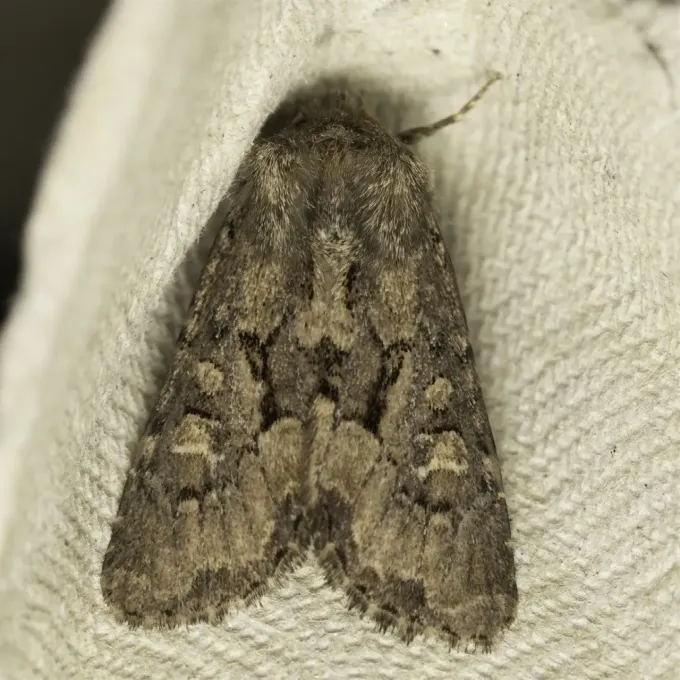
The Flounced rustic (Luperina testacea) is a moth belonging to the Noctuidae family. The adult wingspan typically ranges from 30 to 40 mm, with forewings displaying mottled brown or ochre patterns that provide excellent camouflage against withered vegetation.
The larvae are typically pale, grayish, or yellowish with dark, sclerotized tubercles on their segments. Their heads are a distinct brown color, facilitating their primary feeding activity, which involves tunneling into the base of plant stems.
What it damages
This species is recognized as a pest primarily affecting cereal crops, including wheat, barley, and various wild grasses. The larvae live underground or at the base of the plant, feeding on roots and the lower stem sections.
The damage caused by larvae results in the cutting of the plant at the soil level. In agricultural settings, this can lead to significant thinning of crops and the creation of bare patches in the field, which reduces total yield.
When it appears
The flight period for adult moths occurs from late summer into early autumn, specifically during August and September. Mating occurs shortly after emergence, followed by oviposition on host plant bases.
The species overwinters in the larval stage deep within the soil. As temperatures rise in spring, the larvae resume feeding, growing rapidly until they pupate in the soil during the early summer months.
Signs of infestation
Initial signs of infestation appear as wilting in the center of the plant or the sudden browning of young shoots. Because the larvae feed under the soil surface, the damage is often discovered only after the plant has been significantly weakened.
By pulling on a wilted plant, a farmer will find the stem severed just below the crown. Checking the soil around these plants will reveal signs of tunneling activity, which is a definitive indicator of root-feeding pests like the Flounced rustic.
Control measures
Integrated pest management is crucial for controlling this moth. Deep autumn plowing is a highly recommended practice to disrupt the soil environment where larvae overwinter and subsequently emerge.
- Apply approved insecticides during the early larval development stage if populations exceed economic thresholds.
- Maintain weed-free field margins to eliminate secondary host plants.
- Monitor moth activity using pheromone traps to time any potential chemical interventions.
Taxonomy
- Latin name
- Luperina testacea
- Order
- Lepidoptera (butterflies)
- Family
- Noctuidae
- EPPO code
- LUPETE
Discussion
No discussions yet — be the first.