
Lichen moth
Lithosia lacteola
Description
How to identify
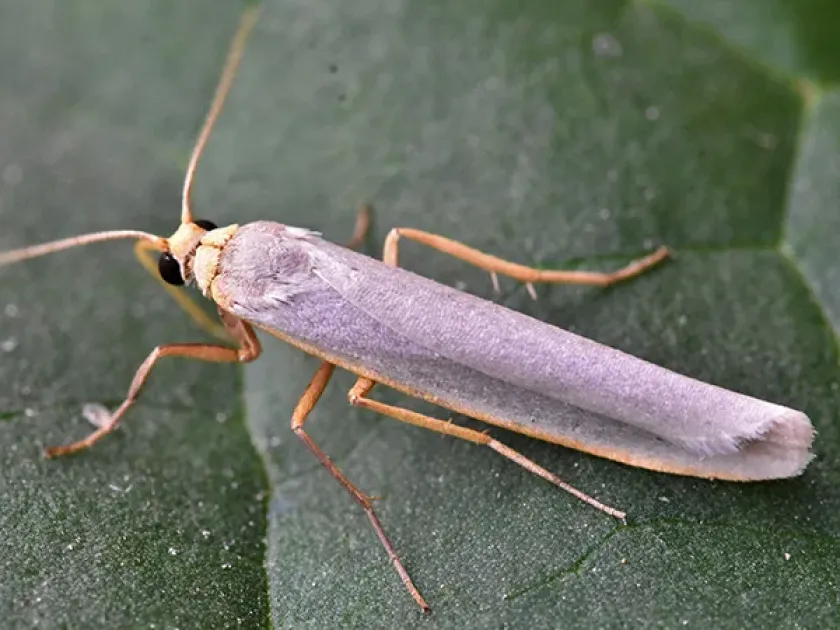
The lichen moth belongs to the family Erebidae, subfamily Lithosiinae. Adult specimens are small moths with a characteristic wing coloration ranging from whitish-cream to light yellow.
The larvae of this species possess a specific morphology: their bodies are covered with dense hairs gathered in tufts, which is a typical defensive adaptation for members of this moth group.
The insect undergoes complete metamorphosis, passing through the stages of egg, larva (caterpillar), pupa, and imago. The adult moths are primarily nocturnal.
The primary habitat includes woody areas where lichens, which serve as the main food source for the larvae throughout their life, are abundant.
The species is found in temperate latitudes, preferring humid forest zones and old gardens where tree bark is heavily covered with epiphytic lichens.
What it damages
Unlike classic agricultural pests, the lichen moth is a specialized phytophage that feeds on lichens growing on the trunks and branches of trees.
The direct damage to fruit or ornamental trees is minimal, as caterpillars do not harm the bark tissue, leaves, or fruit, feeding exclusively on lichen thalli.
However, mass reproduction of the pest can lead to the depletion of the natural bark microflora, which indirectly affects the ecological balance of the garden.
The presence of a large amount of lichen on trees often indicates a weakened state of the plant, which may require agricultural intervention.
In rare cases, in the absence of primary food, larvae may slightly gnaw the epidermis of young shoots, but this is not typical behavior for this species.
When it appears
The activity of adult lichen moths is observed in the summer, typically from June to August, when the moths fly and mate.
Eggs are laid by females on the surface of tree bark or directly on the substrate where larvae will develop after hatching.
Caterpillars are active throughout the warm season and continue feeding until the onset of autumn frosts, after which they enter hibernation in hidden spots.
Hibernation usually occurs in the larval stage within bark cracks, under fallen leaves, or in other protected natural shelters.
The spring emergence of larvae is synchronized with the beginning of the plant vegetation period and the resumption of lichen growth.
Signs of infestation
The main sign of this pest's presence is the appearance of empty patches on tree bark where the lichen cover has been partially or completely consumed.
The presence of specific hairy caterpillars on the surface of trunks during the summer serves as direct evidence of the insect's activity.
In areas where larvae congregate, one can notice their excrement and remnants of cocoons, which they spin before pupating in sheltered places.
Damaged bark areas often appear "cleaned," which contrasts sharply with lichen-covered neighboring branches on the same tree.
The presence of a large number of moths in the evening near light sources in the garden may indicate a high population density in the area.
Control measures
An effective control method is the mechanical cleaning of trunks and main branches from dead bark and lichens using stiff brushes.
Regular sanitary pruning of trees is recommended to ensure better crown ventilation, which prevents the intensive growth of lichens.
Applying lime wash (whitewashing trunks) in early spring creates unfavorable conditions for larval activity and prevents their development.
Chemical insecticide treatments against the lichen moth are generally unnecessary, as it does not cause significant crop damage and is not a mass pest.
- Ensuring optimal tree nutrition to enhance plant immunity.
- Regular inspection of plantings to identify infestation clusters.
- Keeping the area around the tree trunks free of plant debris.
Discussion
No discussions yet — be the first.