
Pale Pinion
Lithophane ornitopus
Description
How to identify
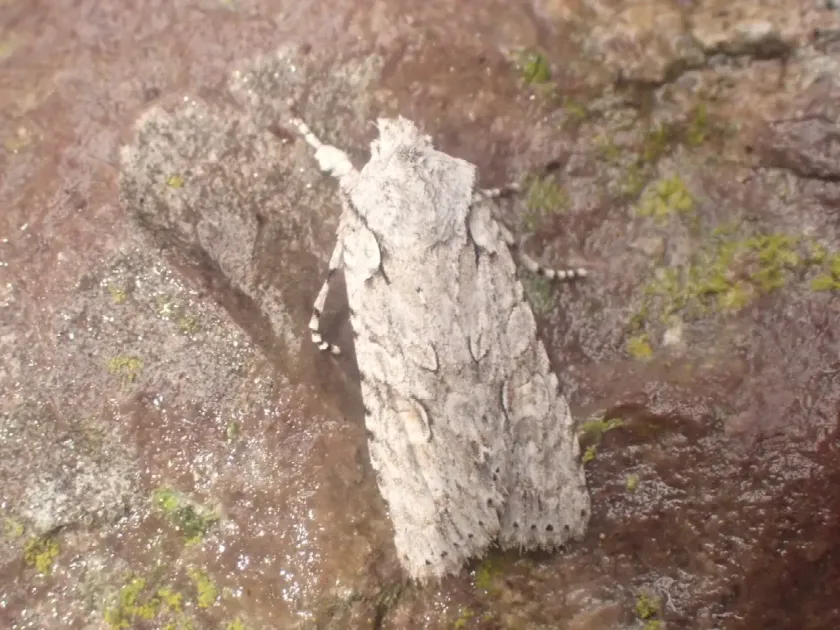
The Pale Pinion (Lithophane ornitopus) is a moth species belonging to the family Noctuidae, characterized by its cryptic coloration.
Adult moths have a wingspan of approximately 35-40 mm, with forewings that perfectly mimic the texture and color of oak bark.
The larvae are cylindrical and possess a green color scheme that aids in concealment among the leaves of host trees.
This species is nocturnal, spending the daylight hours resting in crevices or camouflaged against wood surfaces.
It belongs to the order Lepidoptera, which includes a wide variety of moths known for their diverse life cycles and interactions with plants.
What it damages
The primary food source for Pale Pinion larvae is the foliage of oak trees (Quercus), hence its common name association.
Larvae feed on developing leaves, causing irregular holes and, in cases of high population density, significant defoliation.
Feeding damage can lead to a reduction in the plant's overall vigor and can affect the growth rate of young oak saplings.
Although it prefers oaks, the larvae may occasionally be found feeding on other deciduous trees within its habitat.
Severe infestations can lead to weakened tree health, making the plants more susceptible to secondary stressors such as disease.
When it appears
The species overwinter as adults, emerging from hibernation early in the spring to mate and lay eggs.
The eggs hatch as the buds of the host trees begin to burst, providing fresh food for the emerging larvae.
Larval development typically occurs during the late spring, spanning from May through June in most regions.
Pupation takes place in the soil or within the leaf litter, where the insect remains until the later stages of summer.
The next generation of adults emerges in the autumn, remaining active until they seek hibernation sites for the winter.
Signs of infestation
The appearance of irregular holes in the newly opened leaves is the most common early indicator of larval activity.
The presence of larval frass (droppings) on the leaves or the ground beneath the tree indicates active feeding.
Close inspection of the tree branches can reveal the larvae themselves, though they are highly adept at camouflaging.
In cases of significant damage, the canopy may look thin, and affected leaves might show signs of yellowing or drying.
Monitoring the undersides of leaves and twigs during the spring months is the most effective way to detect the presence of the larvae.
Control measures
Biological control, such as encouraging local bird populations or predatory insects, can effectively manage low-density populations.
Chemical control via insecticides should be reserved for severe outbreaks where tree health is at significant risk.
Removing leaf litter and disturbing the soil around the base of the trees can disrupt the pupation cycle of the moth.
Regular tree health monitoring is essential to ensure that treatments are applied at the most vulnerable stage of the pest's lifecycle.
Integrating cultural practices, such as proper watering and fertilizing, helps trees withstand the stress caused by moderate larval feeding.
Taxonomy
- Latin name
- Lithophane ornitopus
- Order
- Lepidoptera (butterflies)
- Family
- Noctuidae
- EPPO code
- LITPOR
Discussion
No discussions yet — be the first.