
Leautier's Pinion
Lithophane leautieri
Description
How to identify
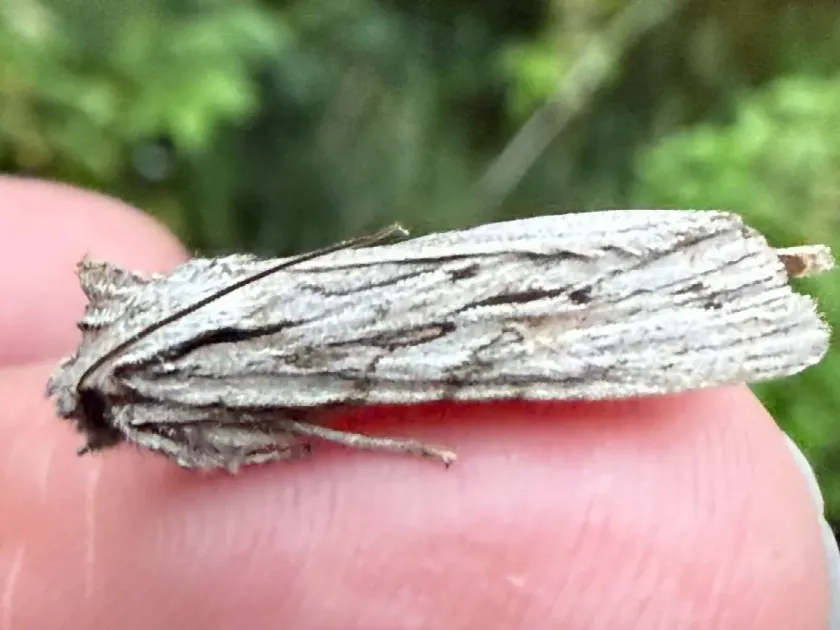
Leautier's Pinion (Lithophane leautieri) is a moth belonging to the family Noctuidae. The adult moth features a cryptically colored pattern that blends seamlessly with the bark of host trees.
The wingspan of the adult insect typically ranges between 35 and 40 millimeters. The overall color is a subtle blend of greys and browns, providing excellent camouflage.
The larvae, or caterpillars, undergo multiple stages of development. Their appearance evolves, typically showing longitudinal pale stripes on a green or brown background.
Mature caterpillars can reach up to 40 millimeters in length and possess strong mandibles capable of chewing through tough, resinous needles.
These larvae are nocturnal by nature, spending their daylight hours hidden deep within the foliage of the host tree to avoid detection by predators.
What it damages
The primary hosts for this moth are members of the Cupressaceae family, with a notable preference for the Monterey cypress (Cupressus macrocarpa).
Beyond cypresses, the caterpillars also cause damage to other ornamental conifers, including various species of junipers and arborvitae found in landscapes.
Feeding larvae consume both young shoots and mature foliage, which leads to thinning of the crown and can severely affect the aesthetic value of the trees.
Heavy infestations lead to significant defoliation, which stresses the tree, inhibits growth, and may leave the plant vulnerable to secondary pests and fungal diseases.
In cases of repeated or severe infestation, parts of the tree may experience dieback, resulting in bare branches and a permanent loss of foliage density.
When it appears
Adult moths are typically active during the autumn months, usually appearing in September and October, when they mate and lay their eggs on host plants.
The eggs overwinter, attached to the bark or foliage, demonstrating a high tolerance for winter temperatures until the following spring.
Larval emergence usually occurs in April or May, coinciding with the flush of new growth on the host coniferous trees, providing an immediate food source.
The caterpillars feed actively for several weeks during late spring and early summer before descending to the soil or leaf litter to pupate.
Pupation takes place throughout the summer months, allowing the species to complete its annual cycle and emerge as adults in the autumn.
Signs of infestation
The presence of fine, granular frass (excrement) scattered at the base of the tree or caught in the webbing between branches is a key indicator of infestation.
Visible damage includes notched or missing needles, with shoots looking stripped or ragged, particularly at the tips where new growth is softest.
Fine silk threads produced by the larvae may be visible on the branches, which the caterpillars use to navigate and secure themselves while feeding.
Affected trees may show premature yellowing or browning of foliage, particularly in sections where the larvae have concentrated their feeding efforts.
During twilight, careful inspection of the foliage might reveal the caterpillars feeding, as they become more active when the light begins to fade.
Control measures
Chemical control is most effective when applied early in the spring as soon as the young larvae emerge and begin feeding on the new growth.
Recommended treatments include insecticides suitable for ornamental trees, applied with thorough coverage of the foliage to ensure contact and ingestion.
Biological control using formulations containing Bacillus thuringiensis is an environmentally friendly option that effectively targets the larvae while sparing beneficial insects.
Maintaining tree vigor through proper irrigation and balanced fertilization helps the tree better withstand feeding damage and recover more quickly.
- Perform regular visual inspections during the spring growth period.
- Prune and dispose of heavily infested or dead branches to reduce population numbers.
- Apply appropriate insecticide treatments at the first sign of larval activity.
Taxonomy
- Latin name
- Lithophane leautieri
- Order
- Lepidoptera (butterflies)
- Family
- Noctuidae
- EPPO code
- LITPLE
Discussion
No discussions yet — be the first.