
Dark gray sallow
Lithophane furcifera
Description
How to identify
The dark gray sallow (Lithophane furcifera) is a moth species belonging to the family Noctuidae. It is widely distributed across temperate regions and is known for its specialized larval feeding habits on deciduous trees.
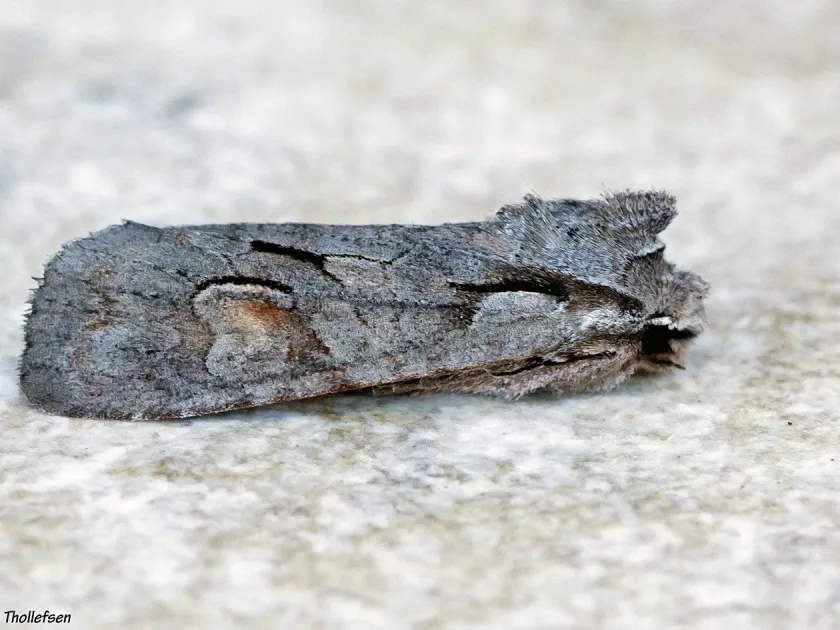
Adult moths feature a wingspan typically ranging between 35 and 45 mm. Their forewings are cryptically colored in shades of dark gray and black, resembling the bark of the trees they frequent, which provides excellent camouflage.
The larvae, or caterpillars, are cylindrical and possess a robust build. Their coloration is adaptive, often blending in with the foliage or twigs of the host plant, making them difficult to spot during the day.
The life cycle encompasses a complete metamorphosis, including egg, larval, pupal, and adult stages. A key biological trait is that adults often overwinter in protected sites, allowing them to emerge and reproduce very early in the spring.
Like many noctuids, this moth is nocturnal. The adults are attracted to light, but their presence in a garden or forest is often only detected through the damage caused by their offspring rather than direct observation of the moths themselves.
What it damages
This species is primarily a pest of deciduous woody plants. Common host trees include species such as birch (Betula), alder (Alnus), willow (Salix), and various fruit trees found in orchards.
The damage is caused by the larval stage. Upon hatching, the young caterpillars immediately seek out buds to feed on, often preventing the normal development of new spring shoots.
As the larvae mature, their feeding habits change. They progress from skeletonizing leaves, where they consume only the soft tissue between veins, to devouring entire leaves, which can result in significant foliage loss.
Heavy infestations can lead to partial or complete defoliation of branches. While a healthy, mature tree can usually withstand such damage, it significantly impacts the tree's growth rate and energy reserves.
Repeated defoliation over several seasons can weaken a tree, making it susceptible to secondary pests, such as wood-boring insects, and various fungal infections that thrive on stressed hosts.
When it appears
Adults emerge from hibernation extremely early in the year, often in March or April, sometimes while temperatures are still quite cool. This allows them to synchronize their activity with the earliest stages of host plant budding.
Eggs are laid individually or in small clusters on twigs or near buds. This precise timing ensures that the emerging larvae have an immediate, high-energy food source as soon as they hatch.
Larval development typically occurs from late spring through early summer. During this time, caterpillars are highly active, feeding intensively to store the nutrients required for pupation.
Pupation takes place in the soil or within the leaf litter beneath the host tree. The pupa remains in this state throughout the summer, undergoing metamorphosis before emerging as the second generation of adults.
A second, partial generation may occur later in the summer. While the spring brood is generally the most noticeable in terms of foliage damage, the later generation contributes to the overall population density of the area.
Signs of infestation
The first sign of an infestation is the presence of damaged or hollowed-out buds in early spring, which fail to open properly or appear stunted.
The presence of frass (caterpillar droppings) on the leaves or the ground beneath the canopy is a clear indicator that feeding larvae are present in the branches above.
Leaf damage, characterized by irregular holes or skeletonized sections where the chlorophyll has been eaten, is a visible indicator of the larvae's progress during the late spring months.
Rolled or tied leaves are often observed, as the caterpillars may use silk to create a small shelter for themselves during the heat of the day to avoid predators and desiccation.
Visual observation of the caterpillars themselves is possible by inspecting the undersides of leaves or the twigs during the evening hours, when the larvae are actively feeding.
Control measures
Chemical control is most effective when applied early in the spring, specifically targeting the young larvae as they emerge from the eggs and begin their initial feeding.
Biological control methods, such as the application of Bacillus thuringiensis, are highly recommended. This bacterium targets specific moth larvae without causing harm to beneficial insects or the surrounding ecosystem.
Cultural practices include the pruning and removal of heavily infested branches to reduce the total population of larvae before they reach maturity and drop to the ground to pupate.
Encouraging natural predators is an excellent long-term strategy. Providing nesting boxes for insectivorous birds can significantly help manage the caterpillar population during the critical spring period.
Sticky bands wrapped around the trunks of young or highly valued trees can act as a mechanical barrier, preventing larvae from moving between different parts of the tree and simplifying manual collection.
Taxonomy
- Latin name
- Lithophane furcifera
- Order
- Lepidoptera (butterflies)
- Family
- Noctuidae
- EPPO code
- LITPFU
Discussion
No discussions yet — be the first.