
Linopodes
Linopodes
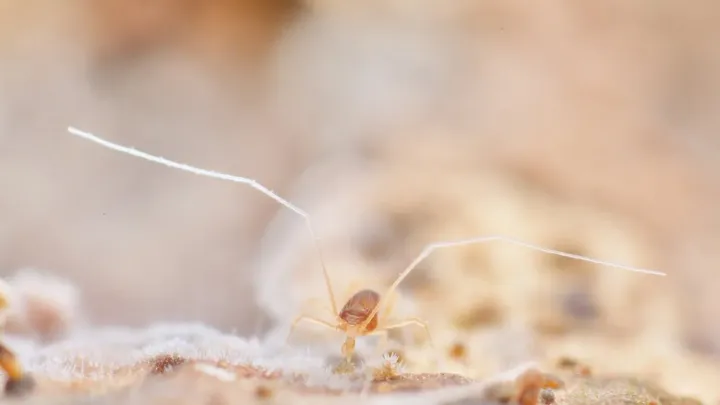
Description
How to identify
Linopodes is a genus of mites belonging to the family Anystidae, order Trombidiformes, known for their distinctive long and slender legs.
These mites are characterized by rapid movement, allowing them to traverse across plant surfaces efficiently in search of food or suitable micro-habitats.
Their body shape is typically oval or pear-shaped, and they are generally small, often requiring magnification for accurate identification in field conditions.
While some species within the family are considered beneficial as predators, others can cause significant stress to agricultural and horticultural crops.
Taxonomic classification relies heavily on the morphology of the legs and sensory setae, which distinguish this genus from other common spider mites.
What it damages
Linopodes mites damage plants primarily by piercing the epidermal layers of leaves and stems to feed on the intracellular contents.
They are known to target a variety of crops, often focusing on young, tender tissues which are crucial for the plant's structural development.
By consuming cell sap, they disrupt the normal physiological processes of the plant, including photosynthesis and nutrient transport.
Persistent feeding leads to stunted growth, wilting, and in severe cases, the necrosis of growing points, resulting in substantial yield losses.
Furthermore, their feeding activity leaves micro-wounds that often serve as entry points for secondary bacterial and fungal infections.
Signs of infestation
The most common sign of an infestation is the appearance of mottled, yellow, or pale patches on the foliage, initially concentrated near the veins.
Affected leaves often display signs of curling or rolling as they lose moisture and essential nutrients due to the mites' feeding.
A fine, sparse webbing might be visible in the axils of stems or on the undersides of leaves, especially during high-population density periods.
Plants infested with Linopodes show a significant lack of vigor, reduced flowering, and a general decline in overall aesthetic or market value.
Inspection with a hand lens often reveals the presence of small, fast-moving mites that scatter quickly upon disturbance of the plant canopy.
Control measures
Effective management of Linopodes involves a combination of monitoring, physical removal, and strategic chemical applications.
Cultural practices, such as maintaining optimal plant health and managing greenhouse humidity, are fundamental in preventing population explosions.
Biological control using predatory mites or other beneficial insects can suppress infestations effectively within integrated pest management programs.
Chemical control should be reserved for cases where thresholds are exceeded, utilizing acaricides that are targeted towards mites while minimizing harm to beneficial organisms.
- Implement regular scouting programs to detect early signs of mite activity.
- Remove and dispose of heavily infested plant tissues to prevent spreading.
- Optimize environmental conditions to be less favorable for mite proliferation.
- Rotate chemical treatments to avoid the development of mite resistance.
Taxonomy
- Latin name
- Linopodes
- Order
- Mites
- Family
- Eupodidae
- EPPO code
- LINPSP
Discussion
No discussions yet — be the first.