
Cuckoo roller
Leptosomus discolor
Description
How to identify
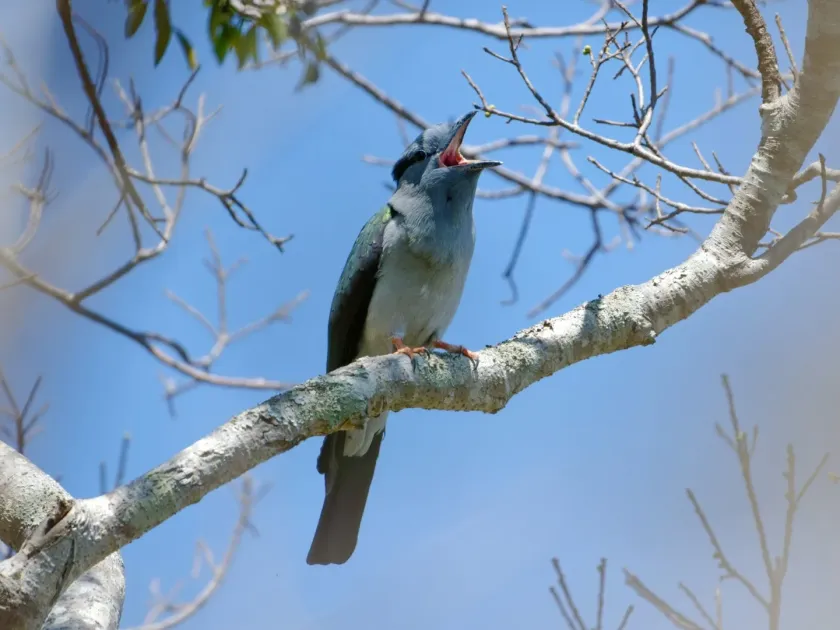
The Cuckoo Roller (Leptosomus discolor) is a unique avian species belonging to the monotypic order Leptosomiformes and family Leptosomidae, native to Madagascar and the Comoro Islands.
It exhibits distinct sexual dimorphism, with males and females having markedly different plumage, which aids in field identification for researchers and agricultural observers.
Morphologically, the species possesses a sturdy build, a powerful beak, and zygodactyl feet, which are evolutionary adaptations for a life spent primarily in the forest canopy.
While the Cuckoo Roller is primarily an insectivore, its presence in agricultural landscapes can occasionally overlap with the cultivation of specific tropical tree crops.
Understanding its systematic status helps agronomists distinguish its behavior from that of typical insect pests, allowing for more tailored management strategies on farms.
What it damages
Although their diet consists mainly of insects like caterpillars and orthopterans, Cuckoo Rollers have been observed feeding on fruits when natural food sources fluctuate.
Direct damage occurs when these birds peck at mature fruits, causing puncture wounds that compromise the harvest quality and commercial value of the produce.
These puncture sites often act as entry points for secondary pathogens, such as fungi and bacteria, which can lead to rapid fruit decay and significant post-harvest losses.
Beyond fruit consumption, the physical presence of the birds in the canopy can result in the breakage of tender twigs and buds, impacting the plant's overall health and vigor.
The severity of the damage is generally localized and tends to be higher in orchards located adjacent to natural forests or dense vegetation corridors.
When it appears
The seasonal activity of the Cuckoo Roller is heavily influenced by the fruiting cycles of local trees and the specific reproductive requirements of the species itself.
Orchards are at highest risk during the ripening phase of crops, as the abundance of sugar-rich fruit provides an attractive supplemental food source for the birds.
Outside of the breeding season, these birds are known for their nomadic behavior, moving between different forest patches and agricultural plots in search of food.
Environmental factors, particularly the onset of the rainy season, play a crucial role in determining the bird's movement patterns and their frequency of visits to cultivated land.
Field monitoring should be prioritized during the fruit maturation period to ensure early detection of any increased activity in the orchard vicinity.
Signs of infestation
A primary indicator of Cuckoo Roller presence is the observation of fresh puncture marks or deep gouges on ripening fruit, reflecting the bird's unique beak structure.
The presence of partially consumed fruit scattered on the ground beneath trees is a common sign of feeding activity occurring in the higher levels of the canopy.
Distinctive territorial and contact calls made by the males are auditory cues that can alert farm workers to the presence of the species nearby.
Accumulation of droppings on branches or leaves directly below favoured perching spots is another diagnostic sign of frequent visits to a specific tree.
Physical evidence, such as snapped young shoots or stripped bark on small branches, may be noted in areas where the birds have spent significant time foraging.
Control measures
Management strategies for the Cuckoo Roller should prioritize non-lethal deterrents that protect the crop while maintaining local biodiversity in the agricultural ecosystem.
The deployment of visual deterrents, such as reflective materials or hawk-mimic kites, can create an environment that the birds find unwelcoming during the ripening season.
Installing protective netting over high-value tree crops is the most effective way to completely prevent access and minimize direct damage to the fruit.
Good agricultural practices, including the prompt harvesting of ripe fruits, can significantly reduce the amount of time the crop remains vulnerable to avian foraging.
An integrated approach, combining behavioral deterrents and careful orchard management, provides the most sustainable defense against potential crop loss.
Taxonomy
- Latin name
- Leptosomus discolor
- Family
- Leptosomatidae
- EPPO code
- LQTSDI
Discussion
No discussions yet — be the first.