
Marbled leptopus
Leptopus marmoratus
Description
How to identify
The marbled leptopus (Leptopus marmoratus) is a member of the Leptopodidae family within the order Hemiptera. These insects are known for their distinct appearance and highly adapted movement patterns on soil and vegetation.
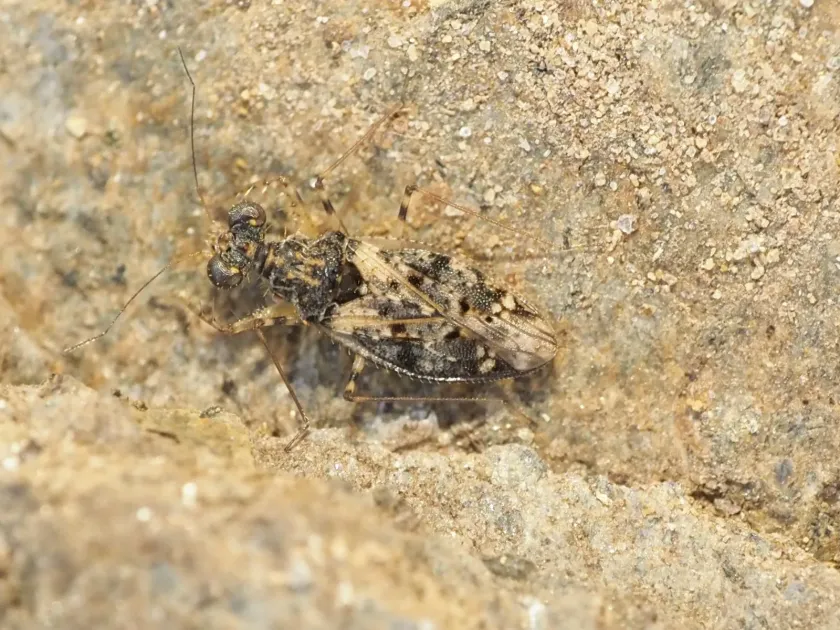
The body is typically flattened with a mottled, marble-like pattern that serves as excellent camouflage against soil or plant detritus, making them difficult to spot in the field.
They possess prominent, bulging eyes and long, agile legs, which are critical for their predatory lifestyle, allowing them to track and capture prey with high speed and precision.
The life cycle undergoes incomplete metamorphosis, with nymphs appearing as miniature versions of the adults, occupying similar ecological niches throughout their development.
These insects prefer environments with high humidity and are frequently found in moist agricultural fields, near irrigation channels, or under thick mulch layers.
What it damages
Although primarily predatory, the marbled leptopus can cause mechanical damage to crops when searching for moisture or nutritional supplements in plant tissues during prey scarcity.
Vegetable crops such as tomatoes, cucumbers, and leafy greens in open fields or greenhouses are most susceptible to their activity, especially during the seedling stage.
Damage presents as tiny necrotic spots on leaves and stems caused by the insect's stylets piercing the plant epidermis to inject digestive enzymes or withdraw fluids.
These punctures provide entry points for opportunistic fungal and bacterial pathogens, which often cause more significant damage than the feeding activity of the insect itself.
In high-density populations, the cumulative stress on young plants can result in stunted growth, leaf discoloration, and decreased overall market value of the harvest.
When it appears
Activity usually begins in the spring as soon as soil temperatures reach a threshold that stimulates the emergence of overwintering adults from the soil or debris.
Population peaks are typically observed during the mid-summer months when weather conditions are warm and humid, creating an optimal environment for egg-laying and nymphal development.
As autumn approaches and temperatures drop, the insects seek protected areas to overwinter, often congregating in crevices, thick plant residue, or loose topsoil.
The duration and intensity of these seasonal stages can vary depending on local microclimates and irrigation practices that maintain high soil moisture levels.
Field scouting should be prioritized during the early morning hours, as this is when the insects are most actively traversing the ground and lower foliage.
Signs of infestation
Early signs of infestation include the appearance of tiny, pale pinprick lesions on the underside of leaves, which may later develop into brown, necrotic spots.
Visual identification of the insects themselves, particularly on moist soil near the base of the plant or on the lower foliage, confirms their presence on the site.
Stunting and visible leaf curling on young plants are common physiological responses to the stress of repeated feeding punctures and secondary infections.
The presence of exuviae (cast-off skins from molting) on stems or leaves indicates that the population is actively developing and going through life stages on the crop.
Secondary signs often include the presence of aphids or other small insects, as the marbled leptopus may be attracted to the crop specifically to hunt these prey items.
Control measures
Effective management focuses on disrupting the favorable conditions that allow these insects to thrive, specifically by controlling excess soil moisture and humidity.
Cultural practices, including thorough weeding and the removal of crop debris after harvest, are essential to eliminate overwintering sites for the next season.
Biological control agents, such as beneficial nematodes or entomopathogenic fungi, can be applied to dampen population growth without harming beneficial pollinators.
Chemical intervention should be reserved for cases where economic thresholds are exceeded, utilizing contact-based insecticides during the early stages of infestation.
- Implement strict field sanitation practices.
- Manage irrigation to avoid prolonged damp soil conditions.
- Monitor populations using sticky traps or physical inspections.
- Rotate crops to minimize continuous infestation cycles.
Taxonomy
- Latin name
- Leptopus marmoratus
- Order
- Hemiptera (bugs, aphids, leafhoppers)
- Family
- Leptopodidae
- EPPO code
- LPPSMA
Discussion
No discussions yet — be the first.