
Rabbit fur mite
Leporacarus gibbus
Description
How to identify
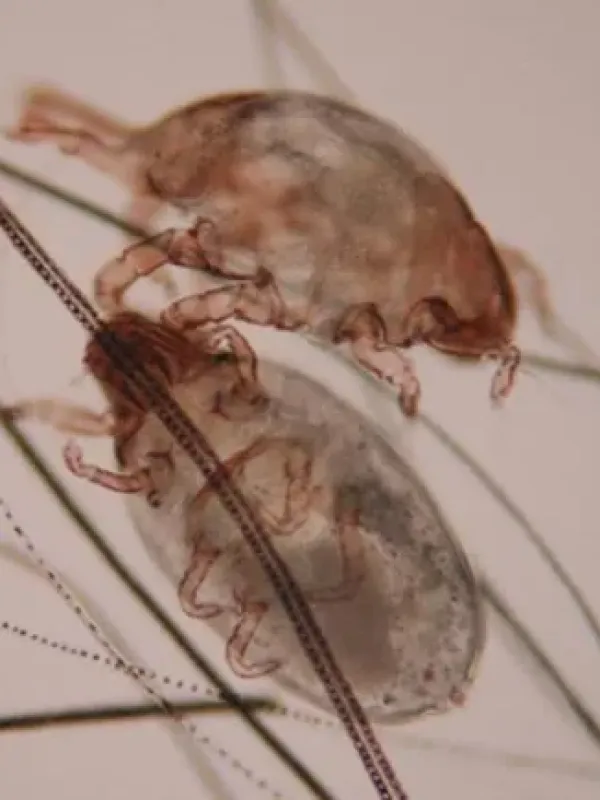
The rabbit fur mite, scientifically known as Leporacarus gibbus, is a host-specific parasite belonging to the Listrophoridae family. These microscopic mites live exclusively in the fur of rabbits, feeding on dead skin cells and skin secretions.
Unlike other mite species, these parasites do not burrow into the skin; instead, they live on the hair shafts. Their elongated bodies are perfectly adapted to grip onto the hair, making them difficult to detect without close examination or microscopic analysis.
The entire life cycle of the mite occurs on the host. Females deposit their eggs by gluing them to the base of the hair. Through larval and nymph stages, the parasite reaches maturity, perpetuating the infestation within the rabbit's fur coat.
Transmission occurs primarily through direct contact between rabbits. However, indirect transmission through contaminated bedding, grooming tools, or even the clothing of people working in rabbitries is a common cause of spread, necessitating strict sanitation protocols.
To identify the parasite, veterinarians perform skin scrapings or use the "tape test" to collect hair samples for microscopic evaluation. To the naked eye, the mites often appear as moving dander or dandruff, which can lead to misdiagnosis if not carefully checked.
What it damages
Note: This object is a parasite of animals and not a crop pest. Infestation of rabbits by this mite causes a condition known as acariasis, which significantly impacts the animal's coat quality and overall physiological well-being.
The primary harm is constant skin irritation. Rabbits experience significant discomfort, leading to decreased appetite, stunted growth in young kits, and a decline in reproductive performance, which creates substantial challenges in commercial rabbit farming.
A heavy infestation causes intense itching. Rabbits become agitated and scratch constantly, leading to abrasions, sores, and secondary bacterial infections that can develop into chronic dermatitis if left unmanaged.
As the infestation progresses, the fur loses its luster and density, becoming brittle and falling out in patches (alopecia). Crusts and scabs often form at the base of the hair, consisting of mite debris, skin flakes, and dried secretions.
For commercial rabbitries, the presence of fur mites leads to economic losses due to damaged pelts and the high costs associated with veterinary treatments and facility decontamination procedures.
Signs of infestation
The hallmark sign of infestation is "walking dandruff"—white, flaky particles that appear to move through the fur. This is a characteristic manifestation of the activity of Leporacarus gibbus.
- Severe itching and restless behavior.
- Patchy hair loss, particularly on the back and shoulders.
- Presence of dry crusts at the hair roots.
- Skin redness accompanied by scratching marks.
- Reduced overall activity and appetite in the rabbit.
When examining a rabbit, focus on the skin along the spine and the base of the tail, as mites tend to cluster in these areas. Rapid spread of these signs to other parts of the body indicates a progressing infestation.
If a rabbit is observed rubbing against cage sides or excessively grooming/chewing its fur, this is a clear signal that diagnostic testing is needed. Ignoring these symptoms can lead to exhaustion and a weakened immune system in the rabbit.
Differential diagnosis is crucial, as clinical symptoms can mimic other dermatological conditions, including ringworm, Cheyletiella mites, or lice. Proper identification ensures that the correct therapeutic approach is implemented.
Control measures
Control of rabbit fur mites relies on the application of effective acaricides. Modern treatments, including spot-on formulations, sprays, and injectable medications, are used to eliminate the mite population at all developmental stages.
Facility decontamination is a mandatory component of the control strategy. Since mites can survive for short periods in the environment, cleaning cages, sanitizing equipment, and replacing bedding are essential steps to prevent re-infestation.
All rabbits in a colony should be treated simultaneously, regardless of whether symptoms are visible on every individual. This approach is necessary to prevent the cycling of mites back to healthy animals and to ensure complete eradication.
Preventative measures must include a mandatory quarantine for all new arrivals. Examining new animals carefully before introducing them to the main herd is the most effective way to prevent outbreaks in rabbitry settings.
Always follow veterinary guidance when applying acaricidal products to avoid toxicity. Adhering to withdrawal periods before slaughter is an absolute necessity when using medications for animals intended for meat production.
Taxonomy
- Latin name
- Leporacarus gibbus
- Order
- Mites
- Family
- Listrophoridae
- EPPO code
- LPRAGI
Discussion
No discussions yet — be the first.