
South American lungfish
Lepidosiren paradoxa
Description
How to identify
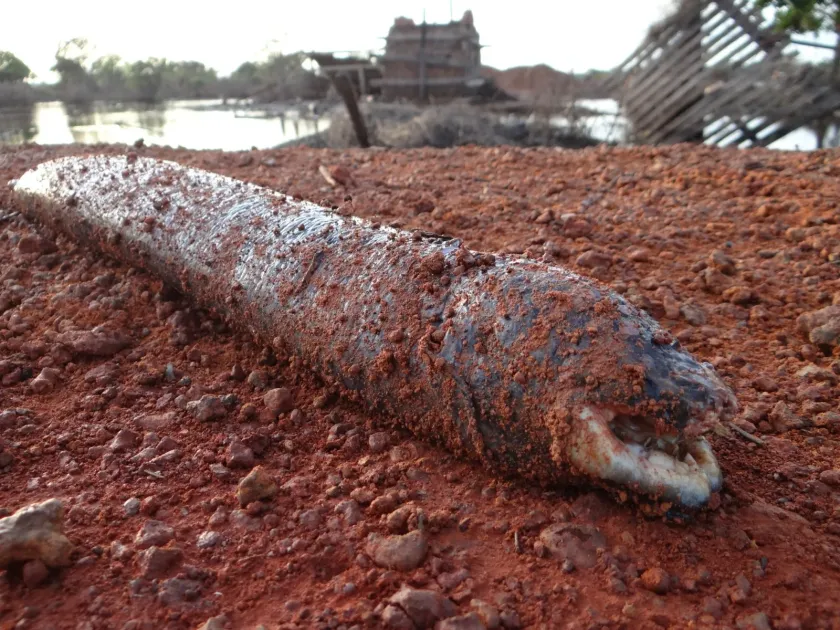
The South American lungfish (Lepidosiren paradoxa) is a remarkable species of lobe-finned fish found in the Amazon, Paraguay, and Paraná river basins. It possesses primitive lungs that allow it to breathe air.
This species is well-known for its ability to estivate in burrows in the mud during the dry season, wrapping itself in a mucus cocoon until the rains return.
The physical appearance of the fish is eel-like, with slender, filamentous pectoral and pelvic fins. Adults typically reach lengths of 60 to 100 centimeters.
Unlike terrestrial pests, the lungfish is strictly adapted to an aquatic or semi-aquatic environment. It lacks limbs or tools for locomotion on land or for feeding on crops.
It is a fascinating subject for biological research, particularly regarding the evolution of vertebrates and air-breathing adaptations.
What it damages
The South American lungfish is not an agricultural pest. Its diet consists of mollusks, crustaceans, and small fish, which it finds at the bottom of tropical marshes and slow-moving rivers.
It does not cause damage to crops, vegetables, or fruits. The anatomy of its jaws is specialized for crushing shells, not for grazing on leaves or roots.
There is no evidence that this species interacts with cultivated fields or affects plant health in any capacity.
In international agricultural databases, Lepidosiren paradoxa is correctly categorized as a non-pest organism, as it poses zero threat to food production.
Labeling this species as a pest is scientifically inaccurate and misrepresents its ecological role as an aquatic predator.
Control measures
No protective or control measures are necessary, as the South American lungfish is completely harmless to any agricultural activity.
Chemical intervention is not required and would be environmentally damaging to the freshwater habitats this species calls home.
Agro-technical practices should focus on sustainable water management, which indirectly protects the habitats of local aquatic fauna like the lungfish.
There is no need for quarantine measures or monitoring programs for this species in agricultural regions, as it lacks the potential to become invasive in typical crop environments.
Farmers are encouraged to preserve natural waterways as part of biodiversity conservation, recognizing that this lungfish plays a positive role in its native ecosystem.
Taxonomy
- Latin name
- Lepidosiren paradoxa
- Family
- Lepirosirenidae
- EPPO code
- LPDSPA
Discussion
No discussions yet — be the first.