
Grass shrimp
Leander squilla
Description
How to identify
The grass shrimp (Palaemon adspersus, formerly known as Leander squilla) belongs to the order Decapoda and the family Palaemonidae.
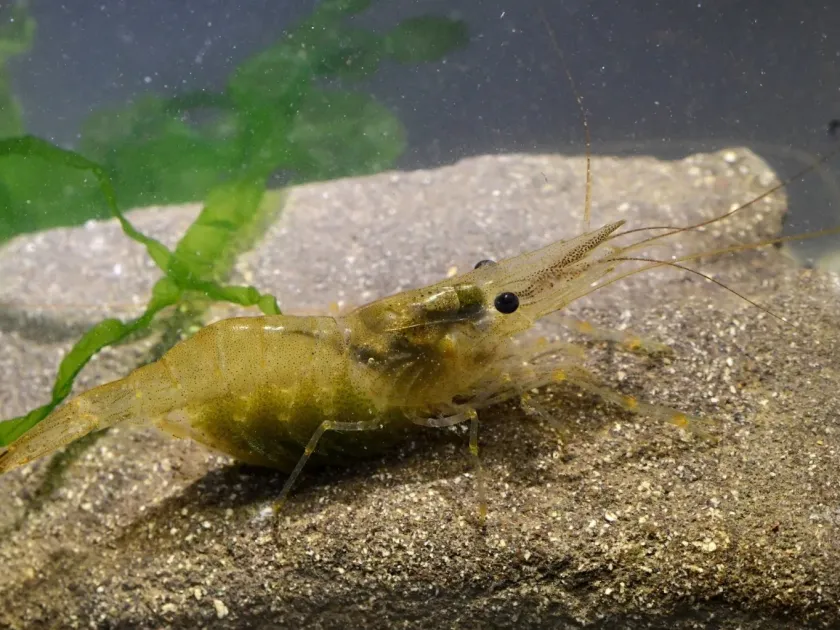
Adult specimens measure between 50 and 70 mm in length and possess a transparent, slender body with a prominent, forward-pointing rostrum.
Their coloration typically ranges from greenish-grey to brown, providing effective camouflage among submerged aquatic plants.
They are equipped with sensitive antennae that allow them to detect vibrations and organic matter in murky water conditions.
These crustaceans are highly adaptable to various water salinities, allowing them to thrive in irrigation systems and flooded agricultural fields.
What it damages
Grass shrimp primarily act as pests in rice cultivation, where they target young seedlings during the initial rooting phase.
By grazing on tender stems, they cut through the plant tissue, leading to stunted growth or the total collapse of the crop stand.
In hydroponic and aquaponic setups, they target root systems, causing physical injury that hinders nutrient uptake and plant vitality.
Mechanical damage caused by their feeding often leads to secondary infections by waterborne bacteria and fungal pathogens.
Their burrowing and foraging activities can also destabilize the root environment, affecting the overall productivity of the crop.
When it appears
The activity of grass shrimp begins to increase in spring as water temperatures in canals and fields rise above 12–15 degrees Celsius.
The peak period of their population growth occurs during the summer months when warm water facilitates larval development.
As water temperatures drop during autumn, they migrate to deeper areas of the water body to seek shelter for the winter period.
The life cycle is closely linked to the availability of aquatic vegetation, which provides essential protection from predators.
In regions with continuous irrigation and stable warm temperatures, the pest may remain active throughout the entire growing season.
Signs of infestation
The most visible sign of infestation is the presence of floating, severed rice stems and damaged shoots in flooded fields.
Reduced crop density in areas near irrigation inlets often suggests that the shrimp population has concentrated in those parts of the field.
Visual inspection of plant roots in hydroponic systems may reveal ragged edges or missing root tips, indicating crustacean feeding.
Increased turbidity in the water is a common symptom of shrimp activity, as they constantly disturb the bottom sediment while searching for food.
The accumulation of molted exoskeletons on plant stems or submerged debris serves as a clear indicator of a thriving population.
Control measures
Installing fine-mesh screens at irrigation water intake points is a primary preventative measure to exclude shrimp from the fields.
Regular maintenance and removal of excess aquatic vegetation from irrigation canals significantly reduces available habitats for the pests.
Biological control, such as introducing predatory fish that feed on crustaceans, provides a sustainable approach to population management.
Water level management, including brief drainage or salinity fluctuations, can be used to disrupt their life cycle in specialized systems.
Chemical intervention should be avoided or applied with extreme caution to prevent toxic impact on the wider aquatic ecosystem.
Discussion
No discussions yet — be the first.