
Coelacanth
Latimeria chalumnae
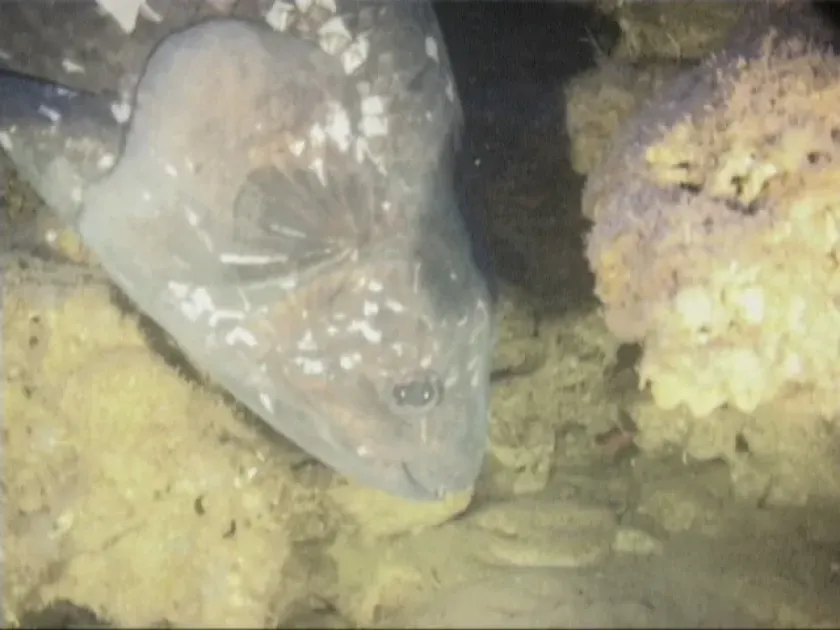
Description
How to identify
The coelacanth (Latimeria chalumnae) is a large lobe-finned fish that belongs to the order Coelacanthiformes.
It is widely recognized as a "living fossil" because its anatomical structure has remained remarkably stable throughout millions of years.
The fish is characterized by a heavy, armored-like scale covering and specialized lobed fins that resemble limbs.
Adult specimens can reach lengths of up to two meters and weigh significant amounts, making them large marine predators.
Their coloration, typically shades of blue and brown, provides effective camouflage in the dark, deep-water environments they inhabit.
What it damages
The coelacanth is an exclusively deep-sea marine animal and does not interact with any terrestrial agricultural crops.
There is no evidence or biological possibility for this fish to cause damage to plants, as it lives hundreds of meters below the sea surface.
Its diet consists strictly of small fish and cephalopods found in oceanic depths, meaning it cannot be considered a plant pest.
Labeling the coelacanth as a plant pest is scientifically incorrect and has no basis in agricultural science or entomology.
It poses zero threat to harvest, gardens, or forests, as it never leaves its aquatic habitat to come into contact with land-based flora.
When it appears
The lifecycle of the coelacanth is completely independent of seasonal plant growth or the agricultural cycle.
As deep-sea inhabitants, these fish live in an environment that is not subject to seasonal variations or crop harvesting schedules.
Their reproductive behavior occurs in stable deep-water conditions, entirely decoupled from the seasonal changes experienced by terrestrial ecosystems.
There is no specific time of year when this species would affect plants, as it has no biological connection to any plant life cycles.
Agricultural monitoring programs do not include this species, as it is biologically incapable of appearing on agricultural land.
Signs of infestation
There are no signs of coelacanth infestation because the fish does not feed on or damage any part of terrestrial plants.
If you encounter plant damage, you should investigate common terrestrial threats such as insects, fungi, or nutrient deficiencies.
Plant health inspections should be focused on identifying typical symptoms related to regional pests and pathogens rather than marine life.
The presence of any unusual markings on crops is definitely not caused by this species, given its oceanic habitat.
Reliable identification of plant damage should be based on established agricultural guidelines and common phytosanitary protocols.
Control measures
No control measures are necessary for the coelacanth, as it is not a pest and does not threaten food production.
The use of pesticides or any other control agents against this fish would be environmentally harmful and entirely pointless.
The coelacanth is a protected species under international conservation laws due to its status as a critically endangered animal.
Conservation efforts for this fish should focus on protecting oceanic habitats, which is completely separate from agricultural pest management.
Farmers should concentrate their efforts on controlling actual agricultural pests like aphids, mites, and moths that directly impact yield.
Taxonomy
- Latin name
- Latimeria chalumnae
- Family
- Latimeriidae
- EPPO code
- LATMCH
Discussion
No discussions yet — be the first.