
Renigera cutworm
Lacinipolia renigera
Description
How to identify
The renigera cutworm, scientifically known as Lacinipolia renigera, belongs to the family Noctuidae. These moths are nocturnal and are commonly found across North American agricultural landscapes.
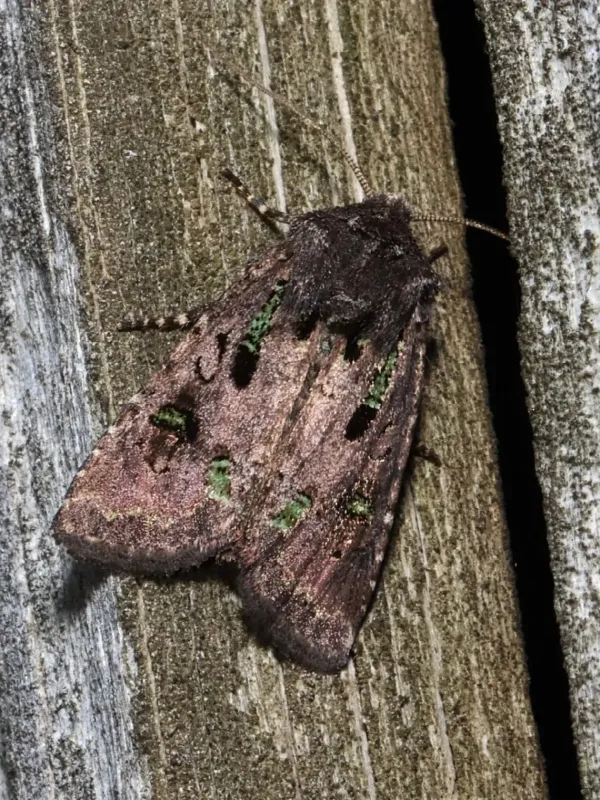
The adult moth features a wingspan of approximately 25 to 30 mm. The forewings display a intricate pattern of brown and grey tones, centered around a kidney-shaped spot, which is the key identifier for the species.
The larvae, commonly referred to as cutworms, have a brownish or grayish body that blends perfectly with soil particles. They are thick-bodied and typically curl up when disturbed.
The life cycle involves four stages: egg, larva, pupa, and adult. The larval stage is the most destructive phase, characterized by voracious feeding on vegetative tissue.
Adaptability is a hallmark of this species, allowing it to colonize a wide variety of habitats, ranging from cultivated fields to meadows and gardens.
What it damages
Lacinipolia renigera is a polyphagous pest, meaning it feeds on a broad range of host plants, including cereal crops, vegetables, and various legumes.
The primary damage occurs during the seedling stage. The larvae chew through the stems at or just below the soil surface, causing the plants to topple over and die.
Besides stem cutting, the larvae may feed on foliage and buds, resulting in significant stand loss and uneven crop distribution, which often requires replanting.
Economic damage is most severe during cool, wet springs when seedlings are growing slowly, making them vulnerable for a longer period of time.
In addition to direct consumption, the wounds caused by cutworms facilitate the entry of secondary pathogens, such as soil-borne fungi that lead to root rot.
When it appears
Adult moths usually emerge in late spring. They are attracted to light and are often monitored using light traps as part of integrated pest management programs.
Eggs are typically laid in the soil or on low-lying vegetation. Once larvae hatch, they begin their feeding cycle, which is predominantly nocturnal.
The species overwinters as a mature larva or pupa deep in the soil, protected from extreme winter temperatures and fluctuations.
Development cycles are dependent on ambient temperature, with most regions experiencing one to two generations per year depending on the latitude.
Late summer and early autumn may see a resurgence in activity, though the damage is less critical than the early spring period when crops are most vulnerable.
Signs of infestation
The most obvious sign of an infestation is the presence of severed seedlings scattered across a field, often with the plant tops wilted or dried up.
Digging around the base of the damaged plant during the day often reveals the curled-up larva hiding just under the soil crust.
The presence of frass (larval droppings) in the vicinity of damaged plants is a clear indicator that feeding is currently taking place.
Monitoring the adult population using pheromone or blacklight traps allows farmers to identify peak flight times and predict potential larval activity.
Increased bird activity, particularly birds scratching the soil surface in the field, can sometimes be a subtle clue that cutworm larvae are present.
Control measures
Tillage practices are highly effective for managing cutworms, as deep plowing disrupts the soil and exposes larvae and pupae to predators and environmental hazards.
Weed control is essential, as dense weed cover provides an ideal egg-laying environment and early food source for emerging larvae.
Biological control agents, such as entomopathogenic nematodes or Bacillus thuringiensis-based products, offer an environmentally friendly way to reduce populations.
Insecticide applications, when necessary, should be applied in the evening, as this is when the larvae come to the surface to feed, increasing the effectiveness of the treatment.
- Use of crop rotation to break the pest cycle.
- Setting up scouting programs for early detection of larvae.
- Planting vigorous, high-vigor seeds to encourage rapid establishment.
- Considering the use of protective seed treatments if high pressure is expected.
Taxonomy
- Latin name
- Lacinipolia renigera
- Order
- Lepidoptera (butterflies)
- Family
- Noctuidae
- EPPO code
- POLIRE
Discussion
No discussions yet — be the first.