
Pale-shouldered Brocade
Lacanobia thalassina
Description
How to identify
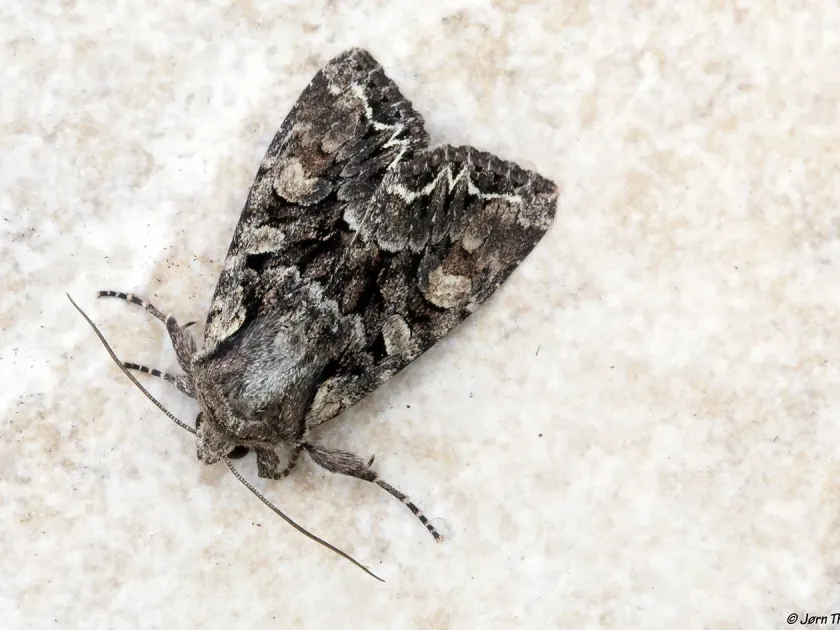
The Pale-shouldered Brocade (Lacanobia thalassina) belongs to the Noctuidae family, a group known for several significant agricultural pests. The adult moth has a wingspan ranging from 35 to 40 millimeters, with a distinct brownish-grey pattern on its wings.
The larvae, or caterpillars, are highly variable in color, typically ranging from light green to brownish, often adorned with pale longitudinal lines. They can grow up to 40 millimeters in length when fully mature.
Pupation occurs in the soil, where the insects spend the winter months. The pupae are reddish-brown, providing a protective stage against the cold and fluctuating temperatures of the dormant season.
The insect follows a complete metamorphosis life cycle, consisting of egg, larva, pupa, and adult moth. Females lay eggs in clusters, primarily on the underside of host plant leaves.
As a polyphagous species, it is not restricted to a single host, which allows it to thrive in diverse environments ranging from kitchen gardens to large-scale commercial fields.
What it damages
Pale-shouldered Brocade larvae are known for feeding on a wide variety of plants. They primarily target vegetable crops, including cabbage, lettuce, and various legumes, causing significant leaf tissue loss.
Field crops such as cereals can also be affected, especially when young plants are at a sensitive developmental stage. The caterpillars are voracious eaters, often stripping leaves down to the veins.
In addition to foliage, the larvae may feed on flower buds and emerging fruits, which can drastically reduce the yield and commercial value of the affected crops.
Damage to the apical meristem or growth points of young plants often results in stunted development or total failure of the plant to mature properly, leading to harvest gaps.
Secondary infections often take hold on plants damaged by the caterpillars, as the open wounds provide an entry point for bacteria and fungi, further worsening the crop condition.
When it appears
The flight season for the adult moth typically begins in late spring and extends through the summer. Depending on local climatic conditions, one or more generations may occur annually.
Larval activity is most intense during the early to mid-summer period, coinciding with the peak vegetative growth of most crops. This is the critical period for field monitoring.
Because the moths are nocturnal, their presence may go unnoticed during the day. Monitoring is best performed at dusk or night using light traps or pheromone attractants.
As the season cools, mature larvae burrow into the soil to pupate. The overwintering pupae remain in the soil until the environmental conditions trigger emergence in the spring.
Temperature and humidity play a decisive role in the speed of the life cycle. Warmer seasons often lead to faster development, potentially increasing the number of generations per year.
Signs of infestation
The most noticeable sign of infestation is irregular, ragged-edged holes in the leaves. In severe cases, the foliage may look skeletonized, leaving only the framework of veins behind.
Frass, which consists of small, dark granular droppings from the caterpillars, is usually found on the leaves below the feeding sites or on the ground at the base of the plant.
Caterpillars can often be found hiding on the underside of leaves or deep within the plant canopy during the day. Their cryptic coloration makes them difficult to spot without close inspection.
If the plants show signs of poor vigor, yellowing, or growth inhibition, it is recommended to inspect the stems and the soil surface for the presence of larvae or their feeding evidence.
Egg masses deposited on the undersides of leaves provide an early warning. Spotting these indicates a need for immediate intervention before the larvae hatch and start widespread feeding.
Control measures
Effective control starts with proper field sanitation. Deep autumn plowing is a highly recommended practice to disrupt the soil, exposing pupae to predators and freezing temperatures.
Managing weed populations in and around the crop area is essential, as these plants often serve as early-season food sources and refuges for the pest before they migrate to crops.
Biological control, including the use of microbial insecticides like Bacillus thuringiensis (Bt), can target the larvae effectively without harming beneficial insects or the surrounding ecosystem.
Chemical intervention should be reserved for situations where larval numbers exceed the economic threshold. Choosing selective insecticides helps minimize the impact on non-target pollinators.
Regular monitoring using pheromone traps allows growers to identify the onset of the moth flight and time applications of control measures for maximum efficacy during the vulnerable larval stage.
Taxonomy
- Latin name
- Lacanobia thalassina
- Order
- Lepidoptera (butterflies)
- Family
- Noctuidae
- EPPO code
- LACATH
Discussion
No discussions yet — be the first.