
Dot moth
Lacanobia suasa
Description
How to identify
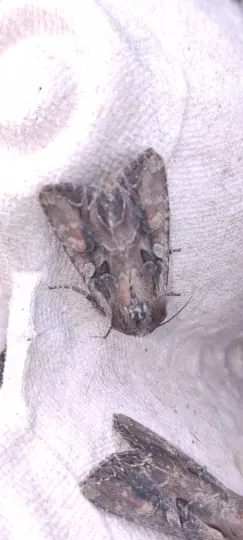
The Dot moth Lacanobia suasa is a member of the Noctuidae family, widely recognized as a versatile agricultural pest. The adult moth typically has a wingspan of 35 to 40 mm, with forewings featuring a complex, greyish-brown pattern.
The larvae, or caterpillars, exhibit variable coloration ranging from light green to dark brown or black, often marked with light longitudinal stripes. The head capsule is distinctively yellowish.
The pupae are reddish-brown and reside within the soil at a shallow depth of approximately 5-10 cm. Adults are primarily nocturnal and remain hidden in dense vegetation during the daylight hours.
The life cycle encompasses the egg, larval, pupal, and adult stages. Depending on the climatic region, the species may produce one or two generations within a single growing season.
Overwintering occurs at the pupal stage, buried within the upper soil layer or beneath leaf litter, providing resilience against cold weather conditions.
What it damages
As a polyphagous insect, the Dot moth affects a wide array of crops including cereals, pulses, sugar beet, and various horticultural plants.
Larvae feed not only on cultivated crops but also on common field weeds, allowing the population to build up significantly before infesting the desired crops.
Feeding damage occurs primarily on the foliage, where larvae consume leaves, which reduces the photosynthetic capacity and overall health of the affected plant.
In high-density infestations, caterpillars can cause severe defoliation, leading to stunted plant growth and significant economic yield losses.
The severity of damage is often correlated with the developmental stage of the crop, with young plants being particularly vulnerable to destruction.
Signs of infestation
Early symptoms include small, irregular holes in the leaf surface, which eventually lead to extensive skeletonization of the plant's leaves as the larvae grow.
Dark fecal pellets found on the ground or on leaves underneath the feeding area are a primary indicator of active caterpillar presence during the night.
Masses of eggs, often covered with specialized scales, can be found on the undersides of leaves if the area is closely inspected for early infestations.
Damage to the apical meristem or growth points results in stunted development, which makes the affected plants appear smaller or deformed compared to the rest of the field.
Visual identification of caterpillars is possible by shaking the foliage over a sheet or using a flashlight at night to detect active feeding.
Control measures
Deep autumn plowing (tillage) is a primary cultural control method that destroys overwintering pupae by displacing them and exposing them to predators or harsh weather.
Strict weed management in and around fields is essential to eliminate alternative host plants and reduce the overall carrying capacity of the local ecosystem for the moth.
Chemical control involving systemic or contact insecticides should be applied based on local economic thresholds to ensure cost-effectiveness and limit environmental impact.
Biological control agents, such as the release of Trichogramma wasps, can effectively parasitize the eggs of the moth, significantly reducing the pest population.
Monitoring the adult population with pheromone traps allows for precise timing of interventions, ensuring that control measures are applied at the most vulnerable larval stage.
Taxonomy
- Latin name
- Lacanobia suasa
- Order
- Lepidoptera (butterflies)
- Family
- Noctuidae
- EPPO code
- POLIDI
Discussion
No discussions yet — be the first.