
Cabbage moth
Lacanobia
Description
How to identify
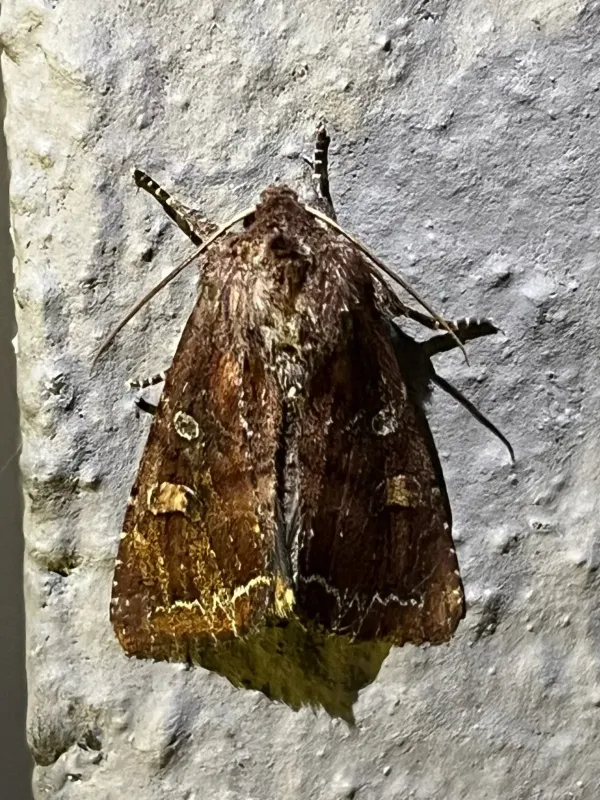
The Cabbage moth (Lacanobia brassicae) is a destructive polyphagous pest belonging to the Noctuidae family. The adult moth has a wingspan of approximately 40–50 mm and features brownish-grey forewings with intricate, marble-like markings.
The larvae, or caterpillars, go through several instars. Young caterpillars are typically light green, while mature ones become darker, often showing shades of brown, grey, or nearly black with a characteristic dorsal stripe.
Eggs are laid in clusters, usually on the underside of host plant leaves. A single female moth can lay hundreds of eggs during her lifespan, facilitating rapid population expansion throughout the growing season.
Pupation occurs in the soil, usually within the top 10–15 cm layer. The pupae are brown, glossy, and highly resilient, serving as the overwintering stage for the species in temperate climates.
Adult moths are nocturnal, spending their days hidden among foliage or debris. They are most active at night, which makes direct observation during the day difficult without specialized equipment like pheromone traps.
What it damages
This pest is highly polyphagous, attacking over 70 different plant species. While Brassicas like cabbage, broccoli, and cauliflower are primary targets, it also affects lettuce, spinach, beets, and peas.
Young larvae initially skeletonize the leaves, consuming the epidermis and chlorophyll while leaving the veins intact. As they grow larger, they create irregular holes and can bore deep into the heads of cabbage crops.
Damage to the head of the cabbage is particularly devastating, as it ruins the marketability of the produce. The tunnels created by the larvae provide entry points for bacteria and fungi, causing the crop to rot from the inside.
Heavy infestations can lead to complete loss of the harvest, especially when larvae feed on the growing point or heart of the plant. In addition to direct tissue consumption, their frass (waste) promotes further decay.
The pest is a significant economic threat in both home gardens and large-scale commercial farming, often requiring intensive management strategies to prevent total crop failure during peak seasons.
When it appears
The life cycle begins in late spring, when temperatures rise and the first generation of adults emerges from the soil. This triggers the initial wave of egg-laying on emerging vegetable crops.
In many regions, the Cabbage moth completes two generations per year. The second generation, emerging in mid-to-late summer, often causes the most extensive damage as it coincides with the final development of cabbage heads.
The duration of the life cycle is highly temperature-dependent, usually lasting between 30 and 50 days. Warm, humid weather accelerates larval development, allowing for overlapping generations that are harder to control.
As autumn approaches, the final generation of larvae pupates in the soil. These pupae enter diapause to survive the winter, waiting for the appropriate environmental cues to emerge the following spring.
Environmental conditions such as excessive moisture or drought can influence the survival rate, but the moth is generally well-adapted to survive various climatic stressors.
Signs of infestation
The presence of egg clusters on the undersides of leaves is the earliest sign of an infestation. These are often small, pale, and slightly raised, making them relatively easy to spot if you inspect plants regularly.
A "windowpane" effect on the leaves indicates the presence of young caterpillars. You will see thin, translucent patches where the chlorophyll has been eaten but the upper cuticle remains.
The accumulation of dark, pellet-like frass in the leaf axils or on the surface of the cabbage head is a clear indicator that larger, more destructive larvae are present and feeding.
Wilting of the leaves or a foul odor originating from the heart of the cabbage head suggests that larvae have burrowed inside and triggered a secondary bacterial or fungal rot.
Seeing adult moths flying around the garden at dusk is a warning sign that egg-laying is likely occurring, necessitating immediate monitoring and preventative measures.
Control measures
Cultural control is a cornerstone of management. Deep plowing of the soil after harvest helps to expose pupae to freezing temperatures and natural predators, significantly reducing the overwintering population.
The use of fine-mesh row covers is an excellent non-chemical method to prevent female moths from reaching the plants to deposit their eggs, effectively shielding the crop during the peak flight season.
Biological control agents, such as Bacillus thuringiensis (Bt), are highly effective against early-instar larvae. These preparations are safe for the environment and do not leave harmful residues on the harvest.
Chemical insecticides should be used as a last resort, strictly adhering to the pre-harvest interval (PHI). It is recommended to rotate chemical classes to prevent the development of insecticide resistance.
- Maintain proper crop rotation to break the life cycle.
- Hand-pick larvae and destroy egg clusters regularly.
- Remove weeds that can serve as alternative hosts.
- Encourage natural predators like birds and parasitic wasps.
Taxonomy
- Latin name
- Lacanobia
- Order
- Lepidoptera (butterflies)
- Family
- Noctuidae
- EPPO code
- LACASP
Discussion
No discussions yet — be the first.