
Ipimorpha retusa
Ipimorpha retusa
Description
How to identify
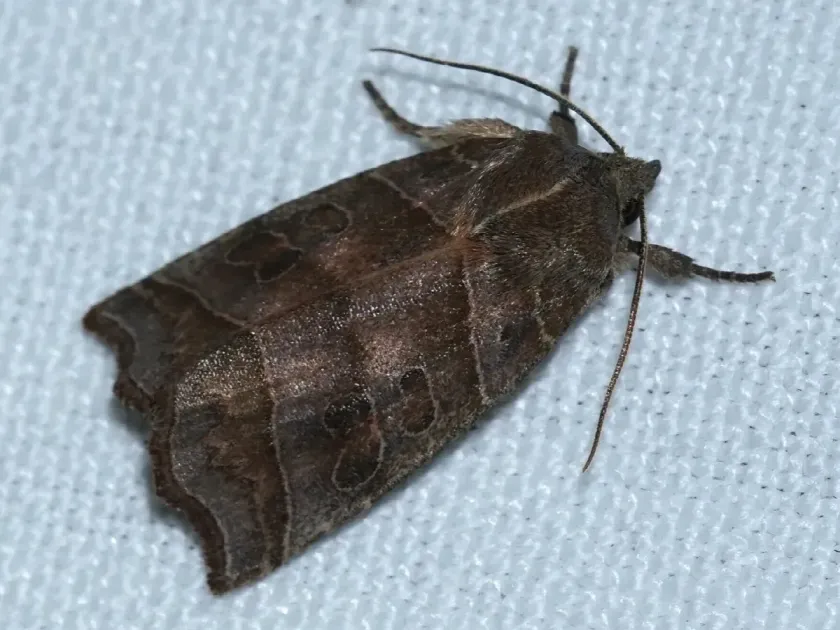
Ipimorpha retusa is a moth species belonging to the family Noctuidae. The adult moth has a wingspan of approximately 25 to 35 mm, with coloration that serves as perfect camouflage against tree bark.
The forewings are typically brownish or ochre in color, featuring two distinct transverse dark lines. Between these lines, there is a lighter band that gives the moth its characteristic appearance, helping it blend into the foliage or twigs.
The larvae, or caterpillars, reach about 30 mm in length. They are primarily green, which allows them to remain hidden among the leaves of their host trees, willow (Salix) and poplar (Populus).
The pupal stage occurs in the soil or in sheltered locations within cocoons made of silk and organic debris. As a nocturnal species, the adult moth is rarely seen during the day, which often masks its presence in a forest area.
This species is well-adapted to environments where its host trees grow, and its life cycle is tightly synchronized with the growth of host plant buds.
What it damages
The larvae feed on the leaves of various species within the Populus and Salix genera. They are known for causing localized damage, which can be significant in dense forest nurseries.
The larvae spin leaves together with silk to form protective rolls or clusters. Inside these structures, they feed on the leaf tissue, leaving behind only the veins and skeletonizing the foliage.
Heavy infestations lead to significant defoliation of the tree crown. In young plantations or nurseries, this stress can retard the growth rate and weaken the saplings, making them vulnerable to secondary pests.
While mature trees can usually withstand periodic defoliation, repeated annual attacks deplete the tree's energy reserves and can lead to increased branch dieback.
In addition to the physical loss of foliage, the damage caused by larvae creates wounds on the leaf surface, which can serve as entry points for various bacterial and fungal pathogens.
When it appears
The life cycle of Ipimorpha retusa is univoltine, meaning there is only one generation per year. Adults typically emerge and fly during mid-to-late summer, specifically July and August.
The species overwinters in the egg stage. Eggs are laid on the branches of host trees, ensuring that the larvae are ready to hatch as soon as the buds begin to burst in early spring.
The larval stage is active from May to June. This is the period when they cause the most noticeable damage, coinciding with the most rapid growth phase of the host trees.
Pupation takes place in early summer after the larvae finish their feeding period. The pupae remain in the ground until the following season's cycle begins.
Environmental conditions play a critical role in larval survival. A warm, humid spring often correlates with higher larval survival rates and potential population surges.
Signs of infestation
The primary symptom of an infestation is the presence of curled or rolled leaves at the ends of twigs. These rolls are held together by visible silken threads produced by the larvae.
Upon inspecting these leaf rolls, one can often find the larva itself or signs of its feeding, such as frass (excrement) and leaf fragments within the protective structure.
Affected trees often show signs of foliage yellowing and premature leaf drop in the areas where feeding activity has been concentrated, giving the crown a sparse or ragged appearance.
In cases of high infestation, a noticeable accumulation of frass may be seen on the leaves or branches situated below the feeding sites, which is an indicator of larval density.
Monitoring the presence of moths using light traps during the summer flight period is an effective way to anticipate the risk of larval damage in the upcoming spring season.
Control measures
In smaller settings like nurseries or private landscapes, manual removal and destruction of the rolled leaves can effectively reduce the local population of the pest.
Biological control using formulations based on Bacillus thuringiensis is a highly recommended approach. It specifically targets the larvae while leaving non-target beneficial insects unharmed.
For large-scale industrial plantations, systemic or contact insecticides may be applied. Timing is crucial; treatments should be performed early in the larval development stage for optimal efficacy.
Maintaining tree health through proper irrigation and nutrient management makes plants less susceptible to severe damage and allows for faster recovery after a defoliation event.
Encouraging biodiversity in and around forest plots supports natural predators, such as insectivorous birds and parasitic wasps, which play a vital role in natural population suppression.
Taxonomy
- Latin name
- Ipimorpha retusa
- Order
- Lepidoptera (butterflies)
- Family
- Noctuidae
- EPPO code
- IPIMRE
Discussion
No discussions yet — be the first.