
Ipimorpha
Ipimorpha
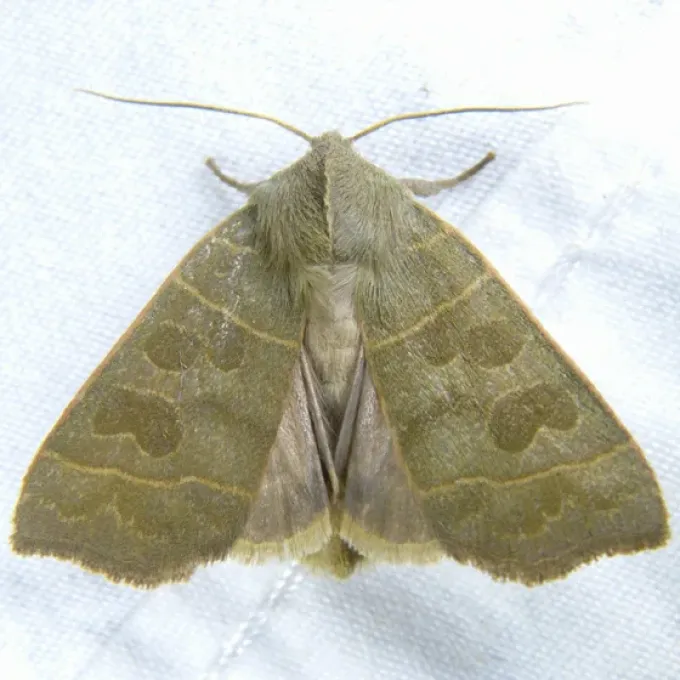
Description
How to identify
Ipimorpha is a genus of moths belonging to the family Noctuidae, with the poplar moth (Ipimorpha retusa) being the most well-known species. Adult moths feature a wingspan of approximately 30–35 mm, displaying ocherous-brown or reddish-brown wing patterns.
The larvae are smooth-bodied, typically green, with distinct white dorsal and lateral stripes. This coloration allows them to blend perfectly with the foliage of their host trees.
Systematically, this genus belongs to the subfamily Xyleninae. They are identified by their host-specific behavior and their distinct habit of folding leaves to create shelters.
These insects overwinter in the egg stage. Females deposit eggs on the bark or near buds in late summer, ensuring a one-year cycle that is synchronized with the tree's growth seasons.
Pupation occurs in early summer, either in the soil or within the rolled leaves, followed by the emergence of adult moths a few weeks later.
##damage##The primary hosts of Ipimorpha are trees from the Salicaceae family, most notably poplars (Populus) and various willow species (Salix).
In forest nurseries and plantations, massive outbreaks can cause significant defoliation of young trees, which ultimately reduces tree vigor and overall annual growth.
The pest tends to target young shoots and leaves located in the upper canopy, making early detection challenging during routine orchard or garden inspections.
While mature trees rarely die from Ipimorpha infestation, continuous leaf loss over several seasons significantly weakens the tree's physiology and resilience to environmental stressors.
For ornamental landscapes, the activity of Ipimorpha drastically reduces the aesthetic appeal of affected trees, leaving crowns sparse and foliage damaged.
##season##The larval activity coincides with the spring foliage development of host trees. The larvae emerge from eggs simultaneously with the budding of poplars and willows.
Damage peaks during May and June, as the larvae grow rapidly and consume large amounts of leaf biomass during this period.
Adult moth flight typically occurs during late summer, specifically in July and August. These are nocturnal insects and are rarely visible during the day without the use of light traps.
Egg-laying takes place in late summer, and the eggs enter a state of diapause throughout the autumn and winter until the following spring.
Understanding this phenological cycle is essential for arborists and foresters to schedule monitoring and control measures efficiently.
##signs##The most reliable sign of an Ipimorpha infestation is the presence of leaves rolled into tubes or cones, held together by fine silken threads secreted by the larvae.
Close inspection reveals skeletonized leaves where the larvae have consumed the soft tissue, leaving only the vascular network, followed by edge-eating as the larvae mature.
Frass (larval waste) accumulating on leaves below the feeding site or on the ground beneath the tree serves as a clear indicator of active feeding activity.
Severe infestations lead to premature leaf yellowing and drying, significantly altering the crown structure and affecting the photosynthetic capacity of the tree.
Arborists should focus their inspections on the upper branches of young host trees, as this is where the larvae primarily establish their feeding shelters.
##control##The most effective mechanical control method involves pruning and removing infested leaves or branches early in the season before the larvae reach maturity.
For large-scale management, biological control using Bacillus thuringiensis formulations is recommended, as it effectively targets the larvae while preserving beneficial predatory insects.
Chemical control should be reserved for major outbreaks and involves using systemic or selective insecticides applied at the time of larval emergence for maximum efficacy.
Because the larvae are well-protected inside their rolled-leaf shelters, contact-based insecticides are often less effective, emphasizing the need for timely application.
Encouraging natural predators such as insectivorous birds and parasitic wasps provides a sustainable way to maintain Ipimorpha populations below damaging levels.
Taxonomy
- Latin name
- Ipimorpha
- Order
- Lepidoptera (butterflies)
- Family
- Noctuidae
- EPPO code
- IPIMSP
Discussion
No discussions yet — be the first.