
Northern cattle grub
Hypoderma lineatum
Description
How to identify
The northern cattle grub (Hypoderma lineatum) is a large, hairy fly that resembles a bumblebee in appearance, typically growing up to 15 mm in length.
As adults, these flies possess vestigial mouthparts and do not feed, dedicating their short lifespan of a few weeks entirely to the process of reproduction.
The female fly is equipped with a specialized ovipositor, which she uses to deposit eggs in small rows along the hair shafts of the cattle's lower legs.
The larvae progress through three distinct developmental stages, evolving from tiny, transparent organisms into robust, spined grubs within the host's body.
Mature larvae are easily identifiable by their dark, cylindrical bodies covered with characteristic transverse rows of minute, backward-pointing spines.
What it damages
This parasite exclusively targets cattle, causing significant economic damage through reduced milk production and stunted weight gain in young livestock.
The constant annoyance caused by adult flies disrupts grazing patterns, forcing cattle to spend energy fleeing rather than consuming nutrients for growth.
Hide damage is a critical issue; the warbles (breathing holes) caused by larvae significantly downgrade the quality of leather, resulting in major financial losses.
The systemic toxins produced by the larvae as they migrate through the connective tissues can cause chronic inflammation, weakness, and overall poor health.
In addition to physical damage, secondary infections of the warble cysts can occur, necessitating expensive veterinary interventions and antibiotic treatments.
When it appears
The active flight season for adult flies usually begins in late spring and continues through early summer, depending on regional weather patterns.
After eggs are deposited, the larvae hatch and penetrate the skin, beginning a long migration path through the animal’s body toward the esophageal or spinal regions.
The larvae typically reach the back and lumbar area of the host by late winter or early spring, where they form the characteristic bumps under the skin.
Once the weather warms, the mature larvae enlarge the breathing holes and eventually emerge from the host to drop onto the ground for pupation.
The pupal stage occurs in the soil, lasting several weeks until the new generation of adult flies emerges to begin the life cycle once again.
Signs of infestation
The first sign of an infestation is intense panic and erratic running in cattle, often called "gadfly" activity, when the flies are buzzing near the herd.
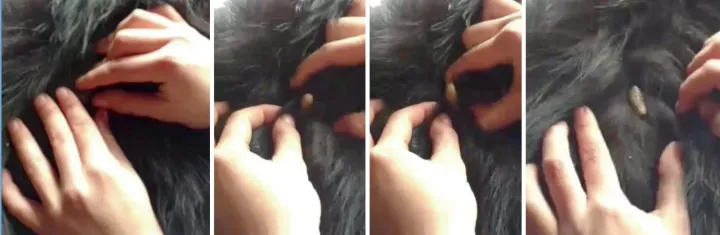
Visual inspection during late winter reveals firm, painful, and raised nodules along the spine and loin area of the affected cattle.
Each nodule features a visible breathing hole, through which the grub periodically protrudes its posterior spiracles to exchange gases with the atmosphere.
Animals frequently rub themselves against fences or trees to alleviate the itching and irritation caused by the larvae localized beneath the skin.
Localized thinning or loss of hair around the warble cysts often occurs, making it easy for farmers to spot affected areas during routine herd checks.
Control measures
The most effective management strategy involves the timely application of systemic parasiticides in the fall, immediately after the end of the fly season.
Treating animals before the larvae migrate to the back prevents the formation of hide damage and significantly improves the overall welfare of the herd.
Farmers must strictly adhere to the withdrawal periods for meat and milk following chemical treatments to ensure consumer safety and regulatory compliance.
Maintaining clean livestock housing and removing manure can help limit the availability of suitable pupation sites for the larvae that emerge from the host.
- Targeted systemic insecticide application.
- Monitoring for lumps in early spring.
- Quarantine protocols for newly introduced cattle.
- Coordinated regional treatment efforts to reduce fly populations.
Taxonomy
- Latin name
- Hypoderma lineatum
- Order
- Diptera (flies)
- Family
- Oestridae
- EPPO code
- HYPDLI
Discussion
No discussions yet — be the first.