
Roe deer warble fly
Hypoderma diana
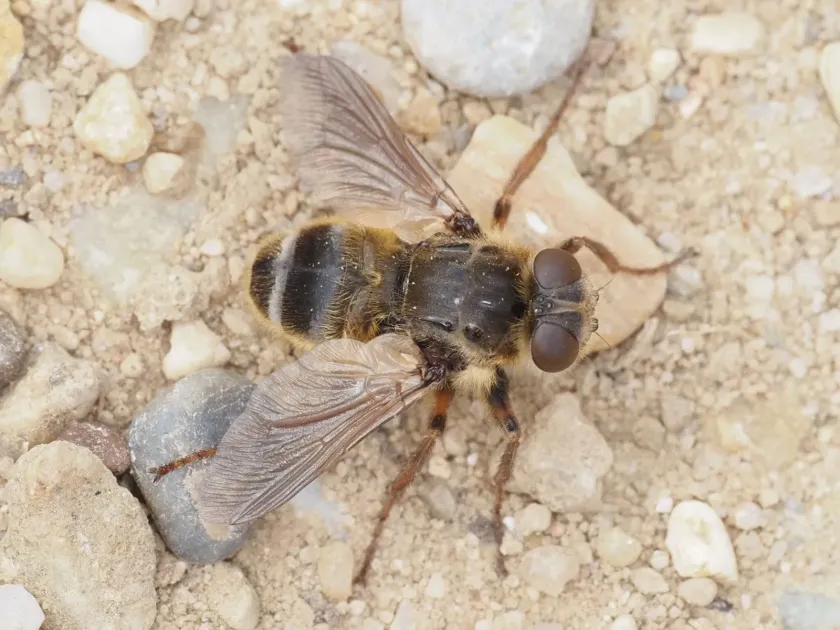
Description
How to identify
The roe deer warble fly, Hypoderma diana, is a large dipteran insect belonging to the Oestridae family. Adult flies resemble bees or bumblebees, characterized by dense hair covering their bodies, and lack functional mouthparts, meaning they do not feed as adults.
The life cycle is intricately tied to its host. Female flies are highly fecund and lay their eggs directly on the hair of the deer during the warm summer months.
The larvae progress through three distinct instars within the host's body. During the final stages, they encyst in the subcutaneous tissue, creating nodules that can be identified via physical examination.
As an obligate parasite, the survival of Hypoderma diana is entirely dependent on its host. The adult flies are most active during bright, sunny days when they seek out hosts for egg-laying.
This species shows high host specificity, primarily targeting cervids, making it a critical health concern for wild roe deer populations in various habitats.
What it damages
While not a plant pest, the roe deer warble fly is a major agricultural and wildlife management concern. It causes a condition known as hypodermosis, which leads to significant health degradation in animals.
Larval infestation results in reduced host immunity, weight loss, and general lethargy. This physiological stress can make the affected animals more susceptible to other diseases and environmental stressors.
The damage caused by larvae moving beneath the skin and eventually exiting leads to holes in the hide, rendering the skins virtually useless for the leather industry.
Infested animals suffer from systemic intoxication due to the metabolic waste produced by the growing larvae. This chronic stress significantly lowers the productivity of the affected wildlife.
Economically, the impact is felt through the depreciation of game products and the costs associated with implementing large-scale veterinary control programs for livestock.
When it appears
Adult flies emerge during late spring and early summer. This is the period when they actively search for hosts, mate, and lay their eggs on the animal's coat.
After hatching, the larvae migrate through the body throughout the autumn and winter months, eventually settling in the subcutaneous tissues of the back.
The exit of third-instar larvae typically occurs in the spring, which is marked by the presence of open breathing holes in the skin of the animal.
Once the larvae drop to the ground, they undergo pupation. The duration of this phase is highly dependent on environmental temperature and soil conditions.
The life cycle spans approximately one year, a biological adaptation that allows the fly to synchronize its development with the host's seasonal cycles and climate.
Signs of infestation
The most prominent sign of infestation is the appearance of characteristic warble swellings on the back and loin areas of the roe deer.
A small breathing hole is often visible at the center of each nodule. Careful observation may reveal pus or serous discharge around these holes if secondary infections occur.
Roe deer exhibit signs of panic and restlessness when the flies are active, often reacting to the sound and presence of the insects by running or fleeing.
Dull or matted fur over the swellings is a common visual indicator of an underlying larval infestation that has been present for several months.
In severe cases, an animal's poor physical condition during the late winter and early spring is a strong indicator of a heavy parasitic burden from warble flies.
Control measures
Effective control is achieved primarily through the application of systemic parasiticides, such as macrocyclic lactones, which kill larvae during their migration.
Veterinary management often involves the application of spot-on treatments or injectable compounds to eliminate larvae before they cause significant tissue damage.
In wildlife management, population monitoring is essential to track the prevalence of the infestation and decide when intervention is required.
Preventive measures include keeping livestock separated from wild deer populations during the summer months to reduce the risk of cross-infestation.
Sanitation practices and the culling of heavily infested individuals can help lower the overall parasite pressure in specific forest or grazing areas.
Taxonomy
- Latin name
- Hypoderma diana
- Order
- Diptera (flies)
- Family
- Oestridae
- EPPO code
- HYPDDI
Discussion
No discussions yet — be the first.