
Deer warble fly
Hypoderma actaeon
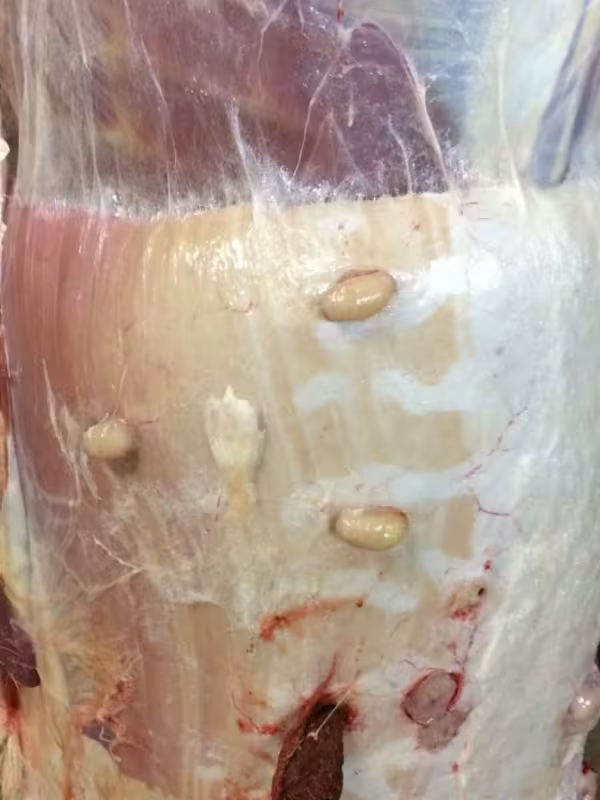
Description
How to identify
The deer warble fly (Hypoderma actaeon) is a parasitic insect belonging to the Oestridae family, specialized in infesting deer populations.
Adult flies are large, hairy, and resemble bumblebees, though they lack functional mouthparts and do not feed as adults, focusing solely on reproduction.
The life cycle involves the female laying eggs on the hair of the host animal, from which larvae hatch and penetrate the skin surface.
Once inside, the larvae undergo a complex migration through the deer's body tissues until they settle in the subcutaneous tissue of the back.
This parasite is highly host-specific, causing significant health problems for both wild and farmed deer species across their distribution range.
What it damages
The main damage is caused by the larval stage, which creates holes in the skin known as warbles, causing severe tissue damage and inflammation.
The presence of larvae leads to reduced weight gain, decreased immunity, and general exhaustion, as the host animal struggles with constant irritation.
Hide quality is severely compromised, as the perforations made by the larvae ruin the integrity of the pelt, making it commercially worthless.
Secondary bacterial infections often occur in the warble sites, leading to pus-filled abscesses that cause significant pain and stress to the deer.
In cases of heavy infestation, the physiological burden can be fatal for young or already weakened animals, resulting in economic losses for farmers.
When it appears
The flight season for adult deer warble flies occurs during the summer months when warm weather permits mating and egg-laying activities.
Larvae remain hidden within the host's body during the autumn and winter months, slowly maturing as they move toward the back region.
By late winter or early spring, the larvae reach the subcutaneous tissue of the back, where they prepare for the final stages of their development.
Emergence of the mature larvae from the skin typically occurs in the spring, at which point they drop to the ground to pupate in the soil.
Monitoring the flight season is essential for scheduling preventive treatments to disrupt the life cycle before the larvae become deeply embedded.
Signs of infestation
The most distinctive signs are visible bumps, or warbles, appearing along the deer's back and spine during the late winter and early spring.
Small holes, known as breathing pores, are visible at the center of each swelling, allowing the larvae to obtain oxygen from the air.
Infected deer show signs of distress, often grooming excessively or rubbing against structures in an attempt to alleviate the persistent itching.
Palpation of the animal’s back reveals painful, firm nodules, which confirm the presence of developing larvae beneath the skin surface.
General poor condition, a dull coat, and weight loss despite adequate feeding are strong indicators of a chronic infestation that requires intervention.
Control measures
Effective control relies on systemic antiparasitic treatments, which are administered to all animals in a herd to kill larvae during migration.
Timing is critical: treatments are best applied in the autumn after the fly season has ended to prevent the development of larvae within the host.
Veterinary oversight ensures that the correct dosage and administration methods are used, prioritizing animal safety and parasite eradication.
- Use of macrocyclic lactones, such as ivermectin, via injection or pour-on methods.
- Regular health monitoring of the herd to detect and treat infested individuals.
- Sanitation measures to maintain clean pasture environments and reduce fly populations.
Integrated pest management strategies focusing on early intervention remain the gold standard for protecting deer herds from Hypoderma actaeon.
Taxonomy
- Latin name
- Hypoderma actaeon
- Order
- Diptera (flies)
- Family
- Oestridae
- EPPO code
- HYPDAC
Discussion
No discussions yet — be the first.