
Warble fly
Hypoderma
Description
How to identify
The warble fly (Hypoderma) is a large dipteran insect that resembles a bumblebee in appearance. The adults are hairy, often featuring black and yellow markings, and possess vestigial mouthparts, meaning they do not feed and live only on energy reserves stored during their larval stage.
Adult females use a specialized ovipositor to attach eggs directly to the hair of host animals. The insect undergoes a complex life cycle involving several stages, including a larval stage that acts as a pathogen to the host.
Larvae are cylindrical or barrel-shaped and are covered with small spines that assist them in migrating through the animal's tissues. By the final stage of development, these larvae can reach up to 3 centimeters in length.
Adult flies are highly active during warm, sunny days. They are very skittish and change flight patterns instantly if they sense danger, making them difficult to manage in open pasture environments.
Specialists identify the species by examining the morphology of larvae extracted from under the skin, specifically by analyzing the structure of their spines and the arrangement of their breathing spiracles.
What it damages
This parasite primarily inflicts damage on livestock, particularly cattle, causing a disease known as hypodermosis. The larvae migrate through the animal's body, damaging tissues and organs along their path.
As they feed on serous fluid and tissue waste, the larvae lead to animal emaciation, reduced milk production, and stunted growth in young stock. The stress caused by the flies' constant harassment also impacts overall weight gain.
The animal's hide is severely compromised due to the formation of breathing holes and fistulas where the larvae localize. This damage significantly lowers the commercial value of the leather, rendering it unsuitable for high-quality processing.
Secondary infections and systemic intoxication from the larvae's waste products can severely weaken the animal's immune system. In severe cases, particularly if larvae migrate near the spinal cord, paralysis or death can occur.
Economic losses arise not only from the loss of product quality but also from veterinary expenses, potential slaughter of severely affected animals, and the general decline in herd health and productivity.
When it appears
The flight activity of adult warble flies occurs during the warm season, typically from late May through mid-August. This activity is directly correlated with weather conditions, specifically temperature, light intensity, and wind speed.
Flies are most active on clear, sunny days, causing cattle to exhibit panic behavior, known as "gadding." This constant running prevents cattle from grazing effectively and depletes their energy reserves.
The life cycle is long: after eggs are laid, larvae penetrate the skin and migrate through the host's body during the autumn and winter months, eventually reaching the subcutaneous tissue by the following spring.
In the spring, the larvae emerge under the skin to form nodules and eventually exit the host to pupate in the soil. After a few weeks in the ground, new adults emerge to continue the cycle.
Understanding this seasonal rhythm is essential for managing the parasite, as only timely treatments applied at specific times of the year can effectively break the warble fly's reproductive cycle.
Signs of infestation
The first sign of infestation is extreme restlessness in the herd. Animals will repeatedly lash their tails, run across the pasture, or seek water to escape the flies during the peak of the season.
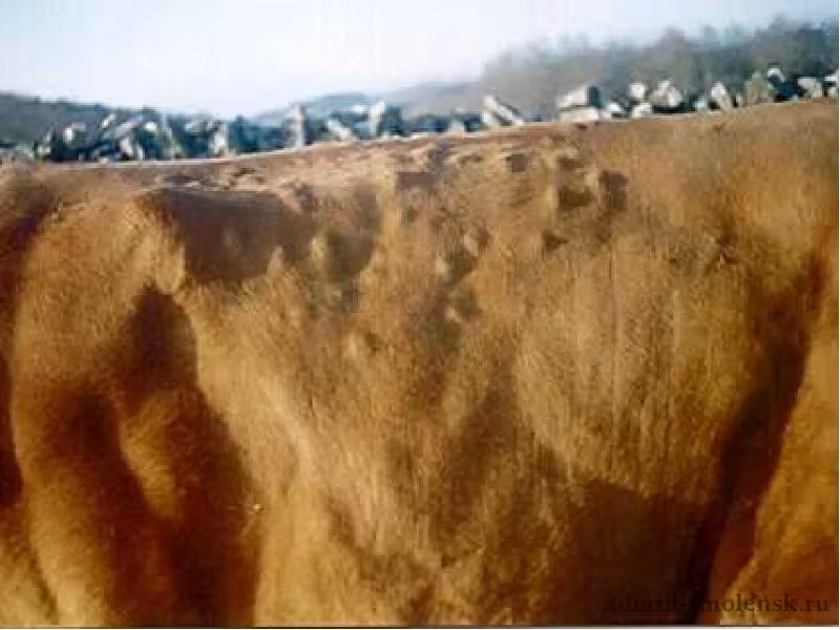
By late winter or early spring, physical examinations reveal firm, swollen lumps called "warbles" under the skin. These are often tender to the touch and feature a small central hole used by the larvae for breathing.
The animal's coat may look dull, matted, or poorly maintained, indicating a systemic health issue. Weight loss is common despite normal food intake as the animal's metabolism is strained by the parasitic load.
Lameness or abnormal posture can occur if larvae have settled near large joints or nerve clusters, causing pain and restricted mobility for the affected cattle.
Advanced diagnostic tools, such as ultrasound or serological testing, allow for the detection of larval migration before the physical warbles appear, which is crucial for early intervention.
Control measures
The primary control strategy involves scheduled antiparasitic treatments for the entire herd, utilizing systemic insecticides in the form of injections or pour-on solutions that target the migrating larvae.
Treatment is most effective when applied in the autumn, immediately after the adult flight period ends, to kill the larvae before they cause significant damage to the host's internal tissues.
Improved management practices include providing shaded areas in pastures where cattle can hide during peak fly activity and adjusting grazing hours to avoid periods of maximum insect flight.
- Application of systemic parasiticides.
- Early detection and isolation of infested livestock.
- Regular veterinary inspections and herd monitoring.
- Sanitation of housing areas and proper pasture management.
A comprehensive approach combining targeted medication with proactive farm management is the most effective way to minimize the warble fly population and ensure high levels of animal health and productivity.
Taxonomy
- Latin name
- Hypoderma
- Order
- Diptera (flies)
- Family
- Oestridae
- EPPO code
- HYPDSP
Discussion
No discussions yet — be the first.