
Lar gibbon
Hylobates lar
Description
How to identify
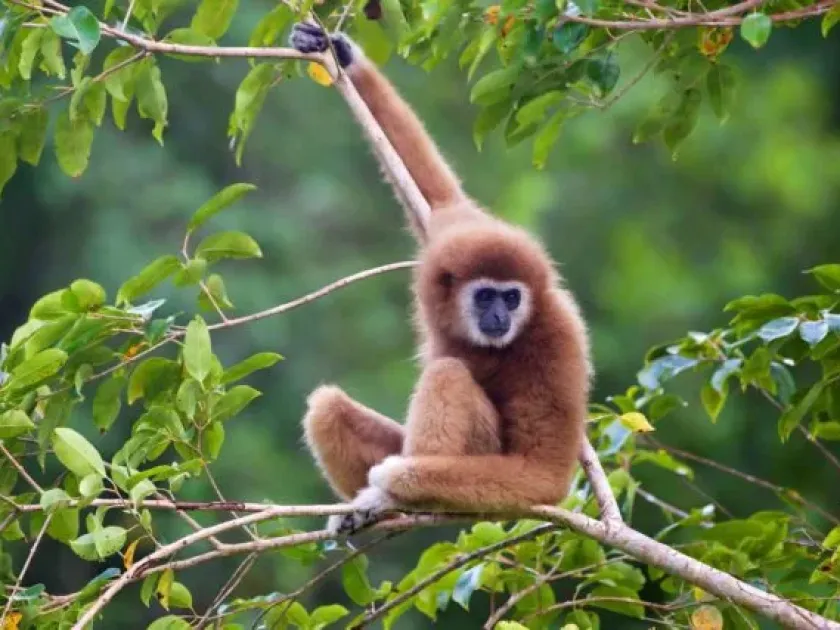
The Lar gibbon (Hylobates lar) is a primate species belonging to the Hylobatidae family. These animals are known for their slender bodies, absence of tails, and long arms, which are perfectly adapted for brachiating through forest canopies.
Physically, they are distinguished by white fur surrounding their faces and white hands and feet. While they primarily inhabit deep forest regions, their presence in agricultural areas creates significant challenges for farm owners, especially in tropical climates.
Lar gibbons live in stable social groups, which allows them to effectively navigate and exploit food sources. Their diurnal activity patterns mean they are most likely to infiltrate agricultural plantations during the early morning hours when farmers are just beginning their work.
The reproduction rate of these primates is low, but their ability to adapt to human-altered landscapes makes them formidable competitors for crop yields. Their intelligence allows them to learn patterns of human activity on the plantation.
In terms of agricultural impact, these primates exhibit high levels of curiosity and boldness. They use the canopy layer to move undetected over large distances, making them difficult to track until they reach the ripening fruit trees.
What it damages
The primary agricultural damage caused by Hylobates lar is the consumption of ripening fruit. They target crops such as mangoes, bananas, papayas, and various berries, often destroying the entire harvest potential of individual trees.
In addition to eating the fruit, they engage in extensive destructive behavior by plucking and discarding unripe fruits. This leads to substantial waste, as the discarded produce is often damaged and unsuitable for market sale.
Mechanical injury to trees is a major concern. When moving across branches, particularly while jumping, they often break limbs and young shoots. This structural damage reduces the plant's capacity to produce fruit in subsequent growing seasons.
Frequent visits by gibbon groups induce chronic stress in cultivated plants. This stress can weaken the trees' physiological health, making them more susceptible to local pests, fungi, and opportunistic bacterial diseases.
The loss of floral buds during the early stages of development significantly impacts the total yield. By removing these buds, the primates directly prevent the formation of fruits, causing long-term economic damage to the plantation.
Signs of infestation
The most prominent sign of their presence is the characteristic vocalization. Lar gibbons are famous for their loud, singing calls, which are used to define their territory and are easily heard over long distances in the morning.
Observing half-eaten fruits scattered under the tree canopy is a clear indicator of primate activity. These fruits typically exhibit distinct bite marks that are different from those left by smaller mammals or insect pests.
Broken twigs and branches located in the upper canopy are telltale signs of a gibbon group's path. These injuries occur in clusters, following the route the group took while moving through the orchard.
The presence of fecal matter in the trees or on the ground provides evidence of the group's occupation of the site. Finding such signs suggests that the primates have established a foraging habit on that specific section of the plantation.
Unusual disturbances among the local avian population can also signal the arrival of gibbons. Many birds and small forest animals clear out when a group of larger, territorial primates enters the area, creating a noticeable silence.
Control measures
Managing Lar gibbon damage requires the use of non-lethal deterrents. Automated noise-making devices, such as predator sound simulators or ultrasonic repellers, have shown effectiveness in discouraging groups from settling on farmland.
Physical barriers, such as specialized netting or pruning trees to eliminate branch bridges, can effectively limit access to valuable orchards. This strategy is particularly useful for protecting high-value tropical fruit trees.
Consistent human presence and active patrolling act as strong deterrents. Gibbons are generally wary of humans and will often avoid plantations where they perceive regular activity and active monitoring from farm workers.
Creating buffer zones consisting of crops less preferred by gibbons can help keep them at a distance from the main production areas. This spatial separation reduces the frequency of accidental encounters and crop loss.
Conservation laws strictly regulate interactions with Hylobates lar. Farmers must focus on ethical control methods, as harming or capturing these primates is illegal and violates international conservation standards for endangered species.
Taxonomy
- Latin name
- Hylobates lar
- Family
- Hylobatidae
- EPPO code
- HYLBLA
Discussion
No discussions yet — be the first.