
Hydropsyche
Hydropsyche
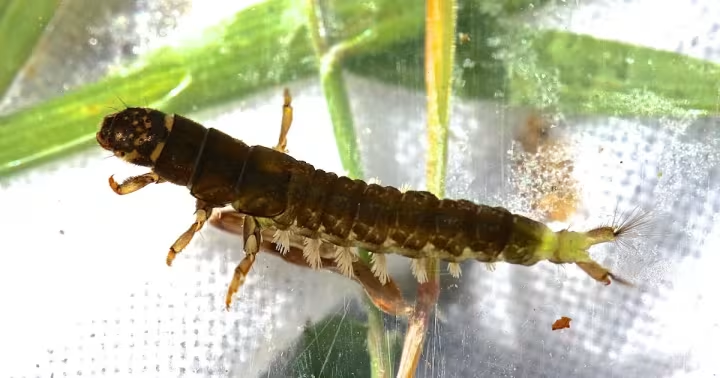
Description
How to identify
Hydropsyche is a genus of net-spinning caddisflies belonging to the family Hydropsychidae, order Trichoptera.
These insects are primarily aquatic in their larval stage, inhabiting running waters such as streams, rivers, and man-made irrigation channels.
The larvae are characterized by well-developed abdominal gills and a sclerotized head, allowing them to thrive in high-flow environments.
They are famous for constructing silken nets used to filter organic particles, plankton, and small invertebrates from the water column.
Adult caddisflies are moth-like in appearance and typically nocturnal, often found near freshwater sources during their mating flights.
What it damages
Hydropsyche species are not classified as agricultural pests because they do not feed on crops, foliage, roots, or seeds.
Their impact on agriculture is strictly limited to infrastructure, specifically regarding the maintenance of irrigation and drainage channels.
Dense populations of larvae can occasionally clog intake screens or water filters, potentially reducing the efficiency of water delivery systems.
They do not cause any yield loss or structural damage to vegetable, cereal, or fruit crops grown in fields.
Therefore, they are considered harmless from an agronomic perspective, playing a vital role as bioindicators of water quality.
Signs of infestation
Presence is usually detected by observing the silken retreats and nets anchored to submerged rocks, branches, or canal walls.
Larvae can be found by examining the substrate in fast-moving water sections of irrigation ditches or natural streams.
Massive gatherings of larvae indicate a well-oxygenated water source, which is generally a positive indicator of water health.
Adults may appear around artificial light sources near fields located in the vicinity of rivers or canal systems.
The absence of plant damage despite the presence of these insects confirms that they are not the target of pest control programs.
Control measures
No chemical pesticide applications are required or recommended for Hydropsyche, as they are not crop-damaging organisms.
Management practices focus on the mechanical maintenance of hydraulic infrastructure to ensure optimal water flow.
Regular cleaning of filters and grates in irrigation systems is the only necessary step to prevent blockages caused by net-building activity.
Maintaining proper channel velocity helps prevent excessive colonization of larvae in specific areas of the water management network.
Agronomic effort should prioritize infrastructure reliability rather than attempts to eradicate these beneficial aquatic insects.
Taxonomy
- Latin name
- Hydropsyche
- Family
- Hydropsychidae
- EPPO code
- HYDPSP
Discussion
No discussions yet — be the first.