
Rosy rustic
Hydraecia micacea
Description
How to identify
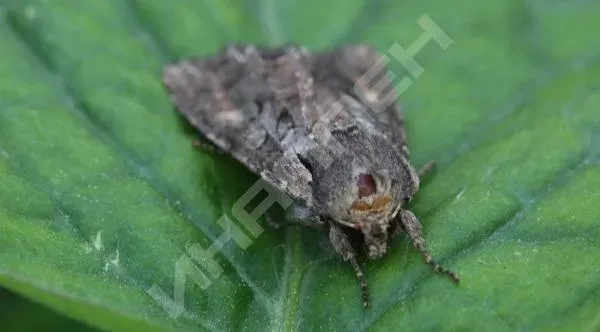
The Rosy rustic (Hydraecia micacea) is a noctuid moth belonging to the family Noctuidae. The adult moth has a wingspan ranging from 30 to 45 mm, with forewings typically featuring a reddish-brown or ochre coloration and a dark transverse band.
The larvae, or caterpillars, reach a length of 35 to 40 mm. They are characterized by a dirty-white to pinkish body covered with dark tubercles, bearing fine hairs, and a distinct dark line running along the back.
The eggs are hemispherical and yellowish, typically deposited by females on the stems of various grasses and sedges. This species overwinters primarily in the egg stage, ensuring survival through harsh conditions.
Pupation occurs in the soil, usually at a depth of up to 10 cm. The pupae are reddish-brown, and the transformation process is completed by the second half of the summer, leading to the emergence of adult moths.
The biology of the Rosy rustic is closely linked to humid environments. Consequently, the moth is most frequently found in low-lying fields or areas with high soil moisture, especially during wet growing seasons.
What it damages
The Rosy rustic is a polyphagous pest, meaning it attacks a wide variety of plants. Common hosts include potatoes, tomatoes, maize, hops, rhubarb, and several wild grasses and sedges.
The larvae are the primary cause of damage as they bore into the stems or crowns of plants. By consuming the inner tissues, they disrupt the plant's vascular system, leading to rapid wilting and decline.
Affected potato stems eventually turn yellow and wither. In severe cases, the entire plant may die or fail to develop marketable tubers, resulting in significant agricultural yield losses.
Bored stems are highly susceptible to secondary infections. Openings created by larvae act as entry points for bacterial and fungal pathogens, which cause further decay of the stem and, in some cases, the tubers themselves.
Damage is particularly devastating in the early growth stages of the crop. If the central shoot of a young potato plant is destroyed, it often leads to the stunted development or complete failure of the plant.
When it appears
The flight period of adult moths typically begins in mid-July and lasts until late September. During this time, they mate and lay eggs on suitable host plants that will sustain the next generation.
Larvae hatch from overwintered eggs in the spring, generally starting in May. Young caterpillars initially feed on weeds and grasses before migrating to cultivated plants as they grow larger.
The most active damage period for crops occurs during June and July. During this time, the larvae are highly active and may move between adjacent plants to continue feeding.
Pupation takes place in the soil from late July through August. The development is highly dependent on environmental temperature, and this stage serves as the final phase before the adult generation emerges.
The Rosy rustic moth completes one generation per year. This predictable seasonal life cycle allows agronomists and farmers to time their monitoring and control measures effectively.
Signs of infestation
The earliest symptom of infestation is the sudden wilting of the top of the plant or individual stems, even when soil moisture appears to be adequate for plant growth.
Close inspection at the base of the stem or near the wilting point often reveals small entry holes. These holes are frequently accompanied by frass (larval excrement), which accumulates in a small mound at the entry site.
Cutting a symptomatic stem longitudinally will reveal a hollowed-out tunnel filled with brown frass and debris from larval feeding. The damaged plant is often weak and easily pulled out of the soil.
The presence of significant populations of grassy weeds, such as sedges or quackgrass, around the edges of the field is a strong indicator of a high risk of Rosy rustic infestation.
In addition to wilting, the leaves or stems may show discoloration, turning paler or taking on a reddish-brown hue compared to the surrounding healthy foliage due to nutrient transport failure.
Control measures
The most effective management strategy is rigorous weed control, especially focusing on grasses and sedges. Removing these hosts before the egg-laying period significantly reduces the pest population.
Deep autumn plowing is a vital cultural practice. It helps expose pupae in the soil to surface conditions, where they become more vulnerable to mechanical damage, frost, and natural predators.
Implementing crop rotation and maintaining spatial isolation from wetlands or low-lying areas where wild hosts thrive can minimize the migration of moths into potato fields.
If the economic threshold of damage is exceeded, the application of registered systemic or contact-stomach insecticides may be necessary during the period of larval activity.
Utilizing pheromone traps for monitoring adult moth populations allows farmers to pinpoint the timing of emergence, optimizing the application of control measures to target larvae effectively.
Taxonomy
- Latin name
- Hydraecia micacea
- Order
- Lepidoptera (butterflies)
- Family
- Noctuidae
- EPPO code
- HYDOMI
Discussion
No discussions yet — be the first.