
Hop vine borer
Hydraecia immanis
Description
How to identify
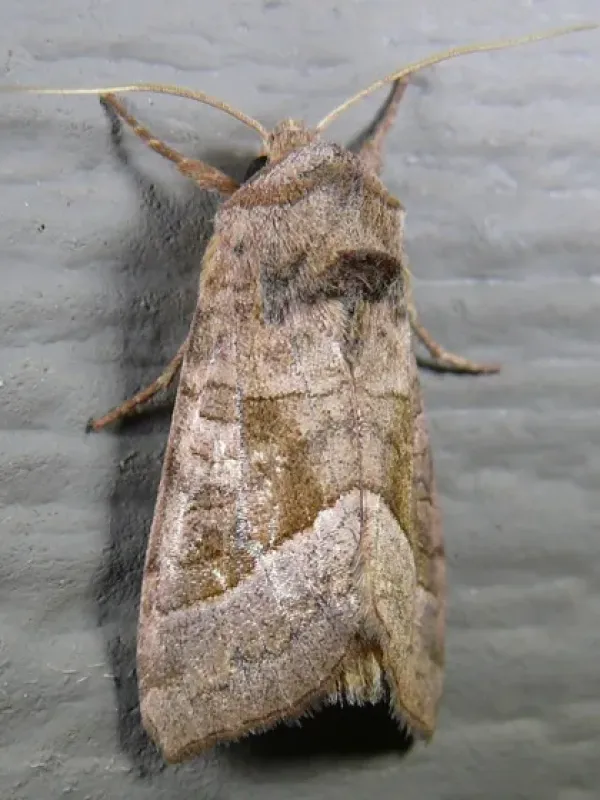
The hop vine borer (Hydraecia immanis) belongs to the family Noctuidae. The adult moth is characterized by a wingspan of 40–50 mm and brownish forewings with complex patterns that provide excellent camouflage.
The larvae are stout, reaching up to 50 mm in length. Their body is cream-colored or pinkish with distinctive dark sclerotized spots on each segment, which distinguishes them from other soil-dwelling larvae.
What it damages
The primary host for this pest is the hop plant (Humulus lupulus). Larvae feed internally on the rhizomes and the lower stems, which is devastating for commercial hop production.
While hops are the main target, the pest can also survive on various wild grasses and corn, utilizing these alternative hosts during the early stages of their life cycle.
When it appears
The life cycle is univoltine, meaning one generation per year. The insect overwinters in the egg stage, typically on the stems of grasses near the hop yards.
Larvae hatch in the spring, usually during May, and immediately begin feeding on available hosts. By late summer, they pupate in the soil, and adult moths emerge to mate and lay eggs.
Signs of infestation
The first indicator is the flagging or wilting of the hop bines. Because the larvae bore into the crown and stem, the plant loses its water transport capabilities very rapidly.
Examining the base of the vine reveals small entry holes and frass accumulation. If a vine is broken open, the tunnel and the larva within can be easily detected.
Control measures
- Sanitation: Remove host grasses around the perimeter of the field to reduce egg-laying sites.
- Tillage: Cultivate the soil in the fall to expose and destroy pupae.
- Chemical: Apply systemic insecticides when larvae are active and migrating to the hop plants.
- Monitoring: Use pheromone traps to time the adult flight and subsequent control measures.
Integrated Pest Management (IPM) is crucial, as relying solely on chemicals can lead to resistance and environmental impact, so combining cultural and chemical tactics is recommended.
Taxonomy
- Latin name
- Hydraecia immanis
- Order
- Lepidoptera (butterflies)
- Family
- Noctuidae
- EPPO code
- HYDOIM
Discussion
No discussions yet — be the first.