
Hydractinia echinata
Hydractinia echinata
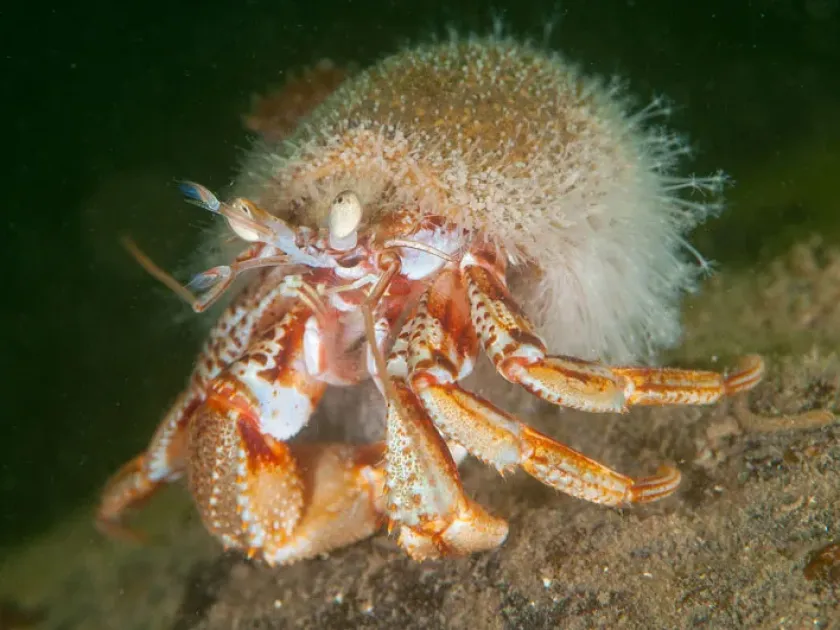
Description
How to identify
Hydractinia echinata is a colonial marine hydroid polyp belonging to the phylum Cnidaria and the class Hydrozoa. This organism is not an insect, fungus, or bacteria that could potentially harm crops.
The colony appears as a thin, velvety, pinkish or brownish crust that adheres firmly to hard surfaces. It consists of specialized polyps that perform distinct roles including feeding, defense, and reproduction.
The colony structure includes gastrozooids (feeding polyps), dactylozooids (defensive polyps), and gonozooids (reproductive polyps). The entire structure is protected by a chitinous layer with small spines.
This species is strictly a marine organism found in saltwater environments. It lacks the physiological adaptations necessary to survive on land, in soil, or on vascular plant tissues.
The life cycle involves a sessile polyp stage, which typically colonizes hard substrates such as the shells occupied by hermit crabs, making it a marine commensal organism.
What it damages
Hydractinia echinata is not a plant pest. There is no evidence in agricultural science or pathology to support the claim that this species causes damage to crops or ornamental plants.
Land plants are not subject to damage by this organism because it cannot inhabit freshwater or terrestrial ecosystems, and it does not feed on plant-derived organic matter.
Any reference to this organism as a crop pest is likely a misidentification or an error in nomenclature. The organism is harmless to agricultural production and plant health.
In the context of marine environments, it may be considered a biofouling agent on marine equipment or shellfish culture structures, but this is entirely unrelated to terrestrial farming.
Its ecological role is limited to symbiotic relationships with marine invertebrates, and it poses no threat to vegetation or forest ecosystems.
Control measures
Since Hydractinia echinata is not a threat to agricultural or horticultural plants, there are no control measures, chemical treatments, or pest management strategies recommended.
The application of pesticides or fungicides is entirely ineffective and ecologically irresponsible, as it does not target any actual plant pathogen or herbivorous insect.
For industrial marine operations where biofouling might occur, mechanical cleaning or physical barrier systems are used, which have no relevance to the agricultural sector.
Agronomists are advised to ensure accurate identification of any suspected pests using verified taxonomic keys to avoid confusion between marine hydroids and real plant pathogens.
Proper identification remains the foundation of integrated pest management (IPM), and this organism should not be included in any list of agricultural pests.
Taxonomy
- Latin name
- Hydractinia echinata
- Family
- Hydractiniidae
- EPPO code
- HDRTEC
Discussion
No discussions yet — be the first.