
Howardula
Howardula
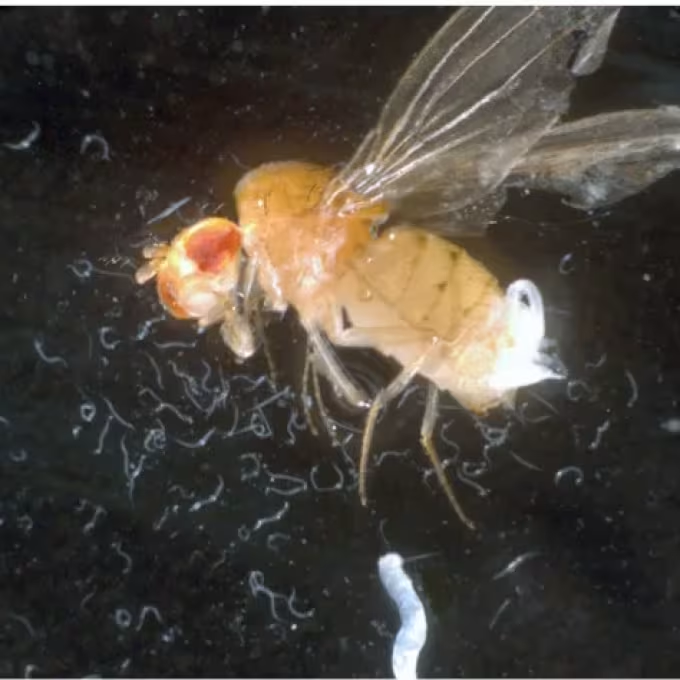
Description
How to identify
Howardula is a genus of microscopic parasitic nematodes belonging to the family Allantonematidae. These organisms are highly specialized endoparasites that infect insects, particularly those found in mushroom-growing environments.
Morphologically, these nematodes are extremely small and difficult to detect without high-magnification microscopy. Females are often found inside the hemocoel of the host insect, where they undergo significant growth and morphological transformation as they mature.
The life cycle of Howardula is intrinsically linked to its host, which in agricultural contexts is typically a sciarid fly. The nematodes rely on the host's movement to disperse themselves throughout the mushroom substrate.
Identification often requires dissection of the host insects or molecular analysis to confirm the presence and specific species of the nematode. Agricultural laboratories perform these checks to assess the risk of infestation in mushroom facilities.
The taxonomic classification of the genus remains a subject of ongoing study, as researchers investigate the host specificity and evolution of these nematodes in relation to the insects they parasitize.
What it damages
Howardula does not consume plants directly; instead, it causes damage by modulating the health and behavior of insects. By infecting sciarid flies, the nematodes can influence the transmission of other fungal and bacterial pathogens within a crop.
Infected insects act as vectors for various diseases. As they move across the mushroom beds, they distribute spores and bacteria that have been picked up from contaminated areas, directly impacting crop quality and yield.
The presence of Howardula can weaken host populations, leading to erratic insect behavior. This can complicate pest management strategies, as the internal presence of the nematode may alter the insect's response to environmental stimuli.
Economic damage occurs primarily due to the secondary infections that follow the insect's activity. Producers often observe declining uniformity in mushroom size and increased susceptibility to bacterial blotch or other related issues.
High levels of Howardula infestation reflect poor sanitary conditions, as the nematodes thrive when the density of the host insect population is high. This creates a feedback loop that lowers overall productivity in mushroom production houses.
Control measures
The management of Howardula is centered on the control of its insect hosts. By preventing sciarid fly populations from establishing, growers can effectively interrupt the lifecycle of the nematode.
Strict thermal pasteurization of the mushroom substrate prior to spawning is the primary defense. High temperatures ensure that any nematodes or insect eggs present in the compost are eradicated before the mushrooms are introduced.
Monitoring using yellow sticky traps is essential to detect insect activity levels early. If sciarid fly populations begin to rise, immediate intervention using biological control agents is recommended to keep them below the damage threshold.
Maintaining high hygiene standards in the production facility, including the use of air filters and limiting human traffic between rooms, is vital to prevent the introduction of carrier insects into the growing environment.
- Thermal pasteurization of substrates.
- Use of biological insecticides to control sciarid flies.
- Monitoring with yellow sticky traps.
- Post-harvest cleaning and disinfection of rooms.
Taxonomy
- Latin name
- Howardula
- Order
- Nematodes
- Family
- Allantonematidae
- EPPO code
- HOWRSP
Discussion
No discussions yet — be the first.