
Common hippopotamus
Hippopotamus amphibius
Description
How to identify
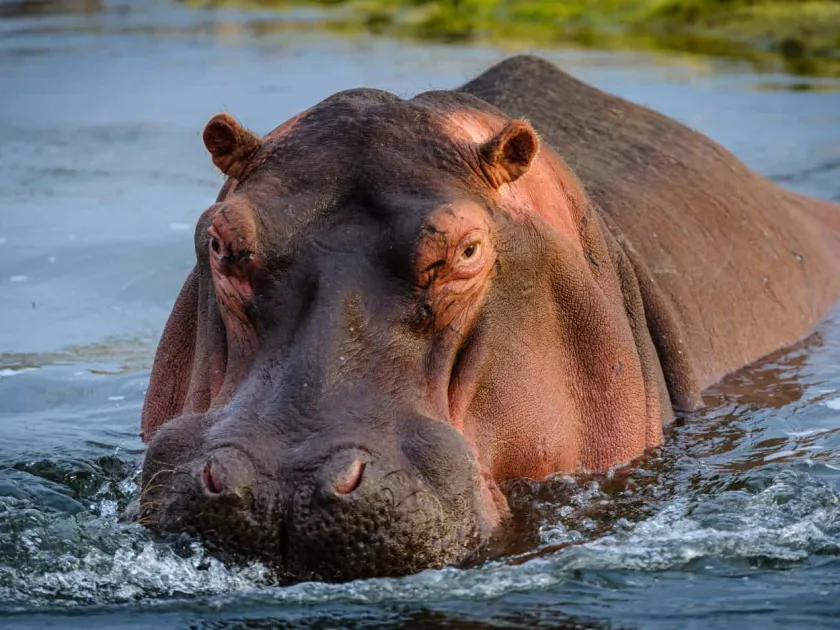
The common hippopotamus (Hippopotamus amphibius) is a large, semi-aquatic mammal belonging to the family Hippopotamidae and the order Artiodactyla.
Known for their massive size, adults can weigh up to 3,000 kilograms. They have thick, sparsely haired skin that requires regular contact with water to remain healthy.
They are primarily nocturnal animals, spending their days submerged in water and their nights grazing on land, often covering several kilometers in search of vegetation.
Hippos possess long, sharp canine teeth used for defense and territorial disputes, which underscores their potential danger to both livestock and human property.
The life cycle involves a lengthy gestation period and a strong mother-calf bond, with family groups often congregating near suitable water sources.
What it damages
Hippos are significant agricultural pests in tropical regions, as they consume vast quantities of vegetation, causing total crop failure in affected areas.
Cereal crops like corn and rice are highly susceptible. Hippos trample these plants, creating wide pathways that lead to further destruction of the soil structure.
Vegetable gardens and orchards located near riverbanks are frequently raided, as hippos can easily access them from their aquatic resting sites.
Feeding behavior involves both grazing and pulling plants up by the roots, which causes deep soil disturbance and prevents potential plant regrowth.
A herd of hippos can destroy entire harvests in a single night due to their immense body mass and continuous grazing patterns.
When it appears
Hippos are active year-round, as they inhabit stable tropical climates where seasons are defined by rainfall rather than temperature fluctuations.
During the dry season, when natural forage in wild habitats becomes scarce, hippos tend to rely more heavily on crops as a supplementary food source.
Activity is predominantly nocturnal, meaning the threat to agricultural fields peaks between dusk and dawn when they leave the safety of their water bodies.
Periods of drought may force hippos to travel greater distances in search of succulent plant matter, expanding their impact to more remote agricultural zones.
The timing of raids is usually consistent, as groups tend to follow specific well-trodden paths from water to feeding grounds nightly.
Signs of infestation
The most visible signs of a hippo presence are large, deep hoof prints in soft ground and wide, flattened trails through dense vegetation.
Grazed areas display a uniform, cropped appearance where crops have been consumed cleanly down to the base of the plant.
Large deposits of scat along their migratory routes serve as a clear indicator of a well-established path between the water and the field.
Physical damage to irrigation infrastructure or fencing indicates that a herd is actively using the area as a route to food supplies.
Reports of nocturnal noise and sightings of massive silhouettes moving near fields are reliable indicators of hippo activity in the vicinity.
Control measures
The most effective strategy is the installation of robust physical barriers, such as reinforced fencing or deep trenches, to restrict the movement of large mammals.
Electric fencing, designed with appropriate voltage levels, can effectively discourage hippos from entering cultivated areas if maintained regularly.
Light and sound-based repellent systems may provide temporary relief, although hippos often habituate to repetitive stimuli over long periods.
Implementing land-use planning by establishing buffer zones between rivers and fields can discourage hippos from venturing into prime agricultural space.
Collaboration with local conservation authorities is essential to develop sustainable wildlife management practices that minimize crop loss while respecting ecological regulations.
Taxonomy
- Latin name
- Hippopotamus amphibius
- Family
- Hippopotamidae
- EPPO code
- HPPPAM
Discussion
No discussions yet — be the first.