
Chameleon shrimp
Hippolyte varians
Description
How to identify
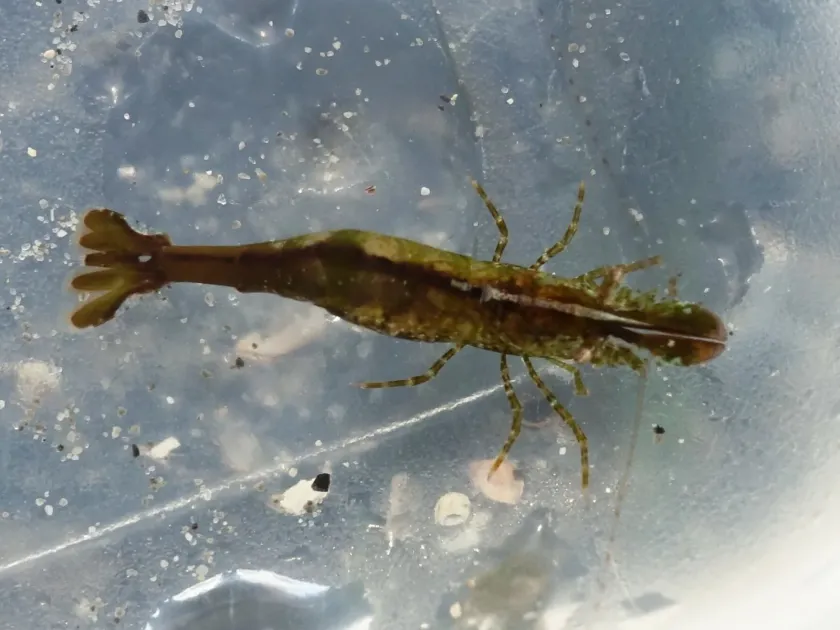
The chameleon shrimp (Hippolyte varians) is a crustacean belonging to the order Decapoda and the family Hippolytidae. It is a marine species renowned for its remarkable camouflage capabilities.
Adult individuals typically measure between 2 and 3 cm in length. Their bodies are streamlined to navigate through dense vegetation, and their coloration changes based on the surrounding environment, ranging from green to dark brown or red.
The life cycle involves a reproductive phase where females carry their eggs on their pleopods. Upon hatching, the larvae undergo a planktonic stage before settling into a benthic lifestyle within seagrass meadows.
These shrimp are highly adapted to coastal habitats where aquatic vegetation is abundant, providing both food and protection from predators through their natural mimicry.
In aquaculture, although not a typical agricultural pest, Hippolyte varians is recognized as an organism capable of affecting the biomass of cultivated seaweed and seagrass.
What it damages
The primary diet of the chameleon shrimp consists of epiphytic algae and detritus, but under high population density, they may graze on living tissues of seagrasses like Zostera marina.
The damage caused involves the skeletonization of leaves and the consumption of young, tender shoots, which directly affects the growth and development of the plants.
Signs of infestation include irregular holes in the leaves and missing leaf tips, which not only degrade the quality of the crop but also impede photosynthesis.
Mechanical damage to the plant epidermis makes the vegetation more susceptible to bacterial and fungal infections, potentially leading to widespread plant death in contained environments.
Economic damage is usually localized to high-density aquaculture systems where precise plant growth is required for commercial success.
Control measures
Effective control in marine farming focuses on non-chemical methods to preserve the delicate aquatic ecosystem and ensure the safety of other biological assets.
Physical exclusion methods, such as fine-mesh netting, are highly recommended to prevent shrimp from accessing the primary cultivation areas during sensitive growth periods.
Biological control methods include introducing natural predators, such as small carnivorous fish, to manage the shrimp population within the farming enclosure.
Regular maintenance of the farming site, including the removal of debris and excessive wild-growing weeds, helps eliminate the hiding spots favored by Hippolyte varians.
Continuous monitoring allows farmers to detect rising population densities early, enabling timely intervention before the shrimp reach levels that could cause significant economic loss.
Taxonomy
- Latin name
- Hippolyte varians
- Family
- Hippolytidae
- EPPO code
- HPPLVA
Discussion
No discussions yet — be the first.