
Heliothis nubigera
Heliothis nubigera
Description
How to identify
Heliothis nubigera is a species of moth belonging to the family Noctuidae. It is a migratory pest capable of covering long distances to infest new fields.
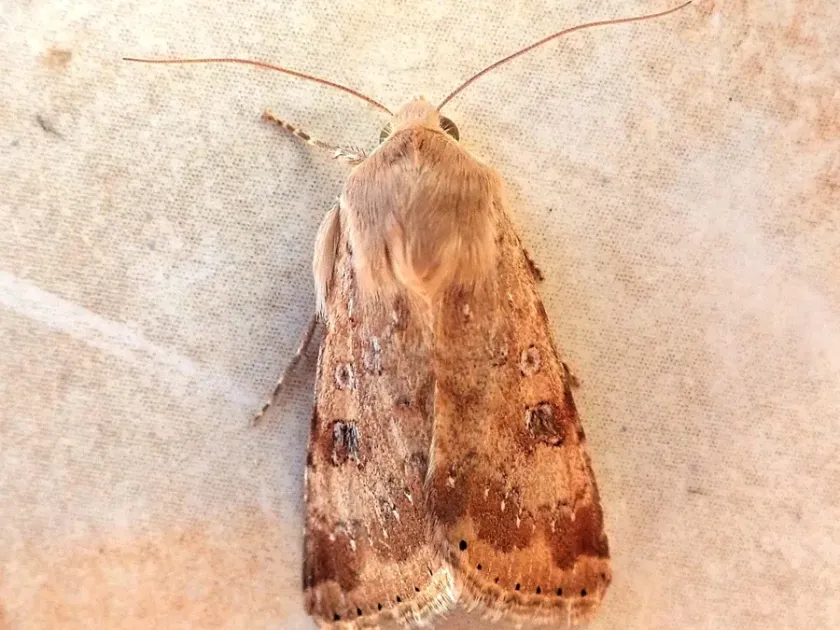
The adult moth typically has a wingspan of 35–40 mm. Its forewings are usually brownish-grey or ochre with a distinct kidney-shaped spot, while the hindwings are lighter with a dark outer border.
The larvae progress through several instars, varying in color from light green to brownish-grey, often marked with characteristic longitudinal stripes along the body.
Pupation occurs in the soil, where the pupae remain in diapause during unfavorable conditions, particularly during the winter months.
This species is visually similar to other related Noctuidae, often requiring professional identification based on genitalia or pheromone trap captures.
What it damages
This pest is highly polyphagous, attacking a wide range of economically important crops including tomatoes, peppers, eggplants, legumes, and cotton.
The larvae are responsible for the damage, as they feed on reproductive parts such as buds, flowers, and developing fruits, causing direct yield losses.
Larval feeding inside the fruit creates deep cavities, which not only spoil the produce but also serve as entry points for secondary fungal and bacterial rot infections.
When infestation levels are high, the larvae can destroy entire harvests by feeding on growth points and preventing the plants from developing properly.
In addition to direct damage, the presence of larvae often leads to significant plant stress and increased susceptibility to other biotic and abiotic factors.
When it appears
The flight activity of adults begins in the spring when temperatures consistently rise above the threshold required for development, typically around 15°C.
Depending on the climatic zone, Heliothis nubigera can complete multiple generations within a single growing season, often overlapping in time.
Larval populations usually peak during the mid-summer period, coinciding with the flowering and fruiting stages of most susceptible host crops.
The emergence of the spring generation from overwintering pupae is heavily dependent on soil moisture and ambient temperature fluctuations.
As daylight hours shorten and temperatures drop in autumn, the pest enters a state of diapause, preparing for the winter survival cycle in the soil.
Signs of infestation
Signs of an infestation include the presence of holes in fruits, flower buds, or young pods, often surrounded by small piles of larval excrement (frass).
Monitoring adult flight using pheromone traps is the most reliable method for detecting the arrival of the pest before significant damage occurs.
Visual inspection of the foliage may reveal small, semi-spherical eggs laid individually, often on the underside of leaves or near flower buds.
Infected plants may show signs of defoliation or stunted growth if the larvae have consumed the terminal growth points of the young stems.
- Circular entry holes in fruit surfaces.
- Premature shedding of buds and flowers.
- Visible larval frass on leaves or fruit stems.
Control measures
Cultural practices like deep plowing after harvest help destroy pupae in the soil, significantly reducing the overwintering population for the next season.
Biological control using microbial insecticides based on Bacillus thuringiensis is recommended to target young larvae while minimizing environmental impact.
Chemical control should be applied based on economic thresholds and monitoring data, targeting the larvae before they penetrate the fruit tissues.
Rotating crops and eliminating host weeds surrounding the fields are essential preventative strategies to manage the pest's life cycle.
Integrating pheromone traps into the pest management program allows for precise timing of interventions, which is critical for successful control.
Taxonomy
- Latin name
- Heliothis nubigera
- Order
- Lepidoptera (butterflies)
- Family
- Noctuidae
- EPPO code
- HELINU
Discussion
No discussions yet — be the first.