
Corn earworm
Helicoverpa zea
Description
How to identify
The corn earworm (Helicoverpa zea), also known as the cotton bollworm, is a destructive moth species within the Noctuidae family. The adult moth has a wingspan of approximately 35–40 mm, with colors ranging from tan or light brown to olive green.
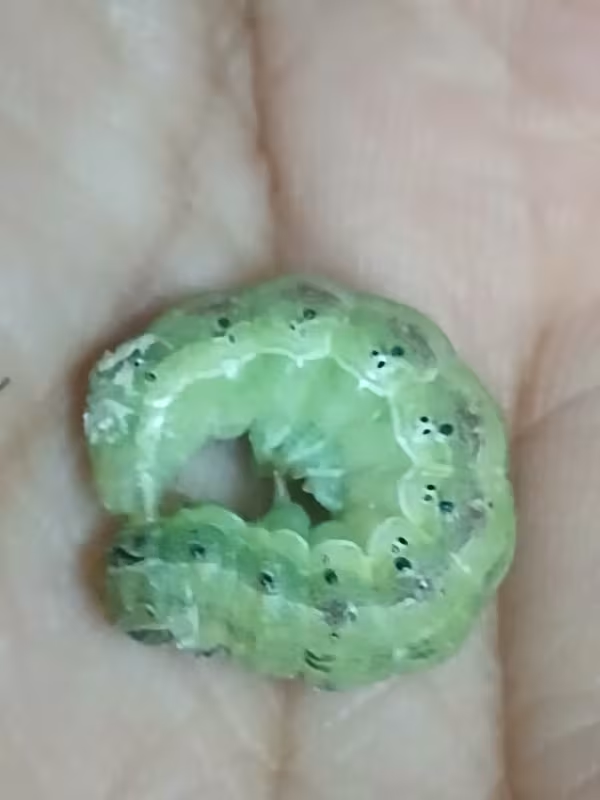
The larvae are the most recognizable life stage, typically displaying a wide range of colors from light green to yellow, brown, or even near-black. They are characterized by a series of alternating light and dark stripes running down their bodies and possess small stiff hairs.
The pupal stage occurs in the soil, where the insect develops at depths ranging from 5 to 15 centimeters. The pupae are roughly 20 mm long and reddish-brown, serving as the overwintering form in warmer climates.
Eggs are hemispherical, initially white or pale yellow, and darken as the larva matures inside. Females deposit these eggs primarily on the fresh silk of corn ears, ensuring immediate food access for the hatching neonates.
Successful field identification involves scouting for eggs on corn silks and looking for early-stage larvae before they burrow deep into the reproductive structures of the plant.
What it damages
The corn earworm is highly polyphagous, attacking a vast array of crops including corn, tomatoes, cotton, legumes, and various peppers. It is considered a major economic threat globally due to the extent of its feeding habits.
On corn, the primary damage occurs when larvae feed on the developing kernels at the tip of the ear. This consumption not only causes yield loss but also creates entry points for moisture and pathogens.
The secondary damage often includes fungal infections, such as Fusarium ear rot, which can lead to the production of mycotoxins in the grain, making the harvest unsafe for human or livestock consumption.
On vegetable crops like tomatoes, larvae bore into the fruit, causing internal tissue destruction and premature rotting. A single larva can destroy several fruits during its developmental cycle.
Overall, the damage caused by this pest leads to significant economic loss for producers, necessitating regular monitoring and timely intervention to maintain crop quality and quantity.
When it appears
The emergence of the corn earworm is temperature-dependent, typically beginning when spring temperatures allow for the development of pupae in the soil. Adults are nocturnal, active mostly during dusk and evening hours.
Multiple generations occur throughout the growing season. In warmer regions, several cycles can take place within a single year, with populations peaking during the silking stage of the corn crop.
Adults exhibit migratory behavior, often traveling long distances on wind currents to colonize new fields, which makes regional monitoring particularly important for effective management.
As autumn approaches and temperatures drop, the final generation of larvae moves into the soil to pupate for the winter, marking the end of the active seasonal cycle in colder zones.
Effective management requires the use of pheromone traps to track adult population spikes, allowing growers to predict larval infestation windows and apply protective measures at the right time.
Signs of infestation
The presence of corn earworm is often first signaled by damaged or partially consumed silks on the tips of corn ears. This is a clear indicator that hatching larvae have begun their feeding process.
Accumulated larval frass (excrement) on the tip of the husk is another major visual sign. This brownish, granular debris accumulates as the larvae feed and grow deeper into the ear.
Upon opening the husk, one may observe the larvae themselves, often curled in a C-shape, along with uneven, missing, or hollowed-out kernels on the upper part of the cob.
Leaf feeding may be observed earlier in the season before corn reaches the silking stage. This presents as small, circular holes or ragged margins on the foliage as young larvae consume plant tissue.
Prematurely browning or damaged husks may also indicate that the infestation is well-established, suggesting that immediate action is required to prevent further spread within the field.
Control measures
Integrated Pest Management (IPM) is the gold standard for controlling the corn earworm, combining cultural, biological, and chemical strategies for maximum efficiency.
Cultural practices, such as fall plowing, are highly effective in disrupting the pupation environment in the soil. Additionally, selecting crop varieties that have tighter husks can provide a physical barrier against larval entry.
Biological control involves the use of beneficial insects like Trichogramma wasps, which parasitize the pest's eggs, or the application of naturally occurring pathogens like Bacillus thuringiensis.
Chemical control is most effective when targeted at the egg-laying or early larval stage. Once the larvae penetrate the husk, contact insecticides have very limited efficacy, making timing crucial.
- Use pheromone traps for early warning.
- Plant resistant or genetically modified hybrids.
- Implement proper crop rotation cycles.
- Apply insecticides at the start of silk emergence.
- Scout fields regularly during silking to determine treatment thresholds.
Taxonomy
- Latin name
- Helicoverpa zea
- Order
- Lepidoptera (butterflies)
- Family
- Noctuidae
- EPPO code
- HELIZE
Discussion
No discussions yet — be the first.