
Hawaiian cotton bollworm
Helicoverpa hawaiiensis
Description
How to identify
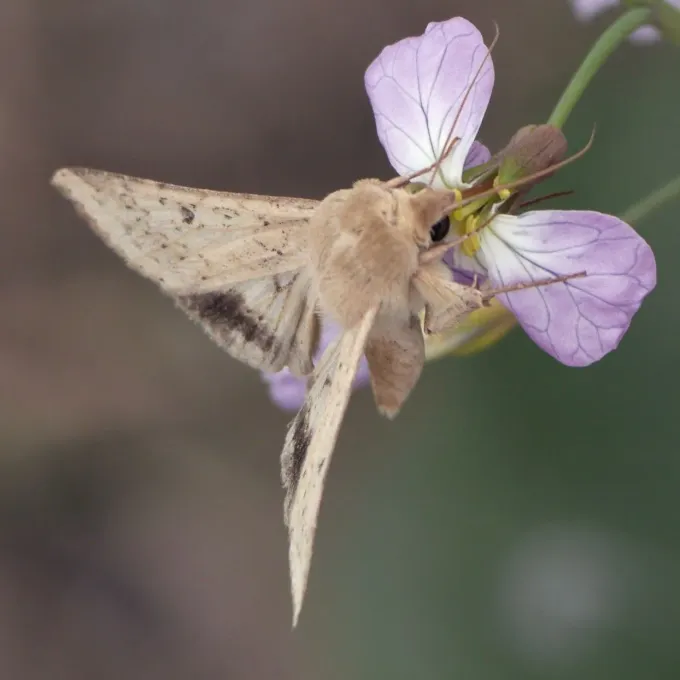
The Hawaiian cotton bollworm (Helicoverpa hawaiiensis) is a moth species belonging to the Noctuidae family. It is recognized as an endemic species to the Hawaiian archipelago.
Adult moths typically exhibit a wingspan of 30–40 mm. Their forewings are characterized by shades of light brown or grey, featuring distinct cross-lines and spots that provide excellent camouflage in native habitats.
Larvae undergo several developmental stages, exhibiting color variations ranging from light green to brown. They are characterized by a prominent head capsule and longitudinal stripes along their body.
The life cycle consists of four distinct phases: egg, larva, pupa, and adult. Development is heavily influenced by the tropical climate of the islands, with high humidity and stable temperatures.
As a member of the Helicoverpa genus, it is taxonomically closely related to some of the world's most significant agricultural pests, necessitating accurate field identification.
What it damages
The pest primarily targets the reproductive structures of plants, including flower buds, blossoms, and developing fruits. This feeding behavior significantly impacts plant productivity.
Larvae bore into fruits, consuming the internal tissues and seeds. This damage often causes premature fruit drop or renders the produce unsalable due to hollowed interiors.
Severe infestations coincide with the flowering and fruiting phenology of the plants, posing a threat to both yields and the quality of agricultural produce.
The entry holes created by the larvae also serve as infection sites for various pathogens, leading to fruit rot and secondary fungal colonizations.
The economic damage threshold varies depending on the crop species and the local environmental conditions, which dictate the seasonal population pressure of the pest.
Signs of infestation
One of the earliest signs of infestation is the presence of larval excrement, often found as dark granular pellets on leaves or stems near infested buds.
Distinct entry or exit holes on fruits or buds are clear indicators of larval activity. Damaged floral parts may also show signs of wilting or discoloration.
During the night, adult moths can be observed around light sources, which is a common diagnostic sign for tracking population shifts.
The premature abscission of buds or young fruits is a frequent symptom of internal feeding by the larvae, leading to noticeable gaps in the plant's canopy.
- Granular larval droppings
- Entry holes in fruits and buds
- Wilting of flowers
- Premature fruit drop
Control measures
Effective management begins with routine field monitoring to detect early-stage larvae before significant economic damage occurs.
Pheromone traps are essential tools for monitoring adult flight patterns, allowing farmers to time their interventions precisely for maximum effectiveness.
Biological control, including the use of Bacillus thuringiensis sprays, is highly effective against young larvae and minimizes the impact on non-target beneficial insects.
Cultural practices, such as the removal of host weeds from field perimeters, help eliminate secondary breeding sites and reduce overall population pressure.
Post-harvest soil cultivation is recommended to disrupt the pupation cycle of the moth, significantly lowering the potential carry-over population for the next season.
Taxonomy
- Latin name
- Helicoverpa hawaiiensis
- Order
- Lepidoptera (butterflies)
- Family
- Noctuidae
- EPPO code
- HELIHA
Discussion
No discussions yet — be the first.