
Oriental tobacco budworm
Helicoverpa assulta
Description
How to identify
The Oriental tobacco budworm (Helicoverpa assulta) is a member of the Noctuidae family. It is a highly destructive pest, particularly known for its specialized affinity for Solanaceous crops.
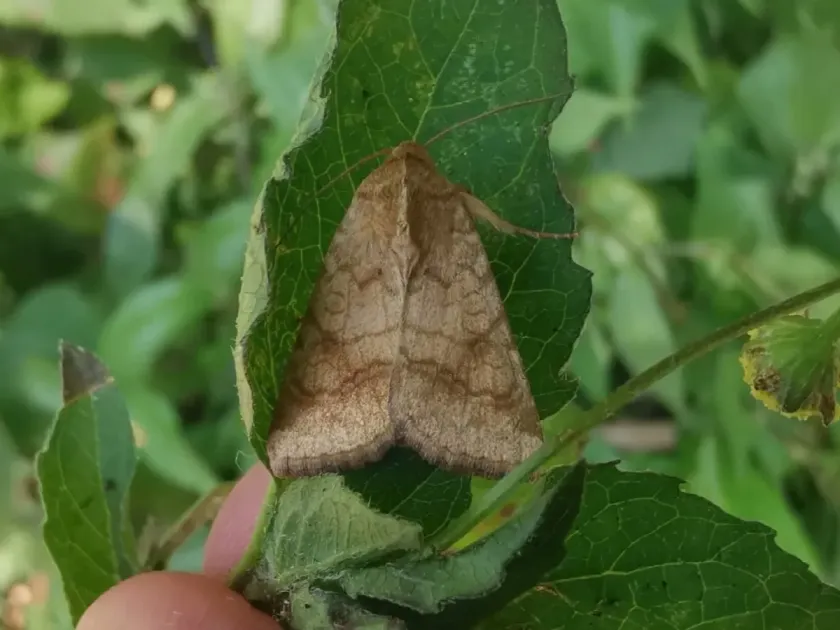
Adult moths have a wingspan of approximately 35–40 mm. Their forewings typically exhibit a yellowish-brown color with distinct dark cross-lines and a prominent kidney-shaped spot, providing excellent camouflage.
The larvae progress through five to six instars. Their body color varies significantly depending on their diet and developmental stage, ranging from pale green to reddish-brown with longitudinal stripes.
Pupae are reddish-brown, measuring 15–18 mm in length, and are characterized by two parallel spines on the cremaster. They typically pupate in the soil at a depth of 5–10 cm.
The eggs are small, hemispherical, and ribbed. They are laid singly by the females, usually on the underside of leaves or directly onto the buds and flowers of the host plant.
What it damages
The primary hosts of this pest include tobacco, tomatoes, peppers, and various other plants in the Solanaceae family. It is considered a major economic threat in many regions.
While young larvae consume leaf tissue, older larvae demonstrate a preference for the reproductive organs of the plant, often boring into buds, flowers, and developing fruits.
In tobacco production, the damage to buds and terminal growth points causes severe stunting and reduces the quality and yield of the leaves significantly.
Infested pepper and tomato fruits are often rendered unmarketable due to the deep boreholes created by the larvae, which also serve as entry points for bacterial and fungal pathogens.
Under favorable conditions, high larval populations can cause total loss of reproductive potential, leading to significant economic losses for commercial growers.
When it appears
The life cycle begins with the emergence of adult moths in late spring, triggered by rising soil and air temperatures that favor the development of overwintering pupae.
The number of annual generations varies by climate; in warmer subtropical areas, the Oriental tobacco budworm can complete three to four generations per growing season.
Adult flight activity and peak egg-laying periods usually coincide with the flowering stage of host crops, which provides the necessary nutrition for neonate larvae.
Larval activity is primarily nocturnal; however, they remain on the plant during the day, often protected inside the fruits or deep within the canopy to avoid desiccation and predators.
As day length shortens and temperatures decline in the autumn, the population transitions into a pupal diapause phase within the soil to survive the winter months.
Signs of infestation
Early indicators of infestation include the presence of fresh larval frass (excrement) on the foliage or near the base of the plant, marking the activity of early-instar larvae.
Holes or irregular gaps in buds and flower petals indicate that the larvae have begun boring into the plant's reproductive structures to feed on the developing tissues.
Premature abscission or wilting of flowers is a classic symptom of larval feeding at the base of the flower or on the peduncle, which disrupts the nutrient flow.
Presence of larvae can be detected during scouting by observing "windowing" on leaves, where the epidermis remains intact while the underlying parenchyma is consumed.
The use of light traps or sex pheromone traps is the most reliable method for detecting adult moth presence and predicting the timing of larval emergence.
Control measures
Cultural practices, such as deep plowing after harvest, are essential for destroying pupal chambers in the soil and reducing the population for the next season.
Sanitation measures, including the removal of solanaceous weeds (like nightshade) from field borders, help minimize the availability of alternative host plants for the pest.
Biological control methods, particularly the release of Trichogramma wasps, have shown effectiveness in parasitizing the eggs and reducing larval numbers naturally.
Chemical control must be timed carefully; insecticides are most effective when applied against neonate or young larvae, before they bore into the protected interiors of fruits or buds.
- Pheromone trap monitoring.
- Deep tillage of soil in autumn.
- Microbial insecticides (Bacillus thuringiensis).
- Crop rotation with non-solanaceous species.
Taxonomy
- Latin name
- Helicoverpa assulta
- Order
- Lepidoptera (butterflies)
- Family
- Noctuidae
- EPPO code
- HELIAS
Discussion
No discussions yet — be the first.