
Cotton bollworm
Helicoverpa
Description
How to identify
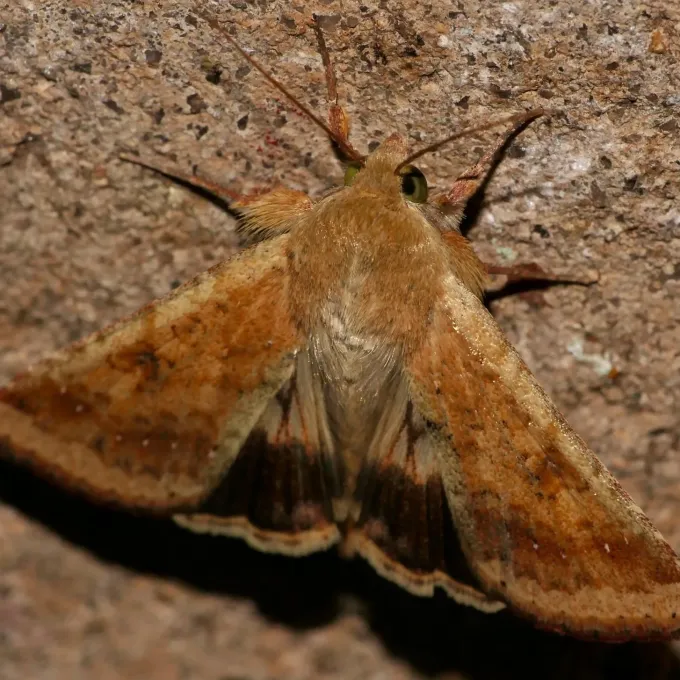
The cotton bollworm (Helicoverpa armigera) is a highly polyphagous moth species belonging to the Noctuidae family. Adult moths feature a wingspan of up to 40 mm, with colors ranging from yellowish-grey to reddish-brown.
The larvae, known as bollworms, reach up to 40 mm in length and exhibit variable coloration, ranging from light green to dark brown or nearly black. Their skin is covered with small, coarse hairs, and they possess characteristic longitudinal stripes along the body.
Pupae are brown, approximately 20 mm long, and have two parallel spines at the posterior end. They typically overwinter in the soil at depths up to 10 cm, emerging when environmental conditions become favorable.
Females lay semi-spherical, yellowish eggs singly on leaves, buds, or flowers. A single female is capable of producing up to 2,000 eggs during her short lifespan, leading to rapid population growth.
This species is globally distributed and notorious for its resilience and ability to adapt to various agricultural ecosystems, making it a major economic threat to food security.
What it damages
As a polyphagous pest, the cotton bollworm attacks over 250 plant species, including major crops like cotton, tomatoes, corn, chickpeas, sunflowers, and various legumes and vegetables.
While early-instar larvae feed on foliage, the older larvae are highly destructive as they prefer reproductive structures. They bore into buds, flowers, and fruits, causing them to wither or rot.
In maize, larvae tunnel into the cobs and consume the kernels during the milk stage, which facilitates the growth of secondary fungal infections and significantly reduces yield quality.
In tomato and pepper crops, larvae create deep entry holes in the fruit, often leading to total loss of the produce due to secondary bacterial and fungal decay.
The economic impact includes not only direct crop destruction but also substantial costs associated with repeated insecticide applications and harvest sorting labor.
When it appears
The emergence of moths from overwintering pupae is triggered by rising temperatures, typically when daily means exceed 18°C in the spring. This marks the beginning of the active season.
The life cycle duration is highly dependent on ambient temperature, ranging from 25 to 45 days. In warmer climates, the bollworm can complete multiple generations within a single season.
The population peaks usually coincide with high summer temperatures, which accelerate the development of larvae and increase the intensity of crop infestation.
As autumn temperatures drop, the final generation of pupae enters diapause in the soil, ensuring the survival of the population through the winter until the next spring cycle.
Monitoring using pheromone traps is essential to track moth migration and activity, allowing farmers to implement control measures precisely when eggs are being laid.
Signs of infestation
Initial signs of infestation appear as small, irregular holes on the leaves, where young larvae have been feeding. They often start in clusters before dispersing across the field.
Frass (larval excrement) appearing as dark pellets on leaves or the base of buds is a classic indicator that bollworms are actively feeding in the vicinity.
Abnormal shedding of flowers and buds is a significant sign, as the larvae often destroy these structures entirely, causing them to fall off the plant prematurely.
Visible boreholes in fruits or pods, often with dark, necrotic edges, indicate that a larva has tunneled inside. These fruits often remain attached but are entirely hollowed out.
Wilting of shoots or terminal growth can occur if larvae have entered the stem or damaged the plant's vascular system, causing localized water stress and nutrient deficiency.
Control measures
Cultural control methods such as deep tillage (plowing) are highly effective at disrupting pupation sites and exposing overwintering pupae to predators and climatic extremes.
Weed management is a critical preventive strategy, as many common weeds act as secondary hosts for early-season generations, allowing the population to build up before crops are vulnerable.
Integrated Pest Management (IPM) relies on pheromone monitoring to optimize the timing of chemical interventions, ensuring treatments target the most vulnerable larval stages.
Chemical control usually involves the application of diamides, pyrethroids, or organophosphates, though rotation of active ingredients is necessary to prevent the development of pesticide resistance.
Biological control options, including the use of Bacillus thuringiensis sprays, egg parasitoids like Trichogramma wasps, and natural predators, are vital components of a sustainable management program.
Taxonomy
- Latin name
- Helicoverpa
- Order
- Lepidoptera (butterflies)
- Family
- Noctuidae
- EPPO code
- HELVSP
Discussion
No discussions yet — be the first.