
Spiral nematode
Helicotylenus dactylopterus
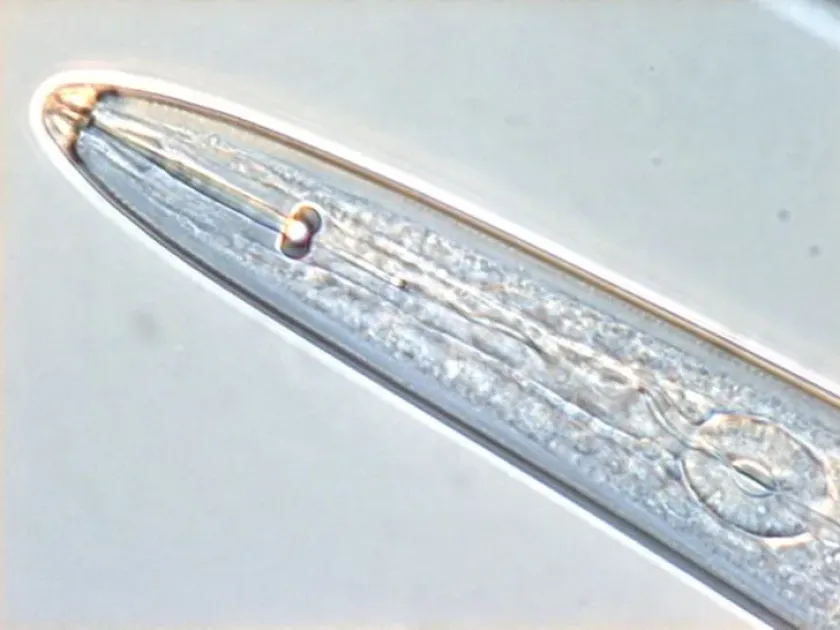
Description
How to identify
The spiral nematode Helicotylenchus dactylopterus is a microscopic worm belonging to the order Tylenchida and the family Hoplolaimidae. It earned its common name from its distinctive habit of coiling into a spiral shape when resting or dead.
The organism is typically 0.5 to 1.0 mm long and possesses a well-developed stylet, a spear-like mouthpart used to penetrate plant tissues and consume nutrients from epidermal root cells.
Its life cycle includes egg, larval, and adult stages, occurring predominantly within the soil or the rhizosphere. These nematodes are migratory semi-endoparasites, capable of moving through the soil to find new host roots.
Spiral nematodes thrive in a variety of soil types, particularly those with sufficient moisture. Their populations can persist in soil for long periods, utilizing various host plants to maintain their life cycle throughout the year.
Dissemination occurs mainly through movement of infested soil, contaminated farming equipment, irrigation water, and infected transplant seedlings, making biosecurity a critical component of farm management.
What it damages
This nematode is a polyphagous pest, meaning it attacks a wide array of agricultural crops, including cereals, corn, potatoes, vegetables, and ornamental trees. It feeds on the root systems, causing structural damage.
Feeding activities impair the plant's ability to uptake water and essential minerals. This leads to reduced root biomass, causing plants to become stunted and prone to wilting during periods of stress.
Damage is often characterized by root necrosis and the reduction of fine hair roots. In severe infestations, the overall plant development is significantly retarded, which drastically reduces the final yield quality and quantity.
The wounds inflicted by the nematodes serve as entry points for secondary pathogens, such as fungi and bacteria. This complex interaction often leads to root rot diseases that can kill the plants entirely.
Economic losses are cumulative, especially in fields with repeated planting of susceptible crops, as the spiral nematode population builds up over several growing seasons, exhausting the soil's productive potential.
Signs of infestation
Symptoms of spiral nematode infestation are often vague and can be mistaken for nutrient deficiencies or simple drought stress. Affected plants typically show uneven growth across the field.
Foliar symptoms include chlorosis, stunting, and a lack of vigor. These plants show less response to fertilization and irrigation because their impaired root systems cannot effectively utilize available resources.
To confirm the presence of Helicotylenchus, soil and root samples must be collected and analyzed in a nematology lab. Microscopic identification is required to distinguish this species from other soil nematodes.
Field signs often appear as patches or clusters of weak plants that do not improve even with increased water supply. If roots from these patches are examined, they frequently appear sparse and discolored.
High population densities lead to total field patches of poor plant performance, which indicates that the soil health has been significantly compromised by the pest burden.
Control measures
Integrated Pest Management (IPM) is essential for controlling spiral nematodes. Crop rotation with non-host plants or resistant varieties is the most effective long-term strategy to reduce nematode populations in the soil.
Good agricultural practices, such as sanitizing equipment between fields and ensuring the use of certified, clean planting material, help prevent the introduction of the pest into uninfested areas.
Soil management, including the use of organic amendments and cover crops, can improve soil structure and microbial diversity, which may suppress nematode activity and help plants compensate for root damage.
Chemical control using nematicides is an option in high-value crops, but it must be performed with caution due to strict regulations, environmental impact, and costs associated with soil treatment.
- Implementing crop rotation cycles with non-host species.
- Using bio-fumigants like mustard cover crops to reduce nematode counts.
- Monitoring soil nematode levels before every major planting season.
- Applying biological control agents that target nematode larvae.
Taxonomy
- Latin name
- Helicotylenus dactylopterus
- Family
- Sebastidae
- EPPO code
- HLENDA
Discussion
No discussions yet — be the first.