
Spiral nematode
Helicotylenchus lobus
Description
How to identify
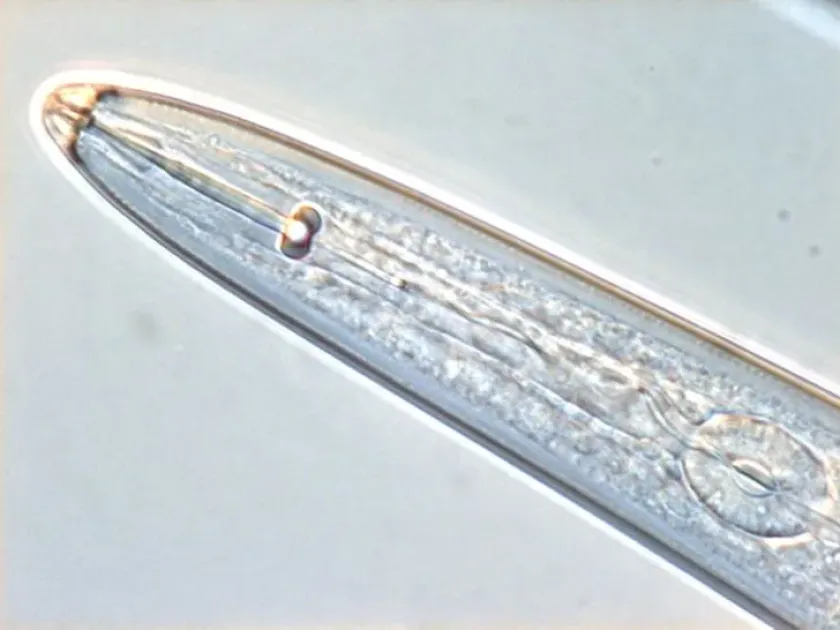
Helicotylenchus lobus is a plant-parasitic nematode belonging to the order Tylenchida and the family Hoplolaimidae. Its common name, "spiral nematode," originates from the characteristic spiral shape the worm adopts when it is at rest or fixed for observation.
Adult nematodes are microscopic, typically ranging between 0.5 and 1.0 mm in length. They are equipped with a strong, sclerotized stylet used to pierce plant cells and extract nutrients from the root tissues.
Identification in the field is impossible without laboratory analysis. Diagnosis requires the collection of soil and root samples, followed by extraction techniques like the Baermann funnel method and identification under a high-powered microscope.
Key diagnostic features include the morphology of the tail, the specific structure of the head region, and the position of the phasmid organs, which are critical for distinguishing H. lobus from other spiral nematode species.
These nematodes are ectoparasites. They remain largely in the soil and on the surface of the roots, causing damage without fully entering the plant tissue, which is a key biological distinction from endoparasitic nematodes.
What it damages
Spiral nematodes have a broad host range, damaging various crops including cereals, vegetables, fruit trees, and ornamental plants. Their presence is particularly detrimental to root systems of sensitive species.
The primary damage occurs when nematodes feed on root cells. This physical injury destroys the outer layers of the root, reducing the plant's capacity to uptake essential water and nutrients effectively.
Feeding sites created by the nematodes serve as entry points for opportunistic soil pathogens, such as fungi and bacteria. This frequently leads to secondary infections and root rot, which exacerbates the decline of the plant.
In cases of heavy infestation, plants show signs of stunted growth, chlorosis, and general weakness. Growers often misattribute these symptoms to nutrient deficiencies or environmental stress.
Over several seasons, the cumulative damage leads to thinning plant populations and significant economic losses in both yield quantity and overall produce quality.
When it appears
The activity and lifecycle of the spiral nematode are heavily influenced by soil temperature. They are most active when soil temperatures range between +15°C and +25°C.
Spiral nematodes are highly resilient. They can survive harsh environmental conditions, such as drought or freezing, by entering a state of anhydrobiosis, allowing them to persist in the soil without a host for extended periods.
The nematode population increases rapidly during the active growing season of the host plant, as root exudates stimulate their feeding and reproductive cycles.
Depending on the climate and host availability, multiple generations can occur within a single year. Soil moisture levels are a critical factor for the movement and success of the nematode populations.
Spread across fields usually occurs via the movement of infested soil attached to farm machinery, tools, or through the distribution of infected planting material, such as seedlings or tubers.
Signs of infestation
The first signs of infestation are usually seen as patches of stunted or uneven growth in a field. Affected plants appear weaker and less vigorous than the surrounding healthy crops.
Yellowing or chlorosis of the leaves is common, indicating that the root system is unable to provide sufficient nutrients to the upper parts of the plant, despite adequate fertilization.
Root system examination often reveals necrosis, dark lesions, and reduced development of fine lateral roots. In severe cases, the entire root architecture may appear decayed or poorly branched.
Infested plants become highly sensitive to environmental stress, especially water deficit. They will wilt much faster during dry spells compared to non-infested plants nearby.
Economic damage is evidenced by a measurable decline in harvest volume and poor quality of the yield, which often results in lower market value and profitability for the producer.
Control measures
Crop rotation is the most effective cultural practice for managing spiral nematodes. Including non-host crops or plants with antagonistic properties in the rotation can help reduce nematode populations in the soil.
Good agricultural practices, such as deep plowing and diligent weed control, are essential to disrupt the nematode lifecycle and maintain soil health.
Using certified, nematode-free planting material is the primary defense strategy. For perennial crops, pre-planting soil treatment or disinfection of rootstock is highly recommended.
If nematode counts exceed economic thresholds, the application of chemical nematicides may be required. These must be applied according to local regulations and strictly following the manufacturer’s instructions.
- Regular soil sampling and monitoring for nematode populations
- Incorporating organic matter to improve soil structure and microbial diversity
- Sanitizing farm equipment between different fields to prevent contamination
Taxonomy
- Latin name
- Helicotylenchus lobus
- Order
- Nematodes
- Family
- Hoplolaimidae
- EPPO code
- HELYLO
Discussion
No discussions yet — be the first.