
Spiral nematode
Helicotylenchus leiocephalus
Description
How to identify
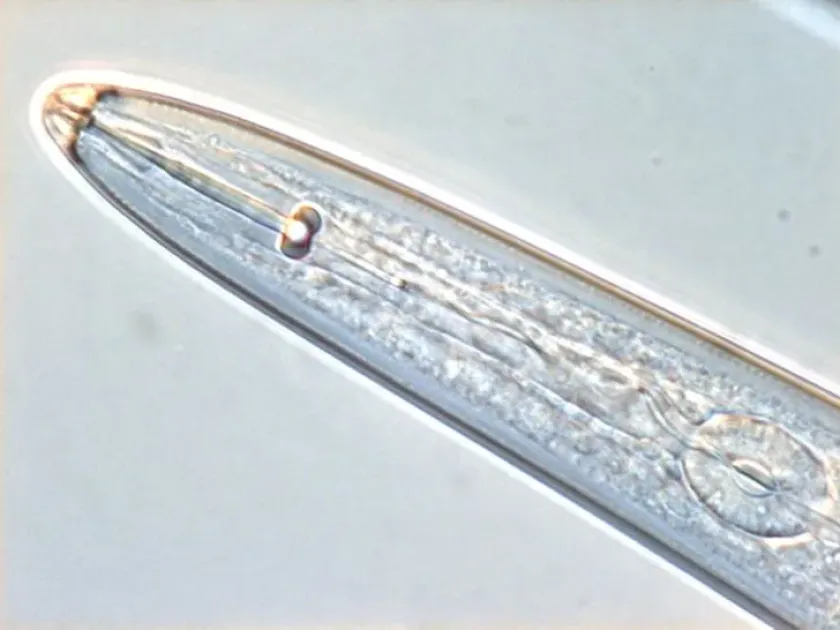
The spiral nematode Helicotylenchus leiocephalus belongs to the order Tylenchida and the family Hoplolaimidae. It is a microscopic plant-parasitic roundworm that curls into a characteristic spiral shape when inactive.
These nematodes possess a robust stylet used to pierce plant cell walls and extract nutrients. Their microscopic size makes them nearly impossible to detect without specialized laboratory diagnostic procedures.
Their life cycle consists of several stages and occurs primarily within the soil or on the surface of plant roots. They are facultative endoparasites, capable of feeding on external root surfaces and partially inside tissues.
They thrive in environments with sufficient soil moisture and the presence of susceptible host plants. The eggs are deposited in the soil, and larvae develop into adults over several weeks depending on temperature.
Dispersal is mainly passive, occurring through the movement of infested soil particles via farm machinery, irrigation water, and the transport of infected nursery stock.
What it damages
Spiral nematodes affect a diverse array of plants, including cereals, vegetables, ornamental plants, and tree fruits. They pose a significant threat to intensive farming operations.
By feeding on root hairs and cortical cells, these nematodes impair the plant's ability to uptake water and essential minerals, leading to stunting and physiological stress.
Wounds caused by the nematode stylet often lead to secondary invasions by opportunistic fungi and bacteria, causing further root decay and necrosis.
Heavy infestations result in substantial yield losses, reduced plant biomass, and a lack of uniformity within a field, making crops more susceptible to environmental stresses.
In high-density populations, the cumulative damage can lead to the total failure of crops, requiring costly field treatments and remediation of soil health.
Signs of infestation
Symptoms often appear as patches of stunted, chlorotic growth across a field. These irregular patches of poor performance are classic signs of nematode activity.
Plants may exhibit symptoms of nutrient deficiency even when soil fertility is adequate. This occurs because the damaged root system is unable to process the available nutrients efficiently.
Root system examination typically reveals a lack of fine feeder roots. Larger roots may show dark brown lesions or necrotic spots where the nematodes have been feeding.
During periods of high temperatures or low moisture, infested plants are the first to wilt. This rapid loss of turgor is a hallmark of root-level compromise caused by nematodes.
Since symptoms can be easily confused with nutrient imbalances or soil compaction, soil and root sampling for diagnostic lab analysis remains the standard for identification.
Control measures
Effective management relies on a multi-faceted approach, starting with long-term crop rotation that uses non-host or trap crops to disrupt the nematode life cycle.
Quarantine and the use of certified nematode-free planting materials are essential to prevent the introduction of the pest into clean soil environments.
Soil management practices, such as proper irrigation and the incorporation of organic matter, can enhance natural soil suppression and improve plant tolerance to nematode feeding.
Chemical control using nematicides should be employed only when monitoring reveals high threshold populations, following strict environmental and safety regulations.
- Use of cover crops that have natural nematicidal properties.
- Strict sanitation protocols for equipment to prevent soil movement between fields.
- Routine soil testing to monitor nematode population levels.
- Maintenance of optimal soil pH and fertilization to boost plant vigor.
Taxonomy
- Latin name
- Helicotylenchus leiocephalus
- Order
- Nematodes
- Family
- Hoplolaimidae
- EPPO code
- HELYLE
Discussion
No discussions yet — be the first.