
Hecatera dysodea
Hecatera dysodea
Description
How to identify
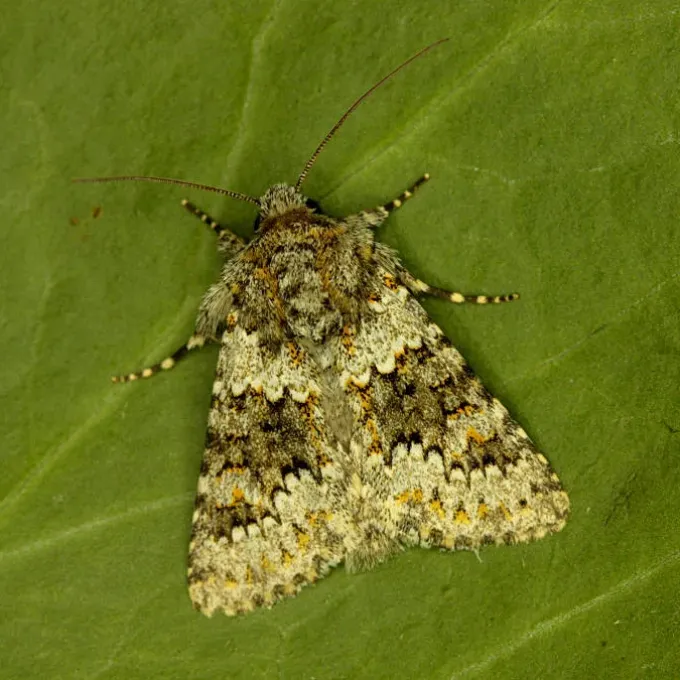
Hecatera dysodea, commonly known as the Small Mottled Willow (though this name is sometimes shared with other species), is a moth belonging to the Noctuidae family. The adult moth has a wingspan of 25–30 mm, with cryptic grey-brown coloration that allows it to blend into its surroundings perfectly.
The larva (caterpillar) grows up to 30 mm in length. Its body color varies from light green to brownish, often featuring subtle longitudinal stripes that act as camouflage while feeding on host plants.
The insect overwinters as a pupa within a compact silk cocoon buried in the soil. This dormancy allows the species to withstand winter frosts and emerge successfully once temperatures rise in the spring.
The life cycle consists of complete metamorphosis: egg, larva, pupa, and adult. Each stage is strategically adapted to the phenological stages of the host plants they consume.
Identifying the pest requires careful observation of both the adult moth's wing pattern and the specific damage left by larvae, as local populations can exhibit slight variations in phenotype.
What it damages
The primary hosts of Hecatera dysodea are plants within the Asteraceae family, with lettuce (Lactuca sativa) being the most economically significant crop affected by this pest.
Larvae primarily attack the reproductive parts of the plant. In seed-producing lettuce crops, they bore into the flower heads, destroying the developing seeds and leading to substantial yield losses.
In addition to cultivated lettuce, the pest thrives on wild lettuce and various thistle species, making unmanaged field edges a source of recurring infestation for nearby crops.
When populations are high, larvae may consume leaves and stems, resulting in stunted growth and compromised vigor, which makes the plants more susceptible to environmental stress.
Secondary damage occurs when the pest's activities introduce moisture and open wounds, facilitating the infection of the flower heads by opportunistic fungal pathogens such as Botrytis.
When it appears
Adult moths typically emerge from overwintering pupae in late spring. The main flight period usually occurs throughout June and July, depending on the local climate and seasonal temperature profiles.
Females deposit eggs on the undersides of leaves or directly onto the flower buds. The incubation period is short, ensuring that larvae synchronize their emergence with the budding stage of the host plant.
The larval stage is most active during the peak of the plant's flowering season, as they require the protein-rich tissues of the reproductive structures for rapid development.
The number of annual generations depends on the latitude, with some regions experiencing one cycle and others having two, which can double the risk of damage if control is neglected.
As the season comes to an end and host plants senesce, the final instar larvae descend to the soil to prepare for pupation and overwintering.
Signs of infestation
The presence of frass (caterpillar excrement) on the leaves or at the base of the flower stalks is the most reliable early indicator of an active infestation.
Inspect flower heads for small entry holes and signs of hollowed-out tissue, which are telltale symptoms of larval feeding behavior inside the bud structures.
The use of silk webbing by the larvae to bind the flower parts together often leaves a visible, tangled appearance within the canopy of the lettuce plants.
- Premature yellowing or necrosis of flower buds.
- Hollowed-out seeds within the harvested heads.
- Presence of larvae upon shaking the flowering stalks.
In nighttime monitoring, the presence of adult moths near UV light traps provides an early warning signal for growers to implement preventative measures.
Control measures
Cultural control is highly effective; deep autumn plowing of fields helps destroy the overwintering pupae in the soil by exposing them to birds and harsh weather conditions.
Managing the surrounding area is crucial; removing wild Asteraceae weeds reduces the alternative food sources that allow the pest population to build up outside the crop field.
Chemical control should be applied based on economic thresholds. Selective insecticides that minimize harm to beneficial pollinators and natural predators are preferred when larvae are in early instars.
Biological control options include applying Bacillus thuringiensis sprays, which are highly effective against noctuid larvae while remaining safe for the surrounding ecosystem.
Using pheromone traps helps monitor population dynamics, allowing for precise timing of interventions, which significantly reduces the total amount of insecticide required for crop protection.
Taxonomy
- Latin name
- Hecatera dysodea
- Order
- Lepidoptera (butterflies)
- Family
- Noctuidae
- EPPO code
- POLISI
Discussion
No discussions yet — be the first.