
Wheat jointworm
Harmolita graminicola
Description
How to identify
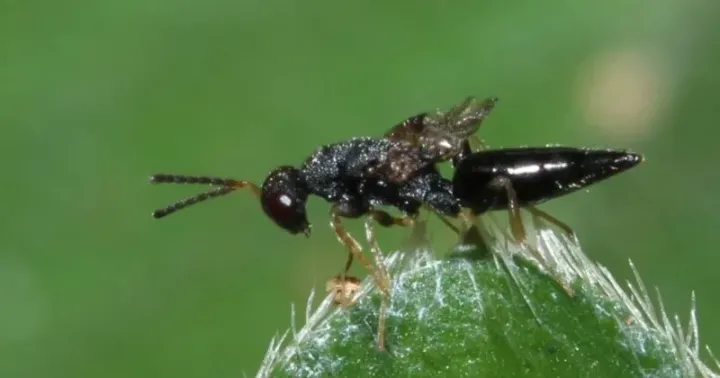
The wheat jointworm (Harmolita graminicola) is a member of the Hymenoptera order, specifically belonging to the Eurytomidae family. It is a small insect, often resembling a tiny black wasp, typically measuring 3–5 mm in length.
Adults exhibit a black, shiny body with clear wings that show characteristic venation. They are fragile-looking insects that spend most of their short lives searching for suitable hosts to lay their eggs.
The larvae are legless, white or yellowish, with curved bodies and chewing mouthparts. They are highly specialized for living and feeding inside the stems of various cereal crops.
They overwinter as mature larvae within the stems of the host plants, specifically inside the stubble left in fields. Pupation occurs within these same stems in the following spring.
The female is equipped with an ovipositor, which she uses to puncture the stem tissue of young cereals and deposit eggs directly into the plant's nutrient-rich tissues.
What it damages
The primary hosts of the wheat jointworm include wheat, barley, and rye. In some cases, wild grasses also serve as hosts, allowing the pest to survive even when crops are absent.
Damage is caused exclusively by the larvae. By feeding inside the stem, they disrupt the vascular bundles, interfering with the transport of water and nutrients to the head.
Infested plants often display stunted growth and structural deformations. The stems may become shortened, which makes them highly susceptible to lodging during windy weather.
The impact on yield is significant, characterized by reduced kernel weight and a high percentage of empty or shriveled grains. This directly affects the quality and quantity of the harvest.
In severe infestation cases, the entire plant may appear yellowed and withered, leading to substantial economic loss for the grain producer if left unchecked.
When it appears
Adult emergence typically occurs in late spring, coinciding with the jointing stage of cereal crops. This synchronization is crucial for the survival of the species.
The lifespan of an adult is relatively short, focusing primarily on mating and locating appropriate host stems for egg-laying during the active growth period of the crop.
The insect completes one generation per year, making it a univoltine pest. After the larvae reach maturity, they enter a state of diapause inside the straw stubble until the next season.
Spring temperatures and soil moisture influence the timing of emergence. Warm conditions during the early growth of cereals often result in higher infestation rates.
Field monitoring is essential during the tillering and jointing phases. Growers often use yellow sticky traps to detect the first presence of the adults.
Signs of infestation
An initial sign of infestation is an uneven stand, where certain plants appear significantly shorter than others in the same field due to inhibited stem elongation.
During the heading phase, infested plants may show pale, poorly developed heads that fail to fill properly. In some cases, the grain remains thin and lacks vitality.
If you split the stem of a suspicious plant, you can find the larvae or the chambers created by their feeding, which are often surrounded by damaged or necrotic tissue.
The presence of small circular exit holes on the surface of the stubble indicates that the adults have already emerged and the lifecycle for that year is complete.
- Stunted height and shortened internodes of the stalks.
- Premature whitening or yellowing of the heads.
- Increased fragility of the straw leading to sudden lodging.
- Hollowed-out inner stem tissue upon physical inspection.
Control measures
Crop rotation is the most effective cultural control measure. Avoid planting wheat in succession, as this allows the pest population to build up rapidly in the soil stubble.
Deep plowing or burying the stubble immediately after harvest is critical. This practice prevents the adults from emerging and successfully laying eggs on new crops.
Managing weeds, especially perennial grasses, is important as they provide a sanctuary for the pest, allowing it to bridge the gap between cereal seasons.
Chemical control is rarely effective after the larvae have entered the stem. Treatments must be timed precisely during the adult flight period to prevent egg-laying.
Selecting cereal varieties with denser or more robust stem structures can make it harder for the female jointworm to penetrate the tissue, thereby reducing infestation risk.
Discussion
No discussions yet — be the first.