
Palm scale
Halimococcus thebaicae
Description
How to identify
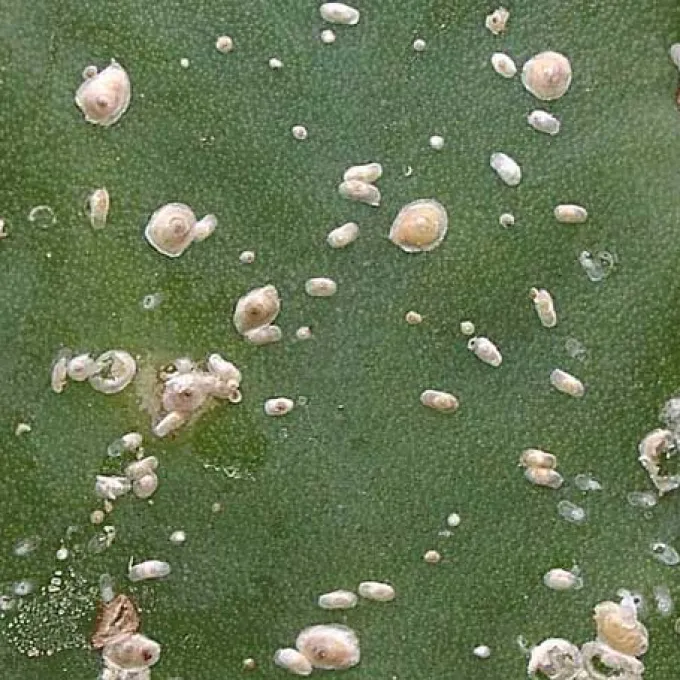
The palm scale Halimococcus thebaicae belongs to the family Halimococcidae in the order Hemiptera. It is a tiny insect that develops a specific protective shield, which covers its body throughout its life cycle.
Adult females of this species lead a sedentary lifestyle, attaching themselves firmly to plant tissues. Their bodies are highly modified, and the shield has a characteristic shape, adapted for close contact with the leaf surface or palm stem.
Unlike females, males have wings and are capable of short-distance flight, which is necessary to locate mates. However, their life cycle is very short as they do not feed in their adult stage.
First-instar larvae, known as crawlers, are the most active dispersal stage of the pest. They can move across the plant or be carried by wind to neighboring specimens, selecting suitable spots for feeding.
This species is highly specialized and is most frequently encountered in hot climates, parasitizing various palm species in their natural habitats and botanical gardens.
What it damages
The primary hosts for this pest include various palm species, such as members of the genera Hyphaene, Phoenix, and 3Washingtonia. The pest thrives in high-humidity environments or, conversely, in dry conditions caused by poor maintenance.
Damage is caused by both adults and larvae sucking cell sap from the plant tissues. This leads to weakened immunity, stunted growth, and deformation of young leaves.
During mass infestations, scale insects can completely cover leaf blades, hindering normal photosynthesis. The plant begins to lose its aesthetic value, with lower leaves turning yellow and drying out prematurely.
Damaged tissue areas become susceptible to secondary infections, including fungal diseases and bacterial blight. Furthermore, sooty mold often grows on the honeydew excreted by the scales, further stressing the plant.
Severe infestations without timely intervention can lead to the complete death of the plant, especially in the case of young seedlings or weakened indoor palms.
Signs of infestation
The first sign of infestation is the appearance of small bumps on leaves or petioles, which feel dense and dry to the touch. These formations range in color from light brown to dark brown.
During inspection, you may notice a sticky substance on the leaf surface, known as honeydew. These sugary excretions create a favorable environment for mold development.
Gradually, symptoms of chlorosis appear, showing yellowing or whitening of the leaf tissue around the areas where pests are concentrated. Leaves lose their luster, become brittle, and curl.
In cases of widespread infestation, the palm stops producing new leaves, and the apical meristem may start to wither due to the total depletion of nutrient reserves.
- Presence of brown scale-like spots.
- Honeydew residue.
- Growth of black sooty mold.
- Deformation of young shoots.
- Drying of leaf segment margins.
Control measures
For early-stage scale management, mechanical cleaning is recommended. Adult insects should be carefully removed using a cotton swab dipped in rubbing alcohol or soapy water.
The use of systemic insecticides is the most effective control method, as the active ingredients penetrate the plant tissues, making the sap toxic to scale insects.
Treatments should be applied regularly, at 7–10 day intervals, to eradicate not only the adults but also the newly emerging crawlers, which are most sensitive to chemical interventions.
It is crucial to isolate infested plants from other ornamental specimens to prevent the spread of crawlers. Furthermore, growing conditions should be reviewed, ensuring lower air humidity and good ventilation.
As a preventive measure, regular inspection of palms is essential, particularly focusing on the undersides of leaves and the bases of petioles, where the pest tends to hide most frequently.
Taxonomy
- Latin name
- Halimococcus thebaicae
- Order
- Hemiptera (bugs, aphids, leafhoppers)
- Family
- Halimococcidae
- EPPO code
- HAMCTH
Discussion
No discussions yet — be the first.